

Teide National Park: the Complete Guide (What to See, How to Get There)
Teide National Park is the most visited national park in Spain, with more than 5 million visitors a year. A UNESCO World Heritage Site since 2007, it is home to the country’s highest peak and to volcanic landscapes unlike anything else in Europe.
🔔 Update of 1 November 2026: because of the snow, several trails around the summit of Teide are restricted. Details here: Teide: trails closed by snow.
Teide isn’t just a 3,718 m summit you have to book months ahead to reach. Above all, it’s a huge park of nearly 19,000 hectares that you can explore in a morning by car with a few stops, or over several days if you want to hike.
In this guide, I explain how to get to the park, what to see even if you’re not going all the way to the summit, how the cable car and permits work, and what to plan for in terms of weather and altitude.
⭐ The essentials
🏔️ Altitude: summit at 3,718 m, the highest point in Spain
🌍 Status: UNESCO World Heritage Site since 2007, 18,990 hectares
🚗 Access: free, by car via the TF-21, TF-24 or TF-38 (there is no park entrance ticket)
🚡 Cable car: up to 3,555 m in 8 minutes, around €40 return
🎫 Summit: regulated access, free PNT-10 permit required
🕒 Visitor centres: 9am to 4pm every day
- The park at a glance
- How to get to the park
- Roques de García and Las Cañadas
- The cable car and La Rambleta
- Climbing to the summit
- Hiking in the park
- A Starlight-certified sky
- Weather and altitude: what to plan for
- Rules to follow in the park
- My verdict
🌋 The Park at a Glance
Created in 1954, Teide National Park covers nearly 19,000 hectares in the heart of Tenerife, around the Teide-Pico Viejo volcano. At 3,718 m, Teide is the highest peak in Spain, and measured from the ocean floor, it is the third-highest volcanic structure in the world, rising more than 7,500 m above the seabed.
The park has been a UNESCO World Heritage Site since 2007, for the richness and diversity of its volcanic landscapes. It is also, by a long way, the most visited national park in Spain: more than 5 million visitors in 2025, over 60% of all national park visits in the Canary Islands combined.
This lunar landscape is also home to unique flora adapted to the altitude and the volcanic climate: 168 plant species, 33 of them endemic to Tenerife. The best known is the red tajinaste (Echium wildpretii), a huge red flower spike that can exceed 2 metres in height. The Teide violet grows right up to the summit, making it the highest-growing flowering plant in Spain.
Tenerife With Love tip:
If you want to see the red tajinaste in bloom, aim for late May or June. The rest of the year, the landscape is still spectacular but much more mineral, almost lunar.
🚗 How to Get to the Park
Entry to the park is completely free, with no ticket and no barrier at the entrance. Only the cable car and access to the summit are paid or regulated. Three main roads lead into the park by car:
- TF-21, from the north (La Orotava), the most spectacular road with its hairpin bends through the pine forest
- TF-24, from La Laguna via El Portillo
- TF-38, from the south (Boca Tauce, Chío), the most direct if you’re staying around Costa Adeje or Los Cristianos
From the south of the island, allow about 1 hour of driving. There are also two bus lines (the 348 from Puerto de la Cruz and the 342 from Costa Adeje), but with limited timetables that leave little time on site. To enjoy the park at your own pace, a car is by far the best option.
Two visitor centres let you get information on site, with exhibitions and geological models: El Portillo on the north side, and Cañada Blanca, right next to the cable car base station. Both are open every day from 9am to 4pm, except 25 December and 1 January.
Tenerife With Love tip:
Fill up your tank before heading up, as there is no petrol station in the park. The last convenient stop is Vilaflor on the south side or La Orotava on the north side.
📍 Roques de García and Las Cañadas
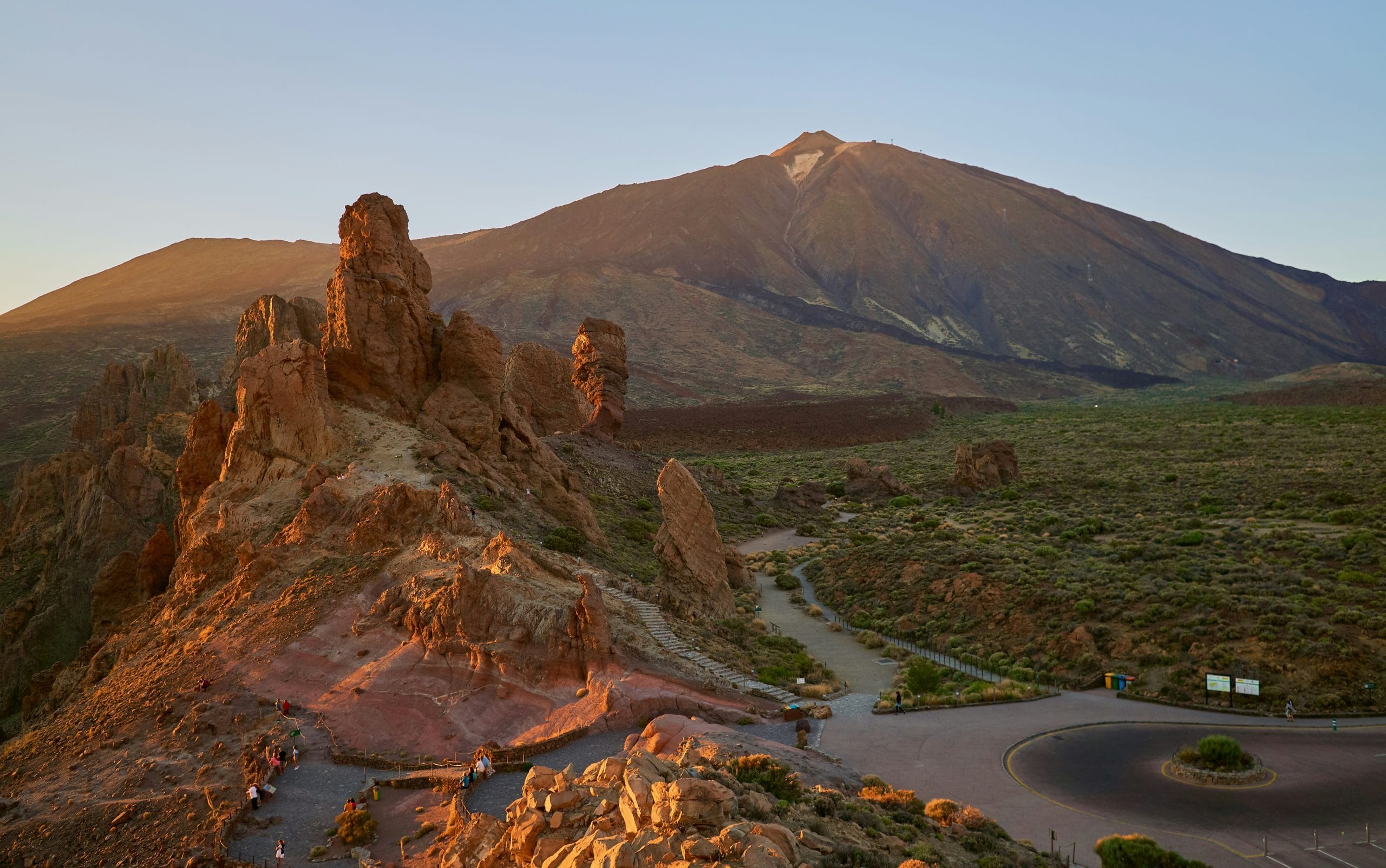
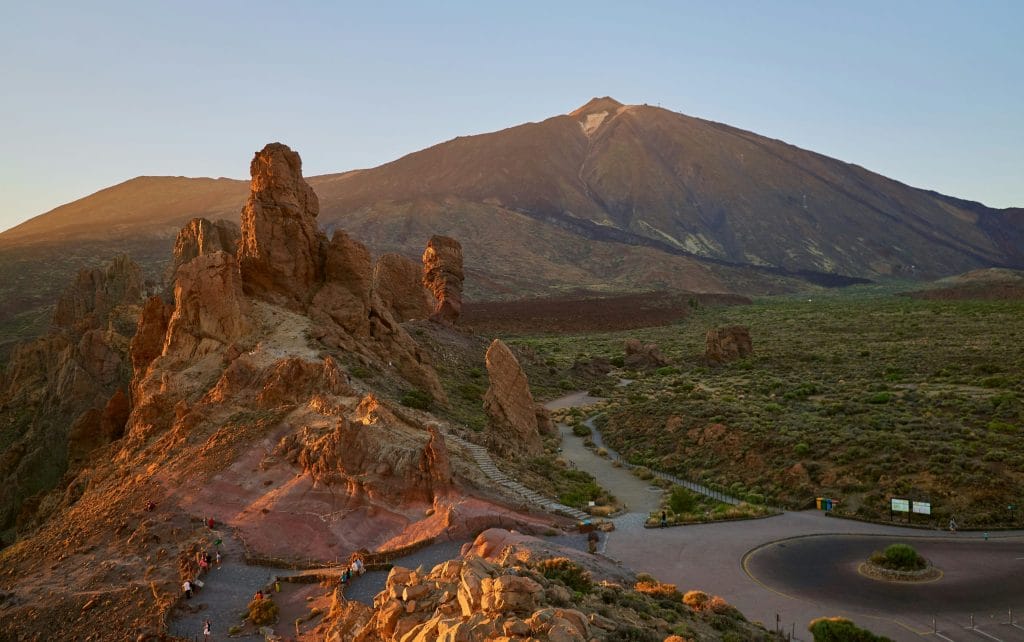
If you only had time to see one place in the park without walking for hours, this would be it. Las Cañadas is the huge caldera that surrounds Teide, a volcanic wall 25 km long that rises in places to 600 m high. It’s this landscape, stretching as far as the eye can see, that gives the park its lunar feel.
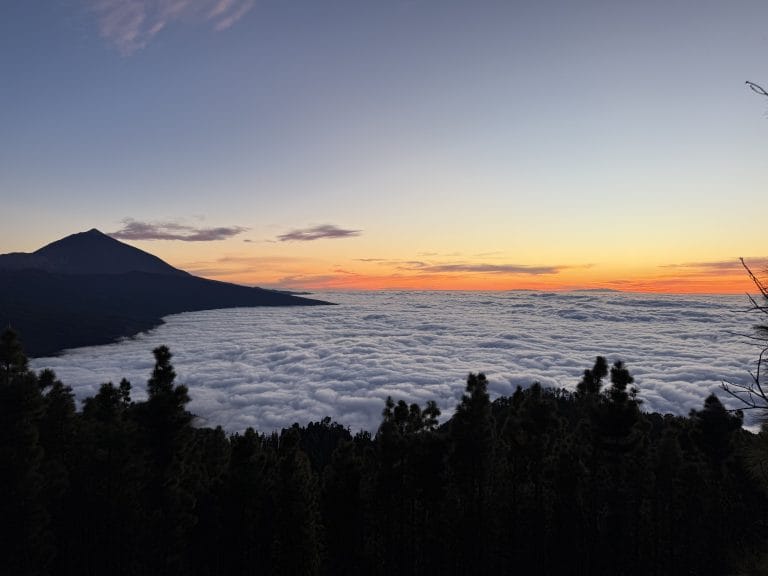
At the heart of this caldera are the Roques de García, a formation of volcanic rocks sculpted by erosion. The most famous, Roque Cinchado, appeared for a long time on old Spanish banknotes. An easy, flat trail goes around it in 20 to 30 minutes, accessible to everyone, with a car park right next to it (near the Parador hotel). It’s also one of the best viewpoints for a sunset over Teide.
If you want to walk them, we have a detailed guide with map, elevation profile and official track: the easy Roques de García loop (3.5 km, about 2 hours). To walk further in the park, also see the Arenas Negras loop from El Portillo (8 km) and the Siete Cañadas traverse (16 km).
You can also climb on foot from Montaña Blanca to La Rambleta, with a compulsory booking: our Montaña Blanca to La Rambleta fact sheet covers the track, the profile and the rules.
On the way, two other stops are worth the detour with no effort: Los Azulejos, mineral cliffs in shades of green and ochre, and Minas de San José, an almost white desert of pumice that contrasts with the rest of the landscape.
If you want to go further than a photo stop, I did the Samara – Montaña de la Cruz de Tea hike, a real on-foot immersion in these volcanic Teide landscapes.
🚡 The Cable Car and La Rambleta
The Teide cable car takes you from 2,356 m to 3,555 m in altitude (La Rambleta) in about 8 minutes, with no permit to book and no physical effort. From La Rambleta, two viewpoints are freely accessible without a permit, and they’re more than enough to understand why this landscape is so impressive.
I’ve written a complete guide with prices, 2026 timetables and my tips for booking well: Teide Cable Car: Tickets, Timetables and What You’ll See at the Top.
🏔️ Climbing to the Summit
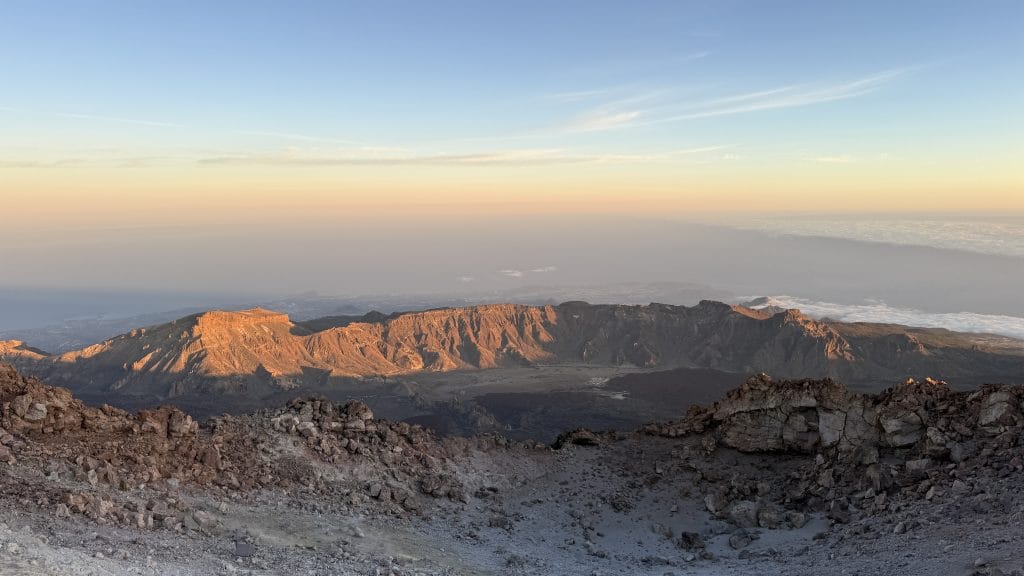
The true summit (3,718 m) is a protected area with regulated access: you need the PNT-10 permit, free but mandatory, whether you go up by cable car plus a short walk, or on foot from Montaña Blanca (which also requires the PNT-07 permit and good physical fitness). I’ve detailed the whole booking procedure, the prices and the mistakes to avoid in my dedicated guide: Teide Summit Permit: How to Get It.
If you want the full experience on foot, I’ve written about my two night ascents, one for a sunrise and one for a sunset: Sunrise at Teide and Sunset at the Top of Teide.
🥾 Hiking in the Park
The park is about more than climbing to the summit. Around forty official waymarked trails cross it, from a simple one-hour stroll to a full day, through lava flows, pumice fields or Canary pine forests on the edge of the park.
Find all my hikes on the island, including those around Teide, on the dedicated hub: Hiking in Tenerife.
For cyclists, climbing Teide is a classic, with its own rules. They are covered in my guide to cycling at Teide.
✨ A Starlight-Certified Sky
The altitude, the lack of light pollution and very often clear skies make the park one of the best places in the world for stargazing. It holds the international Starlight Destination certification, like only a handful of sites in the world. An astronomical observatory is based there, with visits possible by reservation.
🌡️ Weather and Altitude: What to Plan For
Don’t rely on the weather on the coast. At over 2,000 m, temperatures drop sharply, even in midsummer, and can fall below 0°C in winter, especially early in the morning or in the evening. The sun, on the other hand, is very strong at this altitude, with a high risk of sunburn even on cool days.
A few useful habits: always bring a warm jacket even in summer, sun cream and sunglasses, and plenty of water, as the air is very dry. Some people feel mild altitude sickness (shortness of breath, a slight headache) above 3,000 m; go up at your own pace if that’s you. Also check the weather before you set off: the cable car and the roads can close in strong wind, especially in winter.
🌿 Rules to Follow in the Park
Teide is a protected natural area, not a postcard backdrop. A few simple rules to follow:
- Stay on the marked trails; outside the permitted areas the volcanic soil is fragile and takes decades to regenerate
- Don’t take any rocks, pumice or plants, even in small amounts; it is forbidden and punishable by fines
- Drones are prohibited without specific authorisation from the park
- Take your rubbish with you; there are few bins once you’re away from the visitor centres
Quads and buggies are no longer allowed in the park: driving them there has been banned since late 2025, even if some offers suggest otherwise. The full picture is on our page quad and buggy in Tenerife.
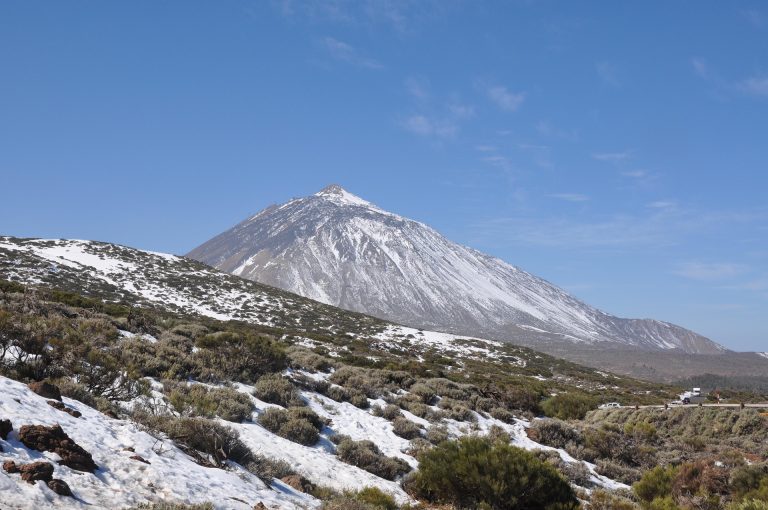
Wondering when the summit is white? I’ve written a guide to snow at Teide: periods, roads and the cable car.
My Verdict
It’s the place in Tenerife I go back to most willingly, even after seeing it dozens of times. The light changes so much with the time of day and the season that the landscape is never quite the same. If you could only do one thing on the island apart from the beaches, this is it.
My advice: don’t limit yourself to a quick stop on the road. Allow at least half a day to walk a little around the Roques de García and take the time to look at the caldera, not just the volcano. And if you get the chance to see it at sunrise or sunset, do it; that’s when the park is at its most impressive.
👉 On the way to the park, two stops are worth the detour: the Tarta viewpoint and the Ayosa viewpoint.
Also worth reading: Vilaflor, the Mountain Village on the Road to Teide.
Also worth discovering: the red tajinaste, Teide’s emblematic flower.
Frequently Asked Questions About Teide National Park
👉 Also worth reading: Stargazing in Tenerife.
Do you have to pay to enter Teide National Park?
No, entry to the park is completely open and free. Only the cable car and regulated access to the true summit (PNT-10 permit) are paid or subject to reservation.
How much time should you allow to visit Teide National Park?
Half a day is enough to see the Roques de García, Las Cañadas and take the cable car. Allow a full day if you also want to hike or climb to the summit.
Can you visit Teide National Park without a car?
Yes, with bus 348 from Puerto de la Cruz or 342 from Costa Adeje, but timetables are limited. A car is by far the best option to enjoy the park at your own pace.
Is there snow at Teide in winter?
Yes, the summit and the higher parts of the park are sometimes covered in snow between December and March. The road may then be temporarily closed, so check before you go.
Do you need a permit to visit Teide National Park?
No, only access to the true summit (3,718 m) requires a free permit, the PNT-10. The rest of the park, including La Rambleta by cable car, is freely accessible without booking.
What is the best time to visit Teide National Park?
The park can be visited all year round. Late May and June to see the red tajinaste in bloom, summer for more stable weather, winter for a chance of snow at the summit but with a higher risk of closures.