

La Orotava: The Historic Town Everyone Drives Through Without Stopping
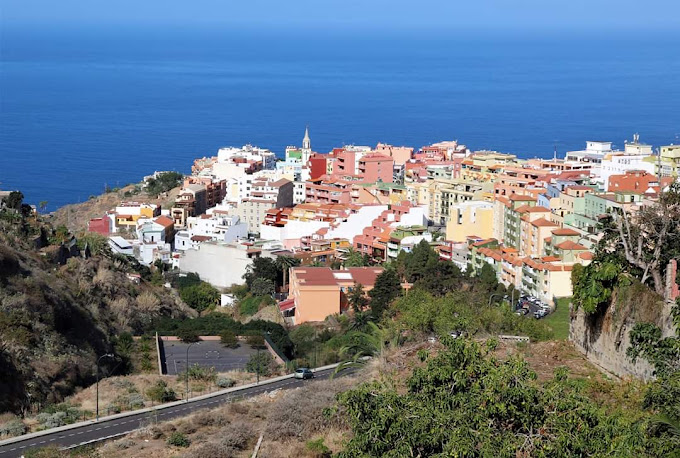
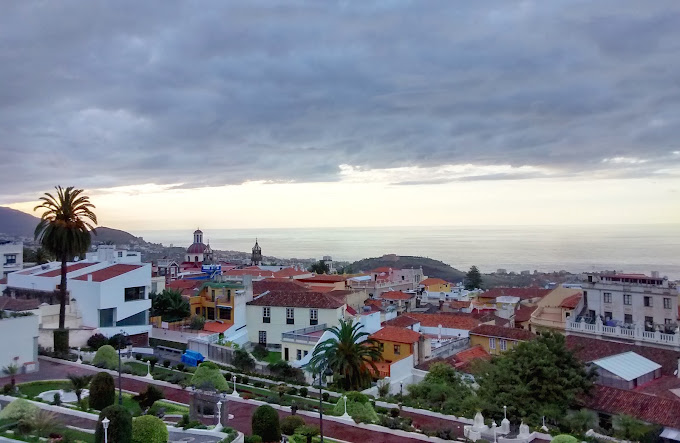
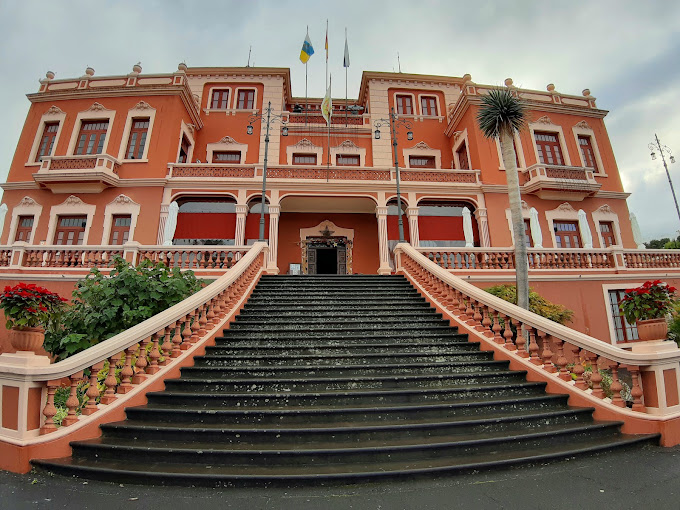
La Orotava is probably the town that is most driven through and least visited in Tenerife: it is the unavoidable crossing point on the road that climbs to Teide from the north, but most cars just pass through without stopping. A shame, because its historic centre, listed as a “Conjunto histórico” since 1976, is one of the best preserved on the island, with its traditional Canarian wooden-balcony houses and sloping cobbled streets.
It is also the largest municipality in Tenerife by area: it stretches from sea level to the summit of Teide, at over 3,700 m altitude, which makes it one of the municipalities with the greatest elevation range in all of Spain.
🎯 Good to know
📍 Location: La Orotava Valley, at about 390 m altitude, 5 minutes from Puerto de la Cruz
🏛️ Status: Historic centre listed as a “Conjunto histórico” since 1976
🚗 Getting there from the south: About 45 min to 1 hour via the TF-1 motorway then the Teide road (TF-21)
🅿️ Parking: A few paid car parks on the edge of the historic centre, which is entirely pedestrian
🌸 Don’t miss if possible: Corpus Christi (June), with its huge carpets of flowers and volcanic sand in the streets
ℹ️ Good to know: The town that most visitors drive through without stopping on the way up to Teide, even though it deserves a real stop
The must-sees of the historic centre
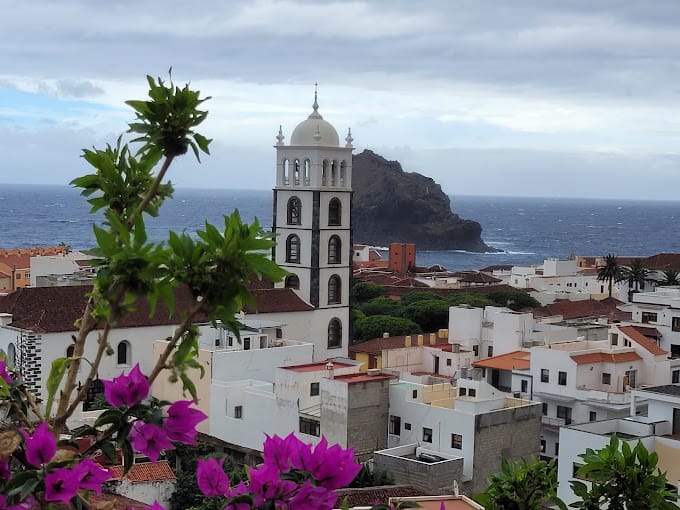
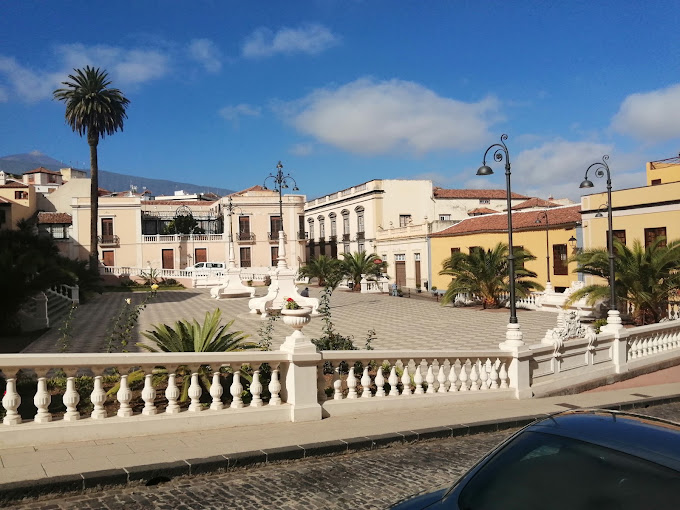
The Casa de los Balcones, a 17th-century house whose façade is covered in carved wooden balconies typical of the Canary Islands, is the architectural symbol of the town and can be visited (small entrance fee). Opposite, the Casa del Turista offers the same kind of visit. The Iglesia de la Concepción, considered one of the finest examples of Baroque architecture in the Canary Islands, dominates the Plaza Casañas with its two asymmetrical towers.
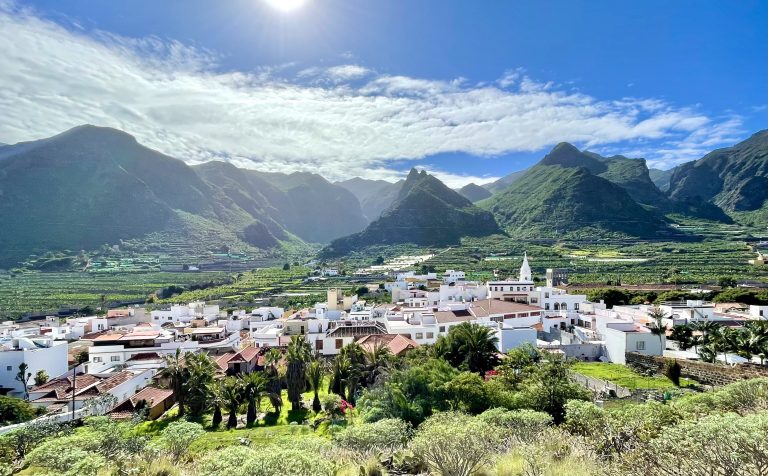
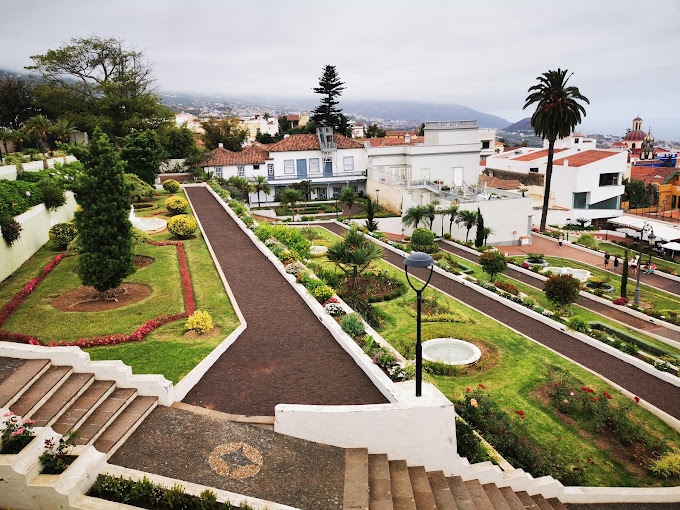
The Plaza de la Constitución, with a view over the valley and the ocean below, is a good place for a break. For panorama lovers, the Mirador de Humboldt, at the entrance to the town when coming from Santa Cruz, offers one of the finest views on the island over the whole La Orotava Valley down to the sea.
Corpus Christi and the flower carpets
If your stay falls in June, La Orotava hosts one of the most spectacular events on the island: for Corpus Christi, residents cover the streets of the historic centre with ephemeral carpets made of flowers and coloured volcanic sand, some of them reproducing genuine works of art. The carpets only last a few hours before being trampled in the procession, so you need to be there at the right time to see them intact.
A few weeks later, at the end of June, La Orotava also hosts the romería de San Isidro Labrador, one of the most renowned on the island for the richness of its decorated floats and traditional costumes.
Getting there
From the south of the island, allow about 45 minutes to 1 hour via the TF-1 motorway then the Teide road (TF-21), which runs right through La Orotava. It is an excellent stopping point if you are heading up to Teide from the north or coming back down towards Puerto de la Cruz, only 5 minutes away by car. The historic centre is visited entirely on foot, as many of the streets are pedestrian or very narrow.
How much time to allow
Allow 1.5 to 2 hours to wander around the historic centre and see the essentials (Casa de los Balcones, Iglesia de la Concepción, Plaza de la Constitución). It is an easy trip to combine with Puerto de la Cruz or with the drive up to Teide on the same day, rather than a destination in its own right for a full day.
Where to eat in La Orotava
La Orotava has several guachinches in its upper areas. I list in particular Guachinche El Cubano and Guachinche El Talegazo, two places that I haven’t tried personally yet but that I document while waiting to be able to discover them.
Nearby
La Orotava combines naturally with Puerto de la Cruz, 5 minutes away, or with the drive up to Teide National Park via the TF-21 road, which has several viewpoints over the valley along the way, including the Mirador de Ayosa.
Still deciding where to base yourself? Compare the areas in our guide to where to stay in Tenerife.
How long does it take to visit La Orotava?
Allow 1.5 to 2 hours for the historic centre (Casa de los Balcones, Iglesia de la Concepción, Plaza de la Constitución). It is a good stop to combine with Puerto de la Cruz or the drive up to Teide.
When can you see the flower carpets in La Orotava?
During Corpus Christi, usually in June (the date varies each year according to the liturgical calendar). The carpets of flowers and volcanic sand only last a few hours before the procession, so you need to find out the exact time.
How do you get to La Orotava from the south of Tenerife?
Allow about 45 minutes to 1 hour by car via the TF-1 motorway then the Teide road (TF-21), which runs through the town.
Is La Orotava worth the detour if I am going up to Teide?
Yes, the road that climbs to Teide from the north goes right through La Orotava. It is an excellent stopping point, with one of the best-preserved historic centres on the island.
Read also: Corpus Christi in La Orotava: carpets of flowers and sand and the gardens of Puerto de la Cruz.