

Santa Cruz de Tenerife: what to see in the capital most tourists skip
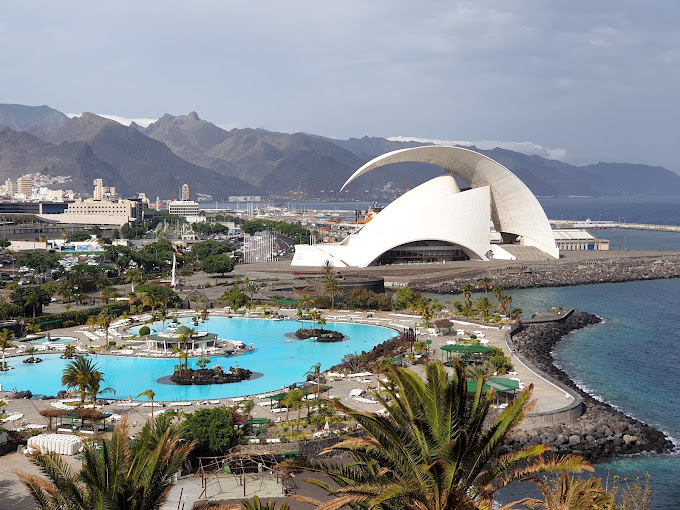
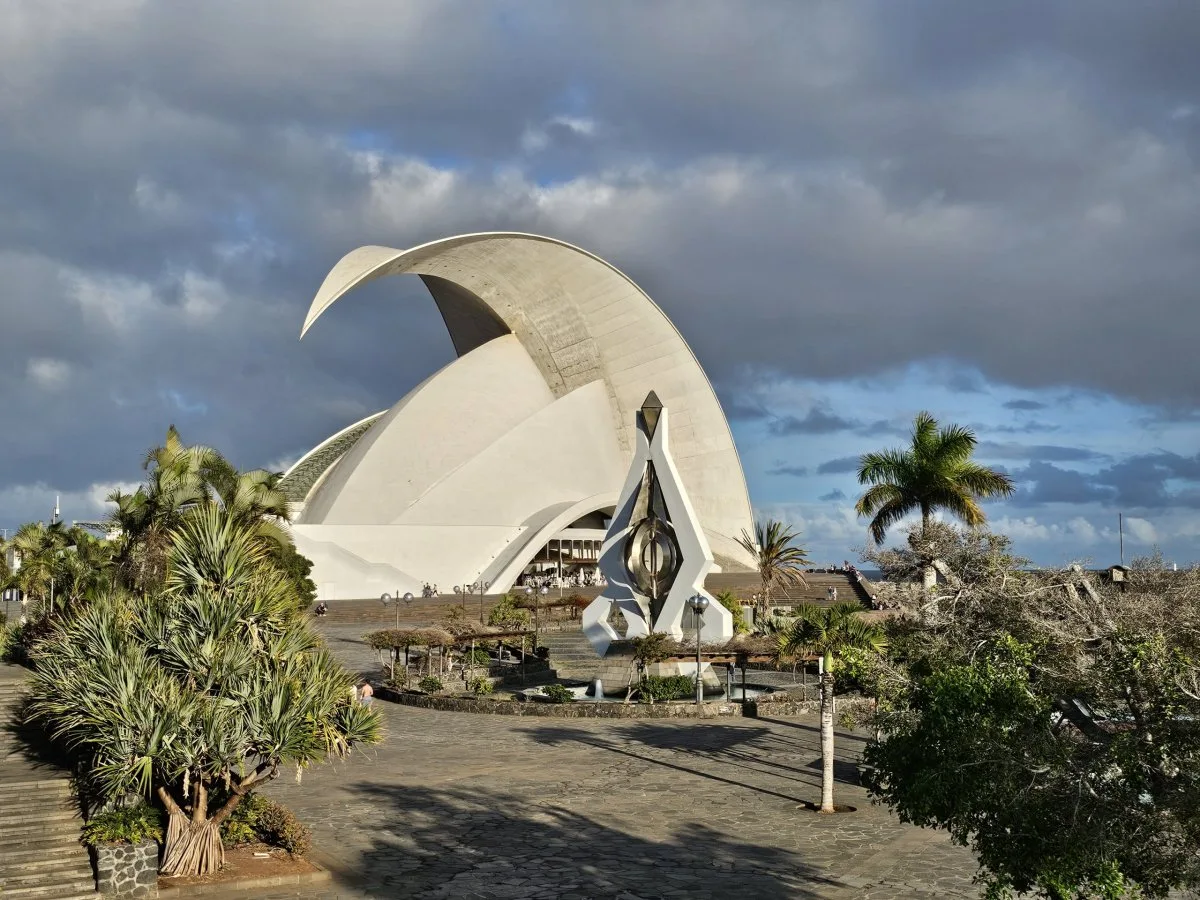
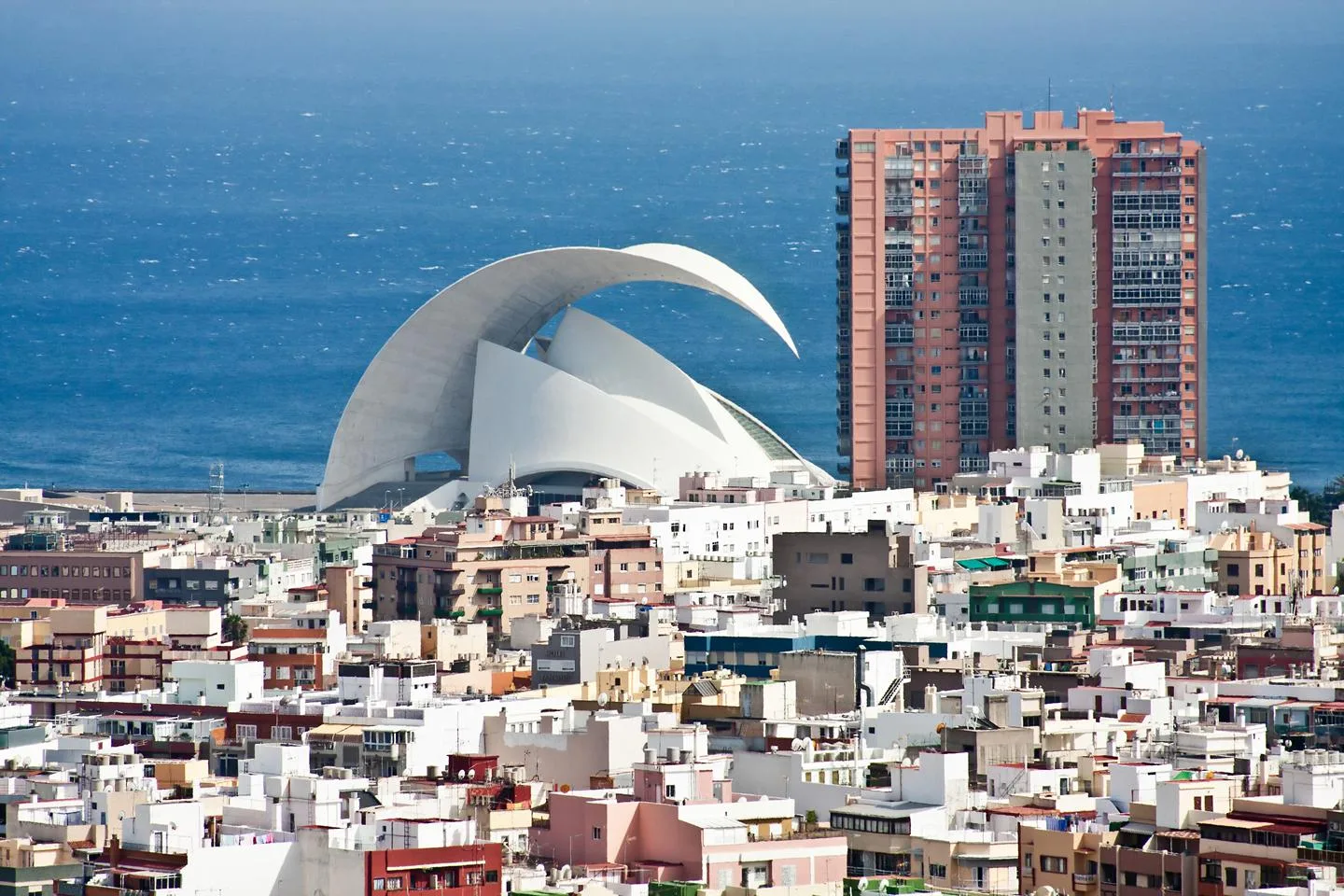
Santa Cruz de Tenerife is the island’s capital, yet it is largely ignored by tourists who stay confined to the beach resorts of the south. It is nonetheless a real Spanish city, lively all year round, with architecture that contrasts completely with the rest of the island: the Auditorio de Tenerife, designed by Santiago Calatrava, has become as recognisable a symbol as Teide on postcards.
If you only do beaches and nature excursions during your stay, you miss a different side of Tenerife: here, people come to stroll along the shopping streets, see a concert at the Auditorio, or simply have a coffee on a terrace among locals rather than tourists.
🎯 Key things to know
📍 Location: North-east Tenerife, capital of the island and of the Canary Islands (a status shared with Las Palmas)
🚌 Getting there from the south: TITSA bus line 111 from Costa Adeje (about 1h10, every 30 minutes), or by car via the TF-1 motorway
🅿️ Parking: Paid underground car parks in the city centre, free parking on the Puertos de Tenerife esplanade (near the port)
🏛️ On site: Auditorio de Tenerife, TEA, Plaza de España, Nuestra Señora de África market, Calle del Castillo
🏖️ Nearby: Playa de Las Teresitas, about 15 minutes by car
ℹ️ Good to know: A city that lives all year round, not only for tourists, and very lively during Carnival (February/March)
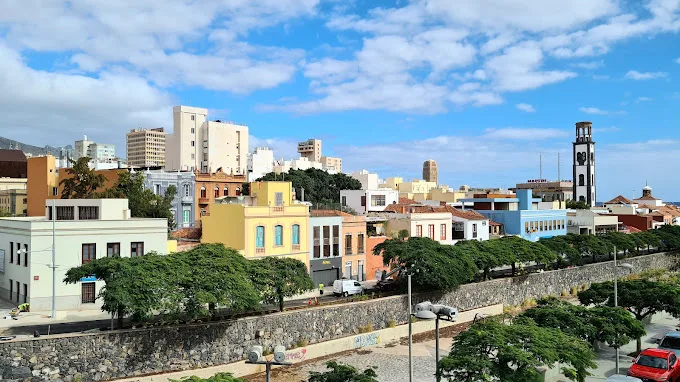
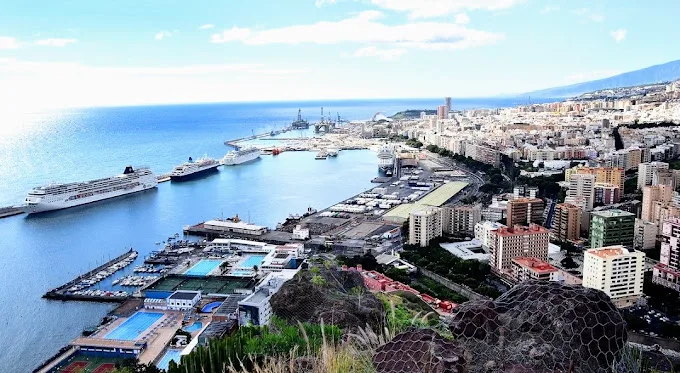
A capital too often ignored by tourists from the south
Santa Cruz has shared the status of capital of the Canary Islands with Las Palmas de Gran Canaria since 1927 (it was the sole capital between 1833 and 1927). The regional parliament and the main institutions are based here. With around 210,000 inhabitants, it is the second largest city in the archipelago, far ahead of the southern resorts, which live almost exclusively from tourism.
You feel this difference straight away as you walk around: the shops, bars and markets cater first and foremost to residents, not holidaymakers. That is precisely what makes it a good change of scene if you are spending several days on the coast.
The main sights
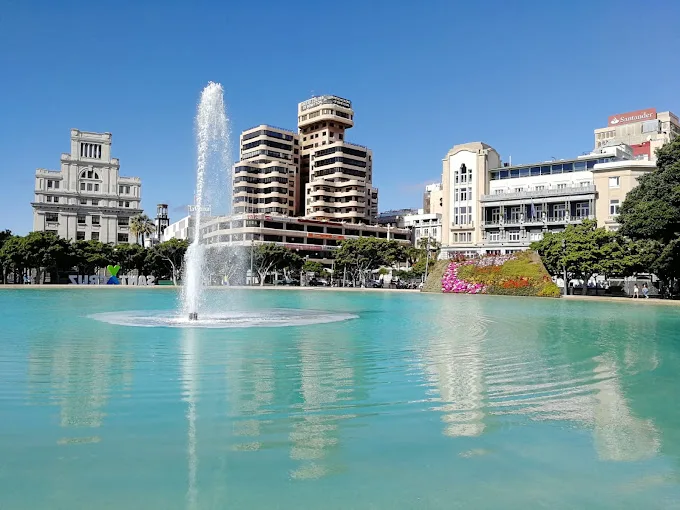
Plaza de España, recently redesigned by the Swiss architects Herzog & de Meuron, is the central landmark: its reflecting pool facing the sea has become a meeting place for locals and visitors alike. Right next to it, Calle del Castillo is the city’s main pedestrian shopping street.
The Auditorio de Tenerife, with its white wave-shaped structure designed by Santiago Calatrava (2003), is visible from much of the seafront and offers guided tours of its concert hall. Just opposite, the TEA (Tenerife Espacio de las Artes) is a contemporary art centre with free admission, a good permanent collection and temporary exhibitions. Parque García Sanabria, with its tropical gardens and sculptures, is a good spot for a break in the shade in the middle of the city.
For a taste of local life, head to the Nuestra Señora de África market, a historic covered market where producers, fishmongers and street food stalls rub shoulders (we have a separate article on it, because it is well worth the detour). Fans of military history or natural sciences can also go on to the military history museum (housed in a fortress from 1884) or the Museum of Nature and Archaeology.
Getting there from the south of the island
From Costa Adeje or Los Cristianos, TITSA bus line 111 runs directly from the bus station (Estación Costa Adeje) to the Santa Cruz Intercambiador in about 1h10, with a departure roughly every 30 minutes. It is the simplest option if you do not want to deal with parking in the city. By car, allow roughly the same journey time via the TF-1 motorway, a little more or a little less depending on rush-hour traffic.
Once there, the historic centre can be explored entirely on foot. For parking, several paid underground car parks are available in the city centre, and there is a free car park on the Puertos de Tenerife esplanade, near the port, about 15-20 minutes’ walk from the centre. The tram (line 1) also makes it easy to reach La Laguna from the centre of Santa Cruz, if you want to combine the two cities in the same day.
How much time to allow and when to go
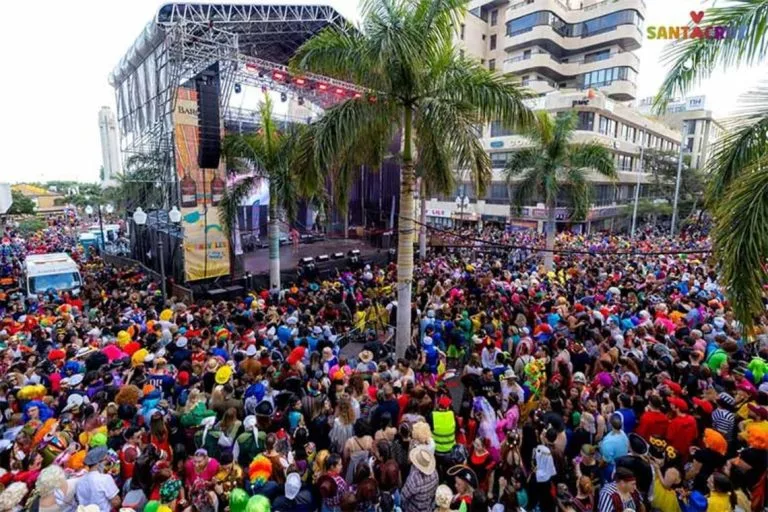
Allow half a day to see the essentials of the centre (Plaza de España, Calle del Castillo, the Auditorio, the TEA), and a full day if you want to add the market, a museum and a proper lunch break. Santa Cruz can be visited all year round, but if possible avoid the middle of the day in high summer (the pedestrian streets offer little shade): morning or late afternoon is more pleasant. If you are on the island during the Santa Cruz Carnival (usually in February or March), it is one of the biggest carnivals in the world after Rio’s, and Santa Cruz is completely transformed for a few days.
Nearby
Santa Cruz combines very well with a visit to San Cristóbal de La Laguna, about 40 minutes away by tram, or with an afternoon at the beach at Playa de Las Teresitas, about 15 minutes by car. If you have more time, Teide National Park and the Anaga massif are also accessible from Santa Cruz, although these are better planned as separate day trips.
Read also: the Tahodio Quarries hike, the Cueva Roja and the Palmetum of Santa Cruz, as well as our one-day Santa Cruz itinerary.
Torn between this city and the resort in the north? Read my comparison Santa Cruz or Puerto de la Cruz.
Still deciding where to base yourself? Compare the areas in our guide to where to stay in Tenerife.
Is Santa Cruz de Tenerife the capital of the island?
Yes. Santa Cruz de Tenerife is the capital of Tenerife, and it shares the status of capital of the Canary Islands with Las Palmas de Gran Canaria. La Laguna, close by, is the former capital. For a clearer picture, see our guide to the town centres of Tenerife (in French).
Where is the town centre of Santa Cruz de Tenerife?
The centre is organised around Plaza de España, facing the port, and Calle del Castillo, the main pedestrian shopping street. The Nuestra Señora de África market is within walking distance of the centre.
How long does it take to visit Santa Cruz de Tenerife?
Allow half a day for the essentials (Plaza de España, Calle del Castillo, the Auditorio, the TEA), and a full day if you want to add the market and a museum without rushing.
How do you get to Santa Cruz de Tenerife from Costa Adeje or Los Cristianos?
The simplest way is TITSA bus line 111, which runs directly from Costa Adeje to Santa Cruz in about 1h10, with a departure every 30 minutes. By car, allow a similar time via the TF-1 motorway.
Where can you park in Santa Cruz de Tenerife?
There are several paid underground car parks in the city centre. There is also a free car park on the Puertos de Tenerife esplanade, near the port, 15-20 minutes’ walk from the centre.
Is Santa Cruz de Tenerife worth the detour compared with the tourist south?
Yes, it is a completely different atmosphere from the beach resorts of the south: a real Spanish city that lives all year round, with striking architecture (the Auditorio de Tenerife in particular) and authentic local life.
Read also: the city centre of Tenerife: how to find your bearings.