


Life in Tenerife: understanding everyday life on the island
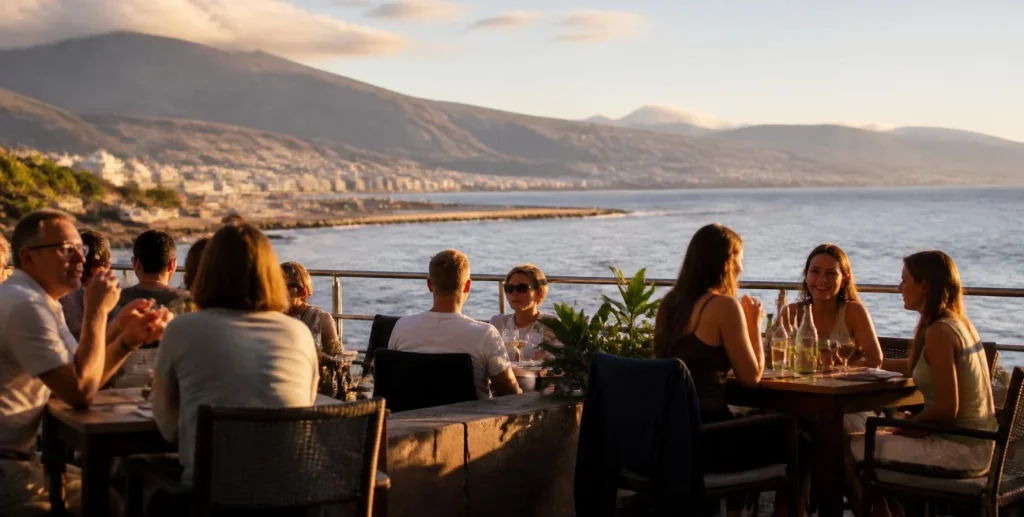
Tenerife isn’t only a destination where you come for a few days in the sun. It’s also an island where people live all year round, with its own habits, rhythm, culture and differences from one region to another.
Whether you’re coming on holiday, thinking about staying for several months or considering moving to Tenerife, this page gives you an overview of what you need to know about everyday life on the island.
Contents
- What is life in Tenerife like?
- Habits and pace of life
- Are locals really friendlier?
- Tenerife vs France: the main differences
- The cost of living in Tenerife
- Where to live in Tenerife?
- A little history and culture
- Working or remote working in Tenerife
- What if you want to move to Tenerife?
- The pros and cons of living in Tenerife
What is life in Tenerife like?
Tenerife offers a lifestyle quite different from the one you may know in France. The climate lets you enjoy the outdoors much more often, and terraces, walks, beaches, markets and restaurants are naturally part of daily life.
But Tenerife shouldn’t be reduced to its seaside resorts. The island also has towns and villages with real local life all year round.
The atmosphere can change completely from one place to another. The south is very touristy and international, while some towns and villages in the north have a more local, traditional feel.
Habits and pace of life
As in the rest of Spain, habits can differ from what people from France and Belgium are used to.
Meals are generally eaten later, evenings often start later, and time with family or friends plays an important part in daily life.
The climate also plays a major role. With pleasant temperatures for much of the year, it’s much easier to live outdoors, meet friends on a terrace, play sport or simply enjoy a walk.
Are locals really friendlier?
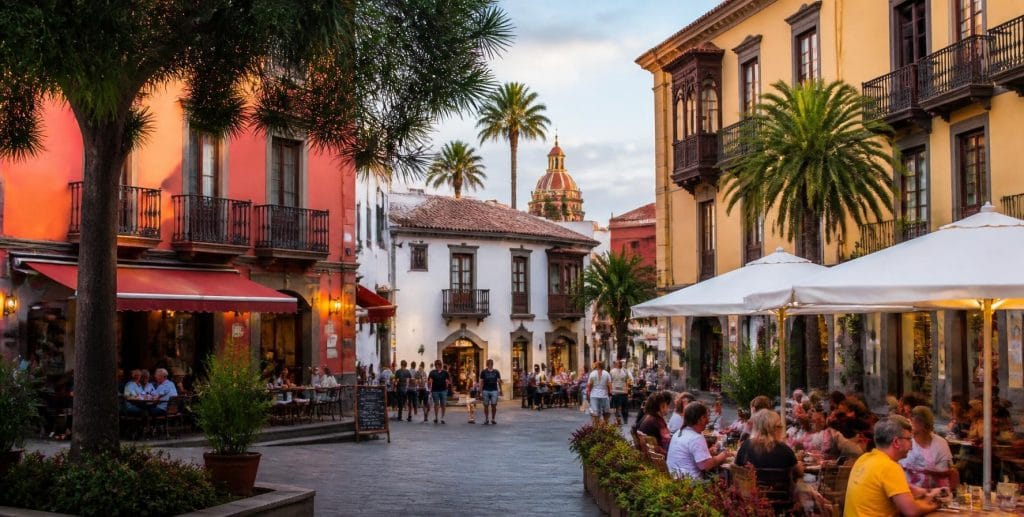
It’s a question many people ask before coming to Tenerife.
Canarians have a reputation for being welcoming and warm, but it would obviously be impossible to generalise about a whole population.
The experience can also be very different depending on where you are. In tourist areas, locals and professionals are used to welcoming visitors from all over the world. In more local areas, knowing a few words of Spanish can quickly make conversations easier.
One thing is certain: getting away from the most touristy areas lets you discover another side of Tenerife and have more contact with the local people.
Tenerife vs France: the main differences
For someone coming from France or Belgium, some differences are quickly noticeable.
The climate
The climate is obviously one of the biggest changes.
But be careful: there is not just one kind of weather in Tenerife. The south is generally drier and sunnier, while the north is wetter and much greener.
Altitude also makes a huge difference. Conditions can be completely different between the coast and the heights of Teide.
A life more focused on the outdoors
The climate lets you spend a lot of time outside.
Beaches, walks, terraces, hikes, markets, sports and water activities can easily be part of everyday life.
It’s probably one of the differences that visitors from France notice most quickly.
Schedules and habits
Spanish schedules can also come as a surprise.
Meals and nights out are generally later than in France. After a few days you get used to it quickly and often end up adopting the rhythm.
The cost of living in Tenerife
The cost of living is probably one of the subjects that needs the most nuance.
Some expenses can be lower than in France, while others, especially housing in the most sought-after areas, can be particularly high.
So don’t set off with the idea that everything is cheaper in Tenerife.
⛽ Fuel
Fuel prices are generally lower than in France, notably because of the Canary Islands’ special tax regime.
🍴 Restaurants
Restaurants can be more affordable than in France, especially in local places and away from the most expensive tourist areas.
However, prices can vary enormously between a local restaurant and one in a very touristy area.
🛒 Groceries
Food prices are fairly variable.
Some local products can be good value, while some imported products can be relatively expensive.
📱 Internet, phone and subscriptions
There are plenty of phone and internet offers.
For European travellers, roaming may also let you use your usual plan, depending on your operator’s conditions.
🏠 Housing
This is probably the point that deserves the most attention.
In the most sought-after areas, especially in the south of Tenerife, housing prices can be high and the rental market is tight.
Housing can therefore represent a large share of the budget for someone who wants to live on the island.
Where to live in Tenerife?
Tenerife offers very different environments depending on the area.
So there isn’t necessarily one best place for everyone: it all depends on your lifestyle, your budget and what you’re looking for.
Costa Adeje
A very touristy seaside resort in the south of Tenerife, Costa Adeje is known for its hotels, beaches, restaurants, shops and infrastructure.
The atmosphere is very international and the climate particularly pleasant.
Los Cristianos
Also very touristy, Los Cristianos has plenty of restaurants, shops and services.
Its port is also an important hub for connections to the other Canary Islands.
Playa de las Américas
Playa de las Américas is one of the liveliest areas in the south.
The resort is particularly known for its restaurants, bars and nightlife.
Santa Cruz de Tenerife
Santa Cruz is the capital of Tenerife.
The atmosphere is very different from the seaside resorts in the south: you find real city life here, with shops, restaurants, offices, cultural events and year-round residents.
San Cristóbal de La Laguna
La Laguna is a historic city known for its architecture, its old town and its cultural, student atmosphere.
Puerto de la Cruz
Located in the north, Puerto de la Cruz has a different atmosphere from the big tourist resorts in the south.
The town is known for its heritage, its natural pools and its greener surroundings.
🌿 Northern Tenerife
The north is generally greener and wetter.
There are many villages, farmland landscapes and an atmosphere that is often more local.
☀️ Southern Tenerife
The south is generally drier and sunnier.
It is also the part of the island where tourism is most developed, with plenty of hotels, restaurants, shops and activities.
A little history and culture
To understand Tenerife, it also helps to know a few things about its history.
Before the conquest
Before the Spanish conquest, the island was inhabited by the Guanches, the indigenous people of the Canary Islands.
Late 15th century
The Spanish conquest of Tenerife took place at the end of the 15th century. The island was then incorporated into the Crown of Castile and gradually underwent profound changes.
Today
Today, Tenerife is part of Spain while keeping a very strong Canarian identity.
This identity can be seen in the food, the traditional festivals, the music, the architecture and the many popular events held throughout the year.
The Santa Cruz de Tenerife Carnival is one of the most important events on the island. All the dates and practical information for Carnival 2027
Meeting people in Tenerife
Tenerife is a very international island.
In some areas, especially in the south, you’ll meet people from Spain but also from the United Kingdom, Germany, Italy, France, Belgium and many other countries.
For someone arriving alone or who simply wants to meet people, activities, events, online groups and local communities can be good ways to make contacts.
🤝 Join our Tenerife With Love WhatsApp group
Are you coming to Tenerife, already living on the island or preparing to move?
We created a WhatsApp group so that French speakers can chat, ask questions, share their favourite places and meet other people interested in Tenerife.

🌴 Tenerife With Love 🇮🇨
The group for French speakers in Tenerife ❤️
Tips, outings, hikes, restaurants, secret spots, meet-ups and mutual help.
Here, we share our discoveries and enjoy Tenerife together ☀️🌊
Working or remote working in Tenerife
Tenerife also attracts many people who work remotely, grow their business or want to enjoy a different environment.
Remote work, freelancing and coworking can be interesting options for some people.
The local job market, meanwhile, is closely tied to the tourism, services and retail sectors.
Knowing Spanish can also be important depending on the job and the type of activity you’re looking for.
Work and remote work in Tenerife
We will soon expand on this topic with more detailed information for those who want to work or grow their business from Tenerife.
What if you want to move to Tenerife?
Spending a few weeks in Tenerife and living there all year round are two very different things.
The NIE is an identification number used in many administrative procedures in Spain.
But the NIE is not a residence permit in itself, and the procedures depend on your situation.
For now, this page only gives the broad outlines. We will gradually expand on each of these topics in dedicated guides.
The pros and cons of living in Tenerife
The strong points
- ☀️ A pleasant climate for much of the year
- 🌊 The sea and the beaches
- 🥾 Exceptional and very varied nature
- 🌋 Teide and the volcanic landscapes
- 🍴 Local food to discover
- 🌴 A life more focused on the outdoors
- 🌍 An international population
- ✈️ A connection with Europe
Things to take into account
- 🏠 Housing can be very expensive in some areas
- 🚗 A car can be very useful for exploring the island
- 🌦️ The weather varies enormously from one area to another
- 🏝️ Some areas are very touristy
- 💼 The local job market can be unusual
- 🌊 Island life can weigh on you day to day
- 🗣️ Spanish becomes important as soon as you leave the very touristy areas
Frequently asked questions about life in Tenerife
Is the cost of living in Tenerife lower than in France?
It depends on the spending category.
Some things cost less, like fuel (around 30% less than in France), but others, especially housing in the most sought-after areas, can be more expensive.
So don’t set off with the idea that everything is cheaper in Tenerife.
Where should you live in Tenerife?
It depends on what you want.
Costa Adeje and Playa de las Américas suit seaside and nightlife living, Los Cristianos the port and shops, or Santa Cruz de Tenerife, the island’s capital.
Each area has its own atmosphere.
What is the climate difference between the north and south of Tenerife?
The north is generally greener and wetter, with an atmosphere that is often more local.
The south is drier and sunnier, and it is also the part of the island where tourism is most developed, with plenty of hotels, restaurants and shops.
Can you work remotely in Tenerife?
Yes, Tenerife attracts many people who work remotely.
Remote work, freelancing and coworking can be interesting options, even though the local job market remains closely tied to the tourism, services and retail sectors.
What procedures are needed to move to Tenerife?
Moving means thinking about housing, income, health, insurance, administrative procedures, banking, your car and taxes.
The NIE, an identification number used in many administrative procedures in Spain, is one thing to plan for, but it is not a residence permit in itself.
Are people in Tenerife really friendly?
Canarians have a reputation for being welcoming, even though it would be impossible to generalise about a whole population.
The experience can vary depending on where you are: in tourist areas, locals are used to welcoming visitors from all over the world, while getting away from the most touristy areas often means more contact with the local population.