

Teide at Sunrise: My Night Ascent to the Summit
Climbing Teide at night to reach the summit at sunrise is a completely different experience from a regular hike. You set off at 1:30 am, spend several hours in the dark with the stars overhead and the mountain silent around you, then the first colours of the day arrive and the giant shadow of the volcano appears in the atmosphere.
I did it on 7 May 2025, on my first ascent of Teide. And it is clearly an experience I would repeat.
🎯 Essentials
📍 Start: Montaña Blanca car park
🕐 Start time: around 1:30 am
🏔️ Summit arrival: around 6:50 am
⏱️ Total time: around 10.5 hours
📏 Distance: around 19 km round trip
⛰️ Elevation gain: around 1,400 m
🎟️ Permits: PNT 07 + PNT 10
🌬️ Bring warm clothing and wind protection
🔦 A headlamp is essential
📈 Elevation profile
around 19 km round trip around 1,400 m of elevation gain · GPS track from 7 May 2025
Profile smoothed from my GPS track (start and finish at around 2,360 m), made symmetrical because the round trip follows the same path. The summit altitude is aligned with the official height of Teide (3,715 m).
Contents
👉 Why climb Teide at sunrise?
👉 Setting off at 1:30 am: a different atmosphere begins
👉 A longer climb than it looks
👉 The wind: probably not the best day
👉 A break with other hikers before the summit
👉 The first lights appear
👉 Teide’s shadow: the show I did not expect
👉 Then the sun appears
👉 Don’t stay at the summit too long
👉 What gear should you bring for a night ascent?
👉 The permits to reach the summit
👉 Do I recommend the Teide sunrise?
👉 Would I do it again?
Why climb Teide at sunrise?
Originally, I hadn’t specifically planned to do Teide at sunrise.
It was simply one of the options I had left when I looked at the available slots to reach the summit. But as I read up on it, I discovered the experience could be really different from a classic ascent.
So I decided to give it a go.
The idea is simple: set off in the middle of the night from Montaña Blanca, climb for several hours in the dark and reach the summit before the sun rises.
On paper, it sounds a bit unusual.
In reality, it’s precisely this night-time climb that makes the experience so special.
Setting off at 1:30 am: a different atmosphere begins
The day before, I had packed my bag and tried to rest for a few hours.
Except that, with the adrenaline, I barely slept at all.
I got to the Montaña Blanca car park at around 1:15 am. Luckily, I found a space right next to the start of the trail.
At 1:30, we were off.
The first few minutes are fairly easy. The moon even gave a bit of light at times. After that, the headlamp becomes essential.
And then the atmosphere changes completely.
You walk in the dark, with only the beam of your lamp in front of you. Around you, almost no sound. Above you, a sky full of stars.
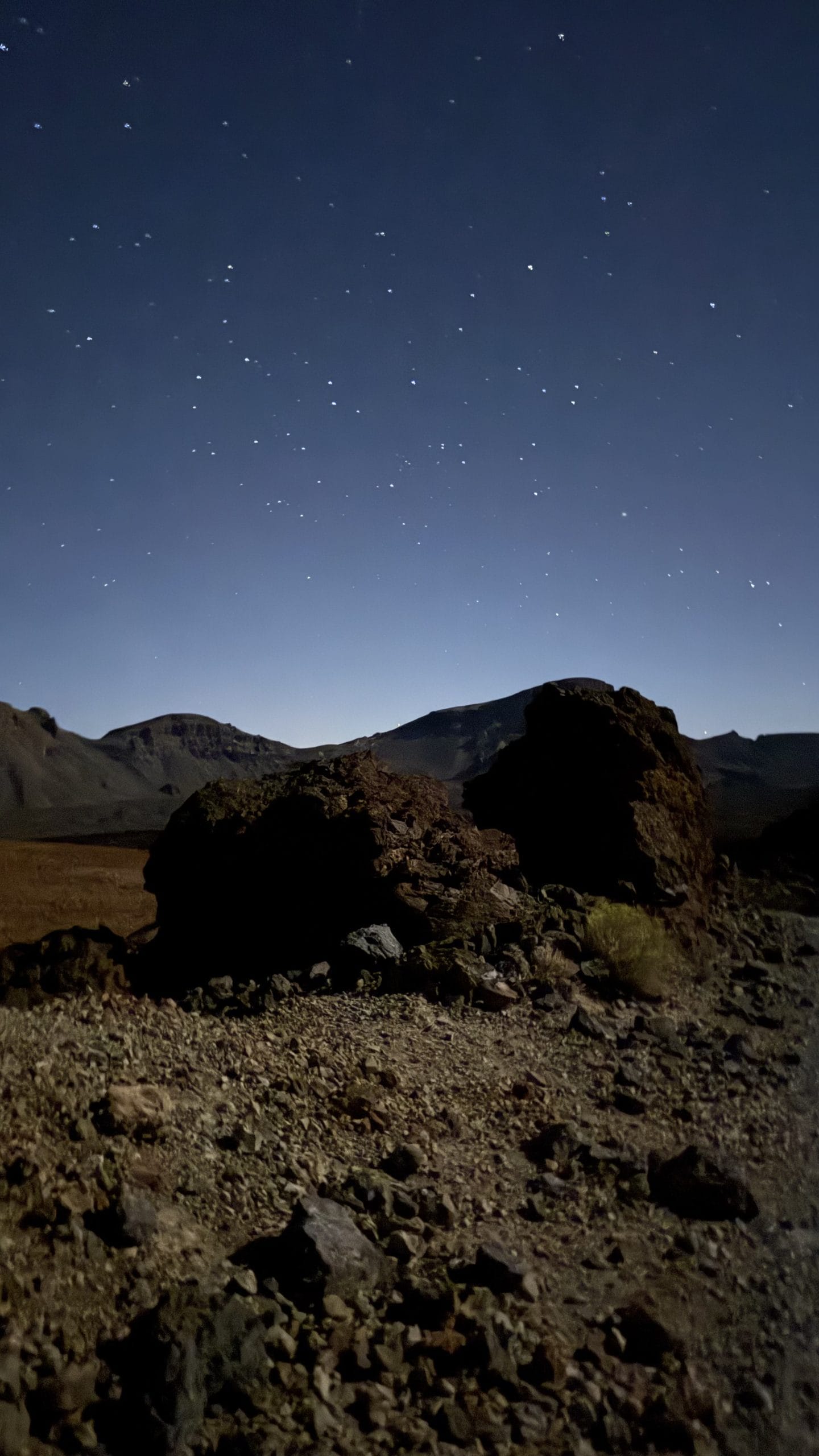
The trail is well marked and I had my GPS track on AllTrails, so I had no particular trouble finding my way.
I passed a few groups during the climb, some faster, some slower. It also means you don’t feel completely alone in the middle of the mountain.
A longer climb than it looks
The route goes via Montaña Blanca before reaching La Rambleta, then the PNT 10 trail takes you on to the summit of Teide.
In total, count on around 19 km round trip, with about 1,400 m of elevation gain depending on the exact route.
For me, the climb took about 4.5 hours.
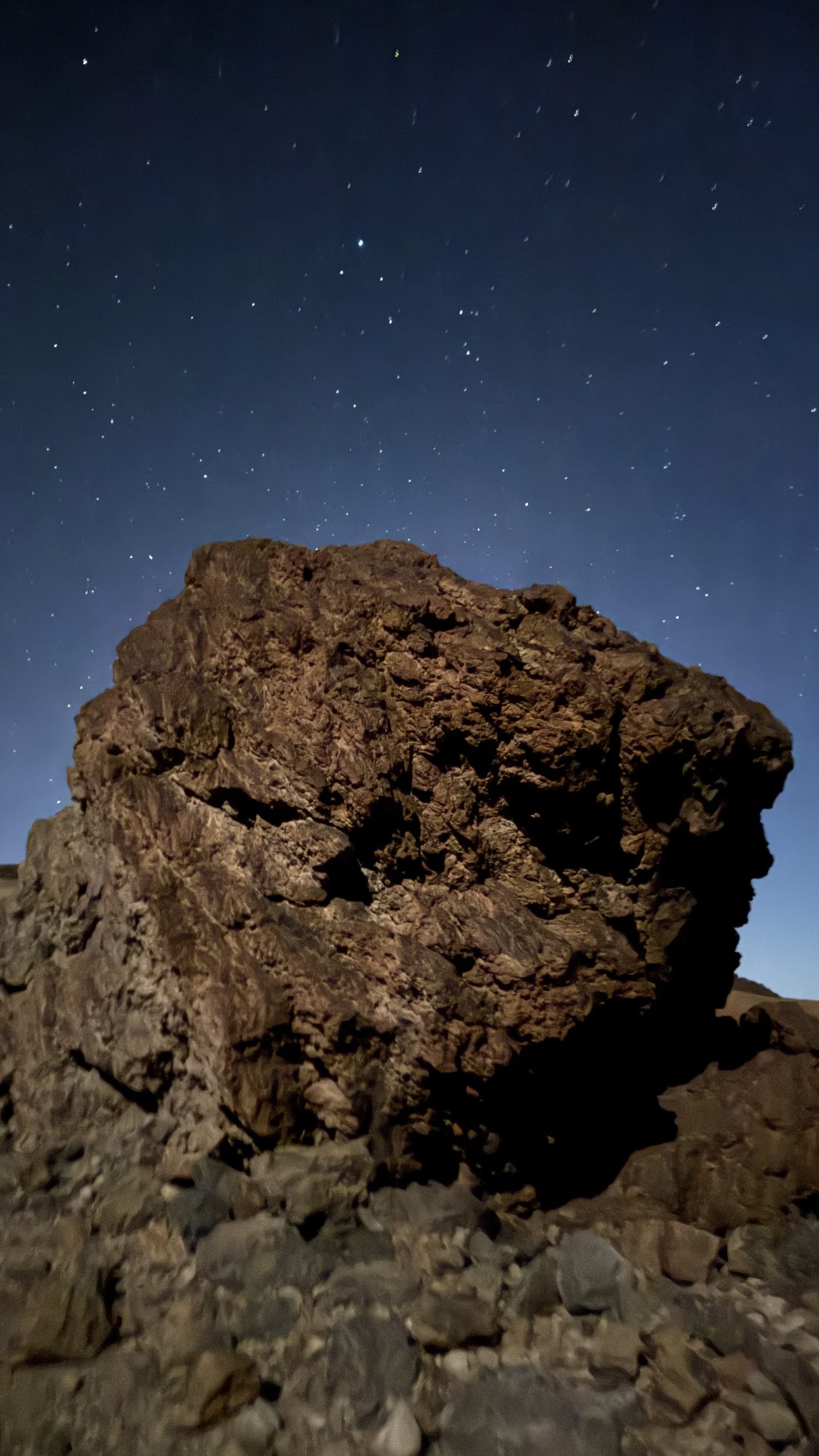
The beginning goes fairly well. But the higher you go, the more demanding the terrain becomes, especially with the altitude and the tiredness.
And there is always a moment when you start wondering what on earth you are doing there.
That is exactly what happened to me.
Especially with the wind we had that day.
The wind: probably not the best day
I knew it would be cold, so I had planned the right gear.
What I hadn’t really anticipated, however, was the strength of the wind.
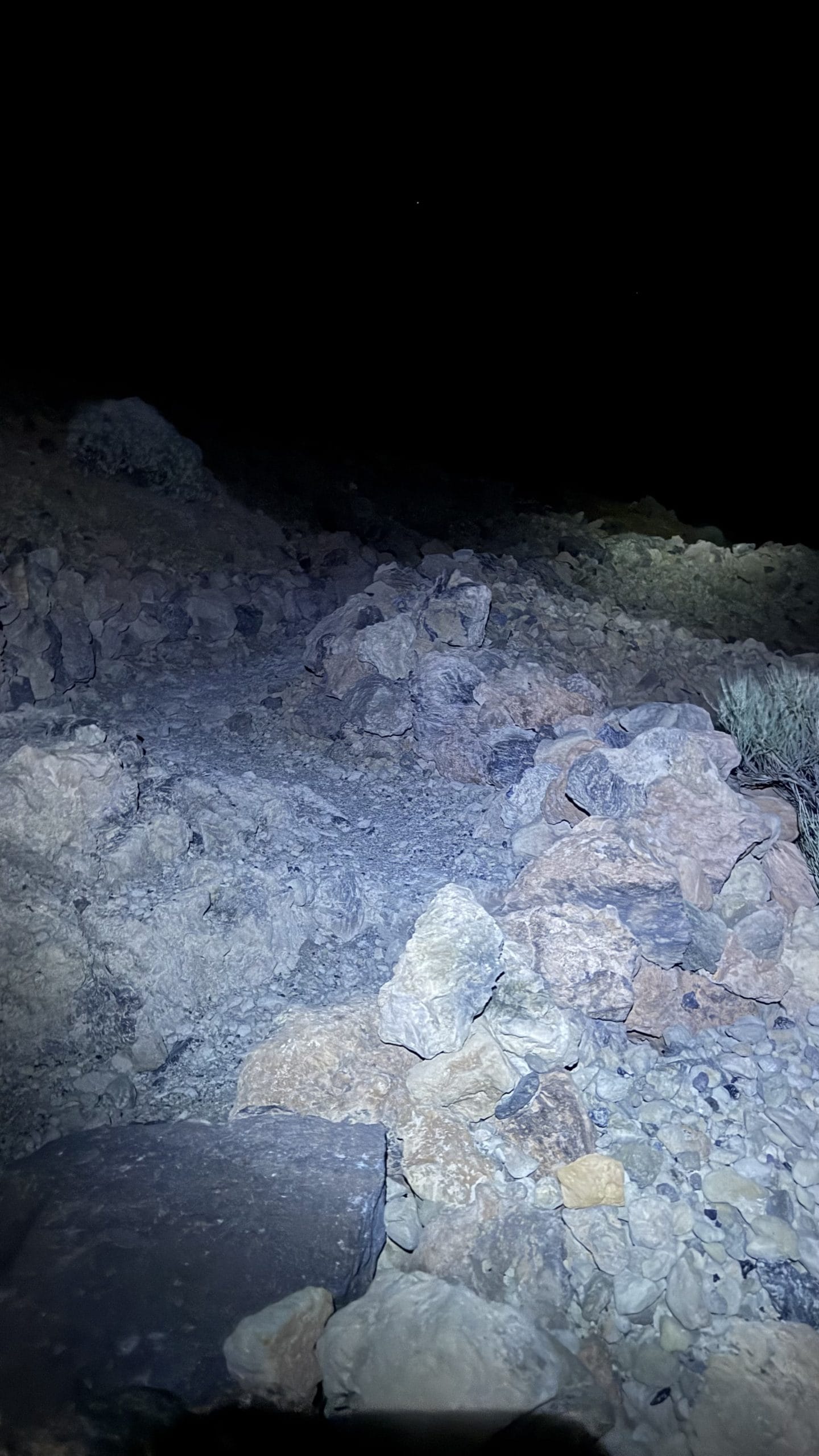
The closer we got to the summit, the stronger the gusts became. In some places they were strong enough to slow us down and push us slightly. We sometimes sheltered behind rocks before carrying on.
Nothing that made me give up, but it inevitably makes the last few kilometres harder.
Looking back, I also think we probably hit a particularly windy day. Conditions can of course be very different from one day to the next.
A break with other hikers before the summit
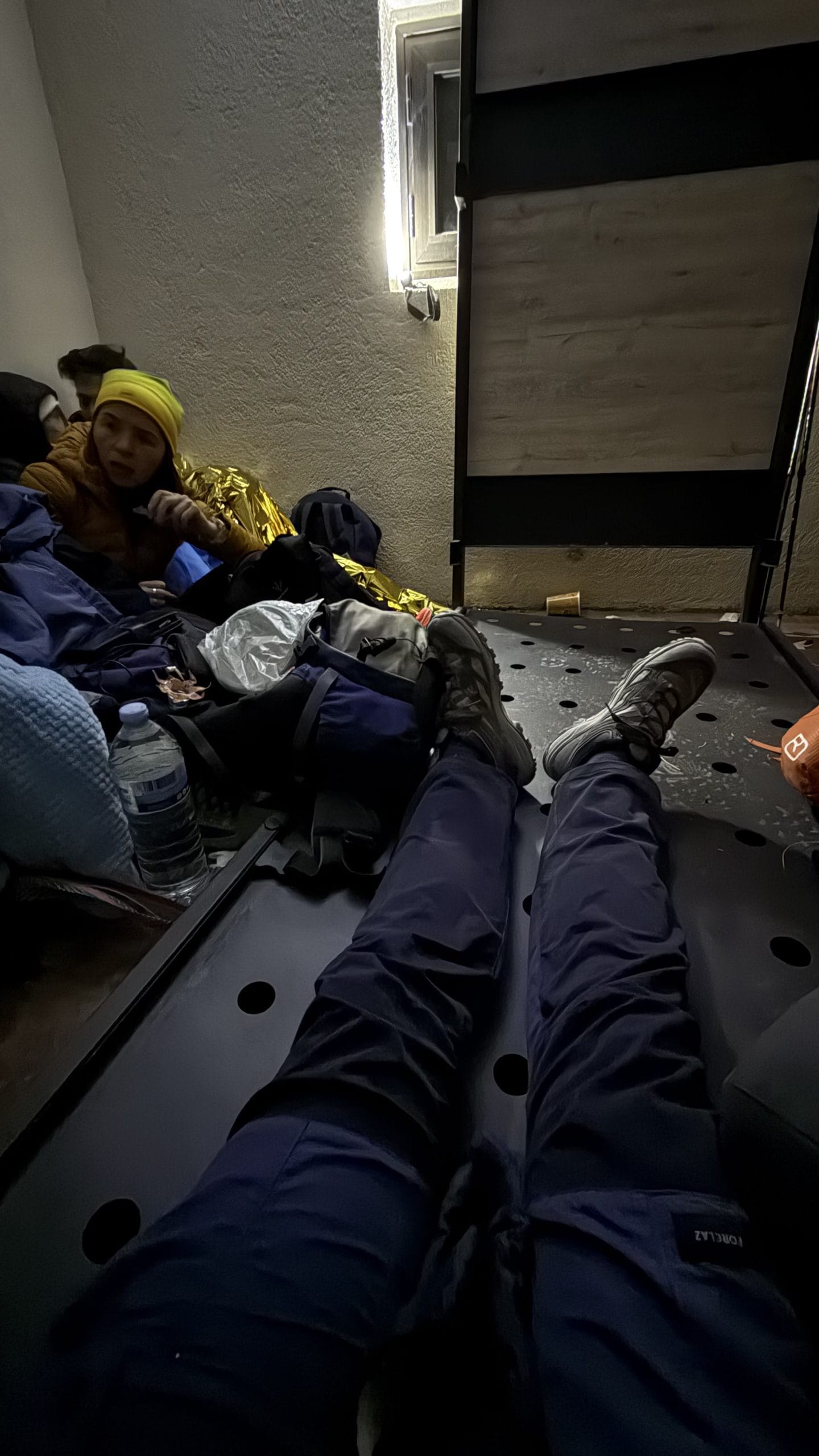
As we approached the Altavista refuge, we met up with about ten other hikers.
We ended up grouping together and took a break of about 20 to 30 minutes in a sheltered spot between four walls.
The aim was twofold: to recover a little and, above all, to avoid reaching the summit far too early.
With the cold and the wind, waiting for a long time outside wouldn’t really have been worth it.
This break was also a good moment to regain some strength and chat with other hikers. Everyone had more or less the same goal: reach the summit before sunrise.
From there, we continued together for part of the climb.
The first lights appear
Around 6:15 am, the sky starts to change.
After several hours in the dark, watching the first colours gradually appear is pretty incredible.
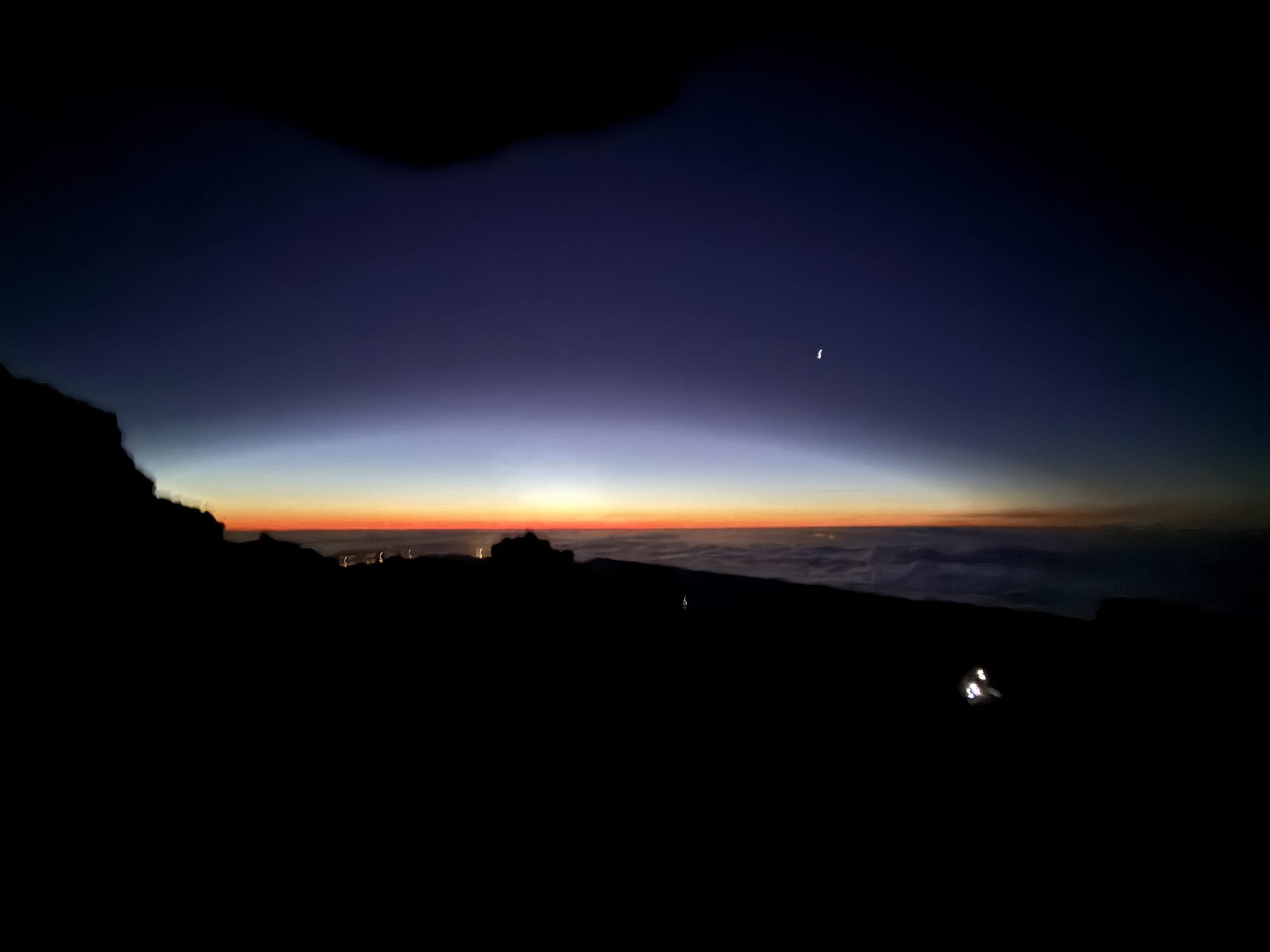
I reached the top at around 6:50 am.
There is still a little time before sunrise, but the wait is part of the experience.
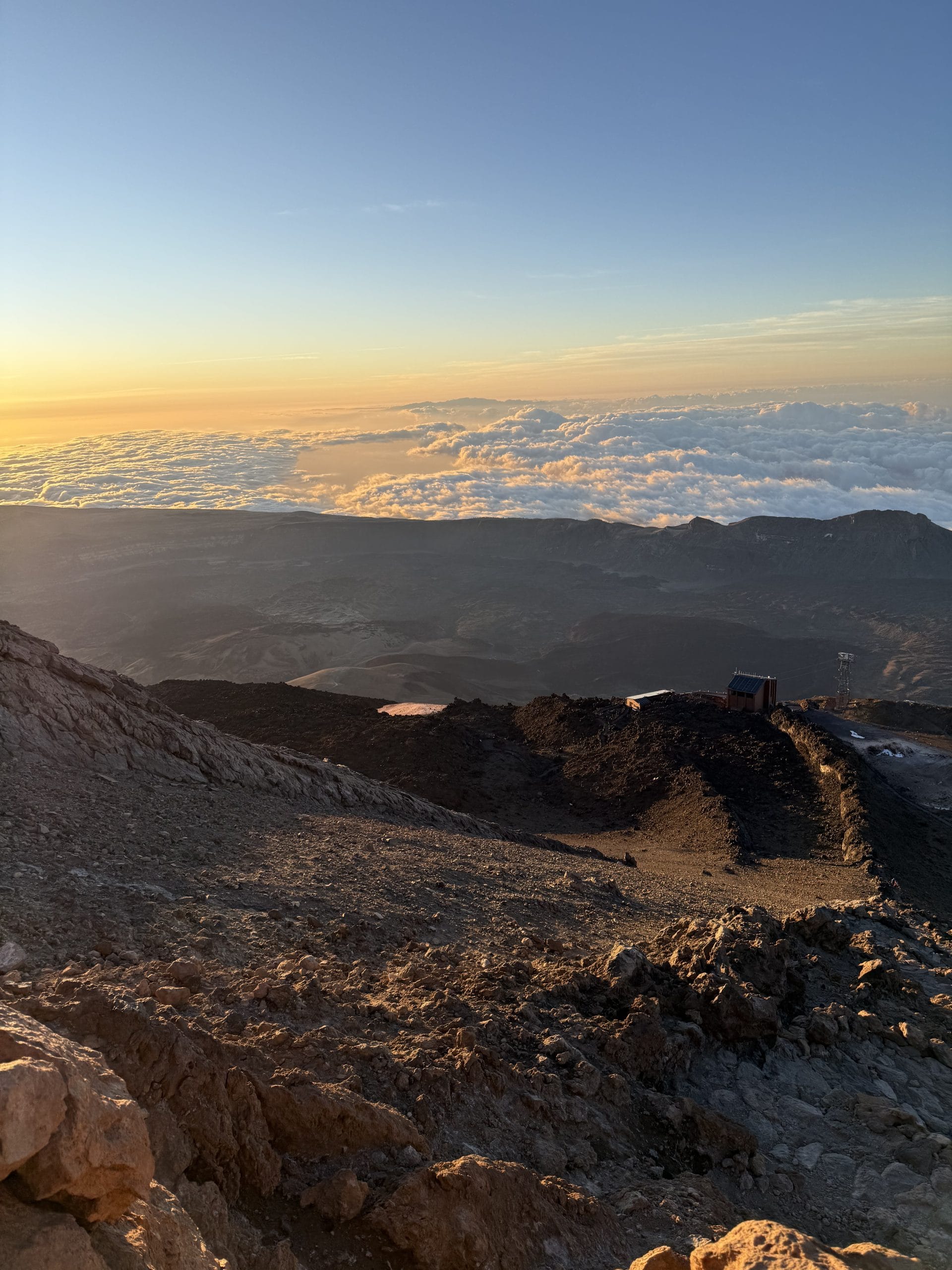
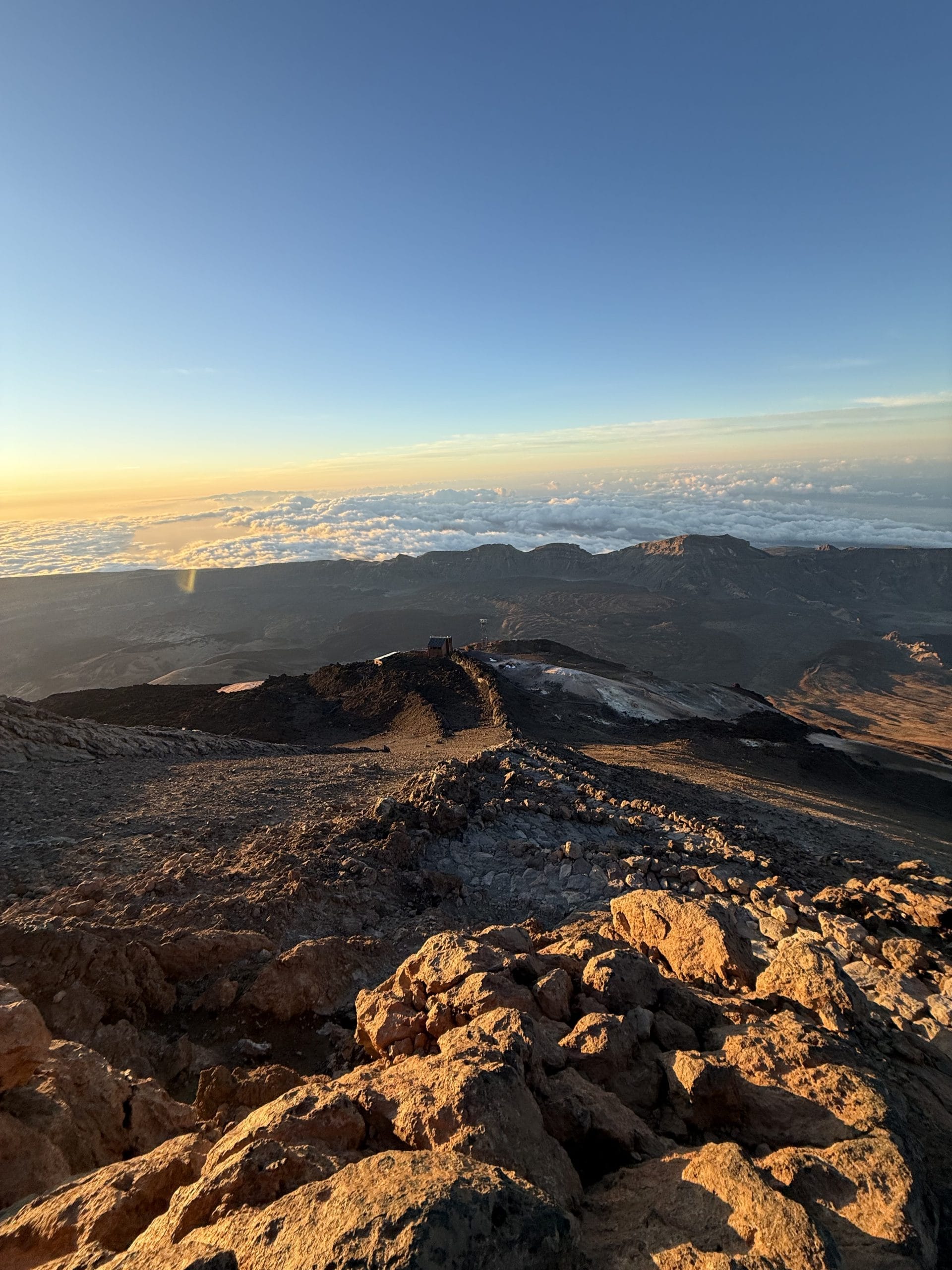
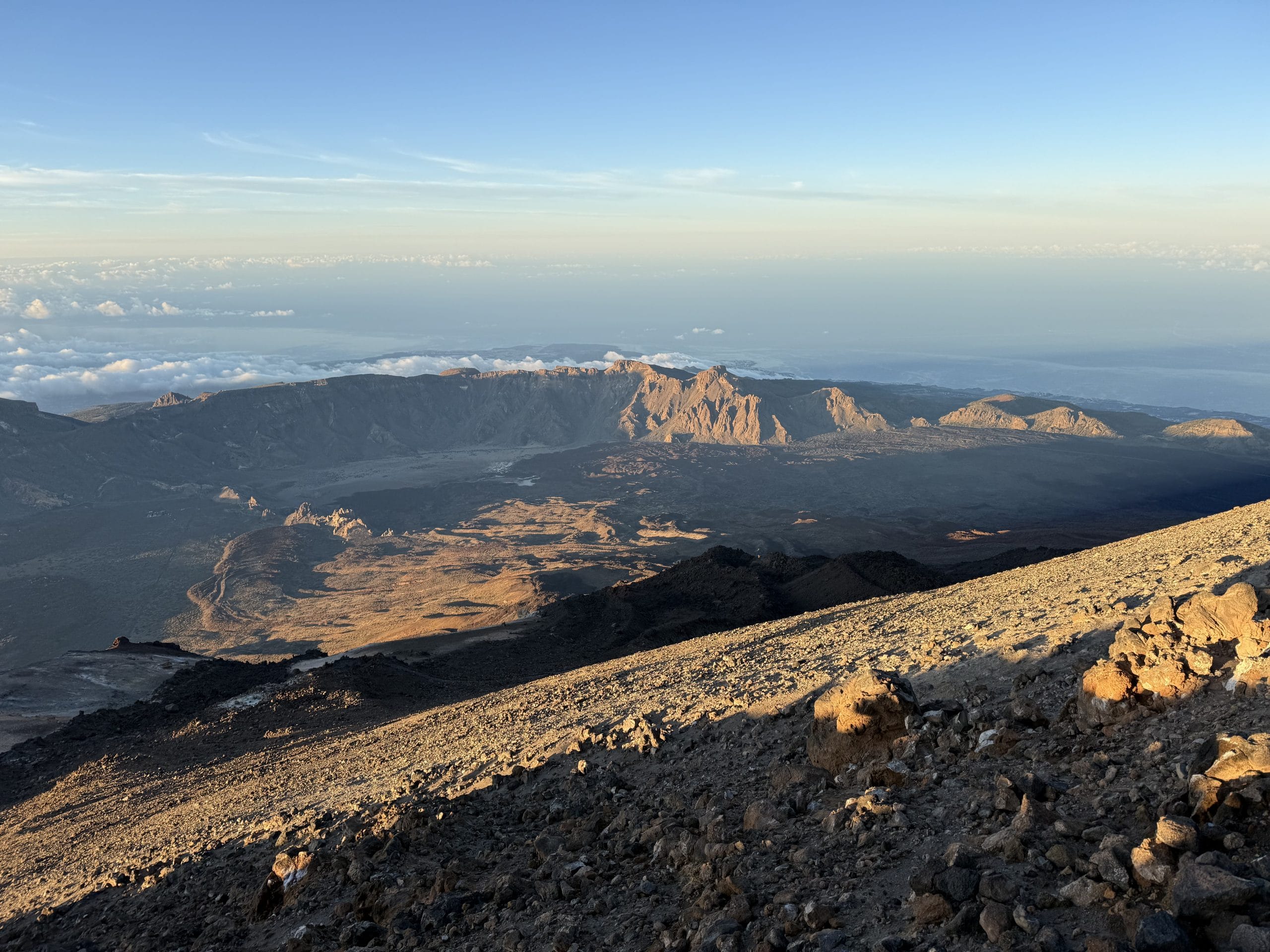
The sea of clouds covers part of the island, while the horizon stays clear further away.
Then the colours gradually turn warmer.
Orange, red, yellow…
The landscape you have been walking through for hours in the dark finally appears before your eyes.
And you understand why some people choose precisely this time to climb.
Teide’s shadow: the show I did not expect
But the moment that probably struck me most wasn’t even the sunrise.
It’s what happens on the other side.
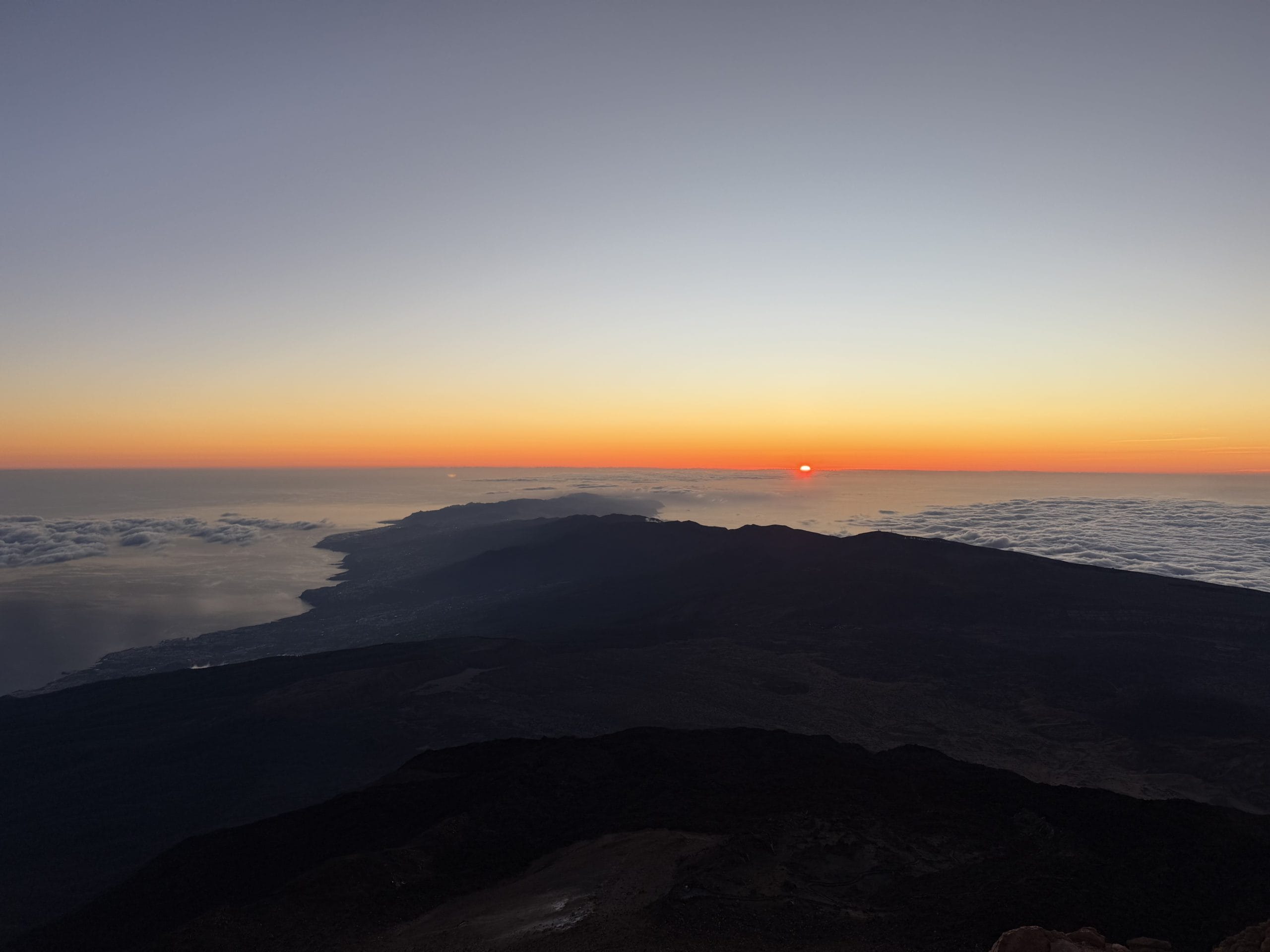
I turned around and saw a huge triangular shape projected into the atmosphere.
The shadow of Teide.
I knew the phenomenon existed because I had already seen photos, but I had completely forgotten about it at that moment.
And seeing it for real from the summit is pretty astonishing.
The triangular shape of the volcano appears projected far away into the atmospheric haze, giving the impression of a gigantic shadow of Teide in the sky.
This is also why you need to look behind you: the shadow appears opposite the sun.
The sun rises in the east, while the volcano’s shadow is cast in the opposite direction.
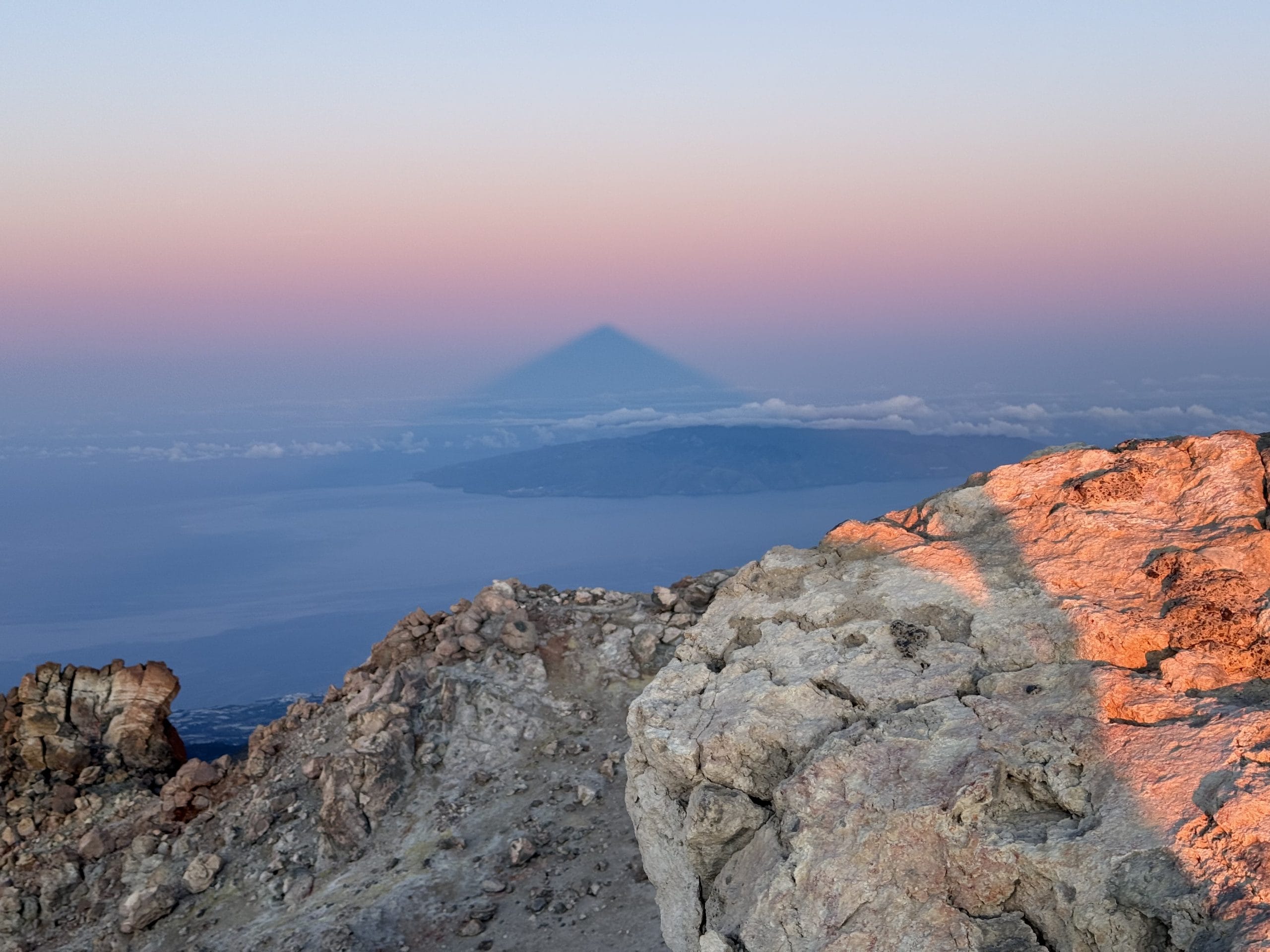
For me, it’s really one of the most impressive natural phenomena I have seen in Tenerife.
Then the sun appears
And finally, the sun starts to rise above the horizon.
The colours change again.
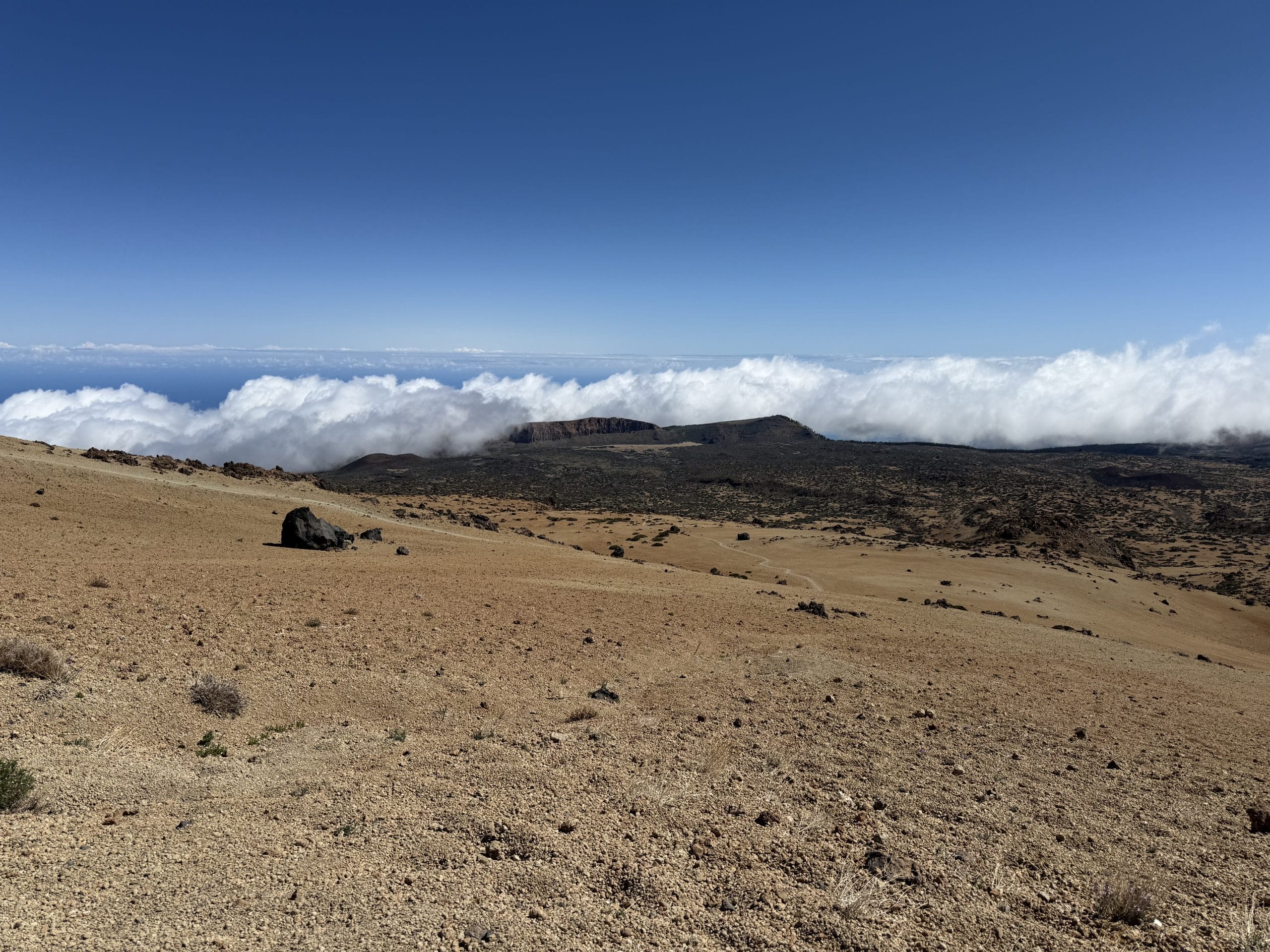
The sea of clouds below, the relief of Tenerife, the clear horizon and that light slowly arriving create an atmosphere that is hard to explain.
It’s one of those moments where you somewhat forget the four hours of climbing you have just done.
You simply enjoy the landscape.
And after several hours in the dark, watching the sun appear from the summit of Spain’s highest volcano inevitably feels special.
Don’t stay at the summit too long
The problem is that the wind was still there.
So we headed back down about 10 to 15 minutes after sunrise.
Before properly starting the descent, we took a short break near the cable car station, sheltered from the wind and in the sun.
It was a chance to eat a little and enjoy the warmth for a few minutes.
Then it was time to head down.
And contrary to what you might think, the descent isn’t necessarily the easiest part.
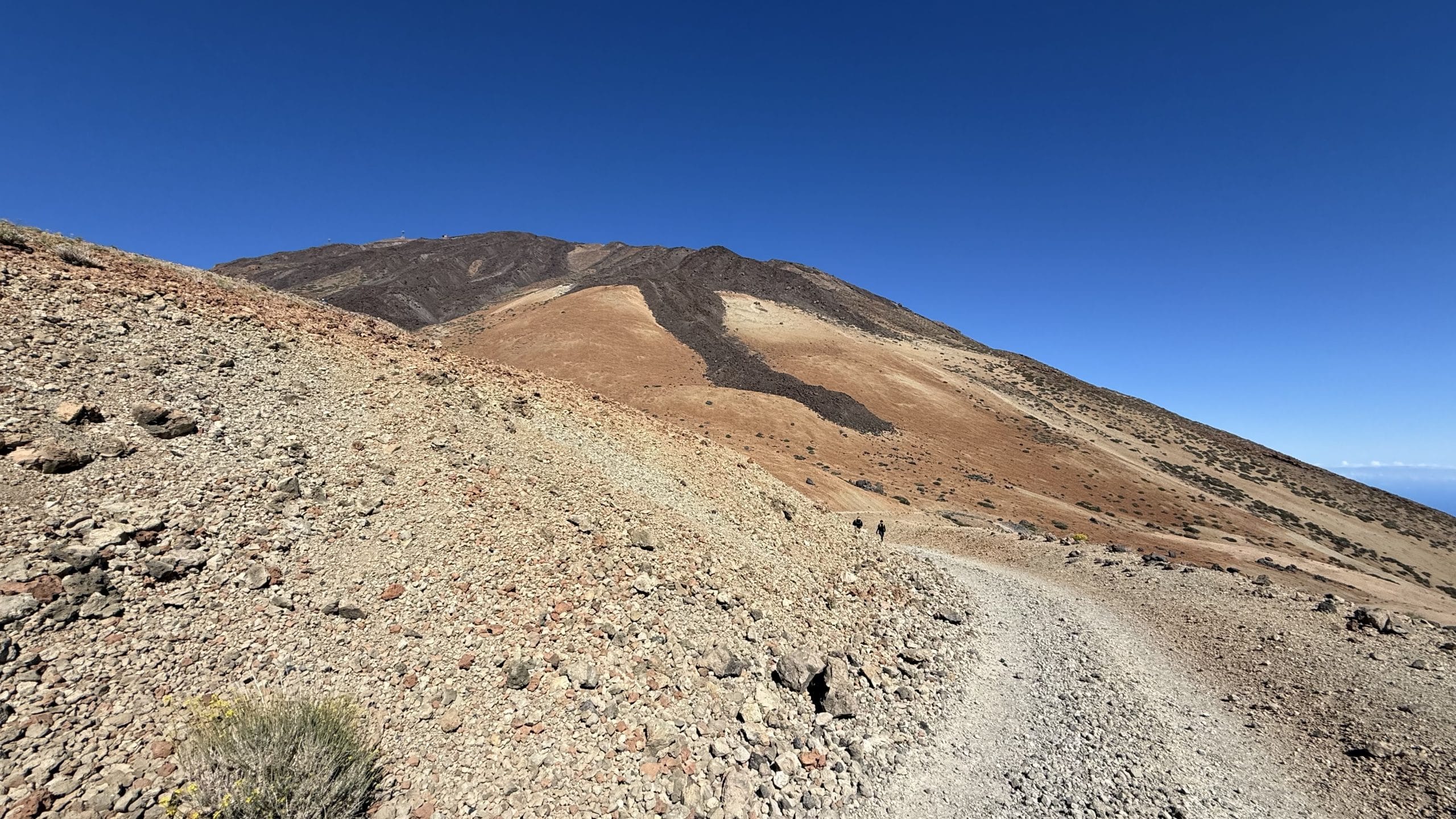
After a night with almost no sleep and several hours of climbing, your legs start to get tired. The descent also works the muscles differently, and the kilometres end up taking their toll.
I finally got back to the car park around noon.
In total, about 10.5 hours between setting off and getting back.
What gear should you bring for a night ascent?
For this experience, I would clearly not set off with the gear of a classic hike in Tenerife.
Temperatures can be very low at the summit and conditions can change quickly.
Here is what I had in my bag:
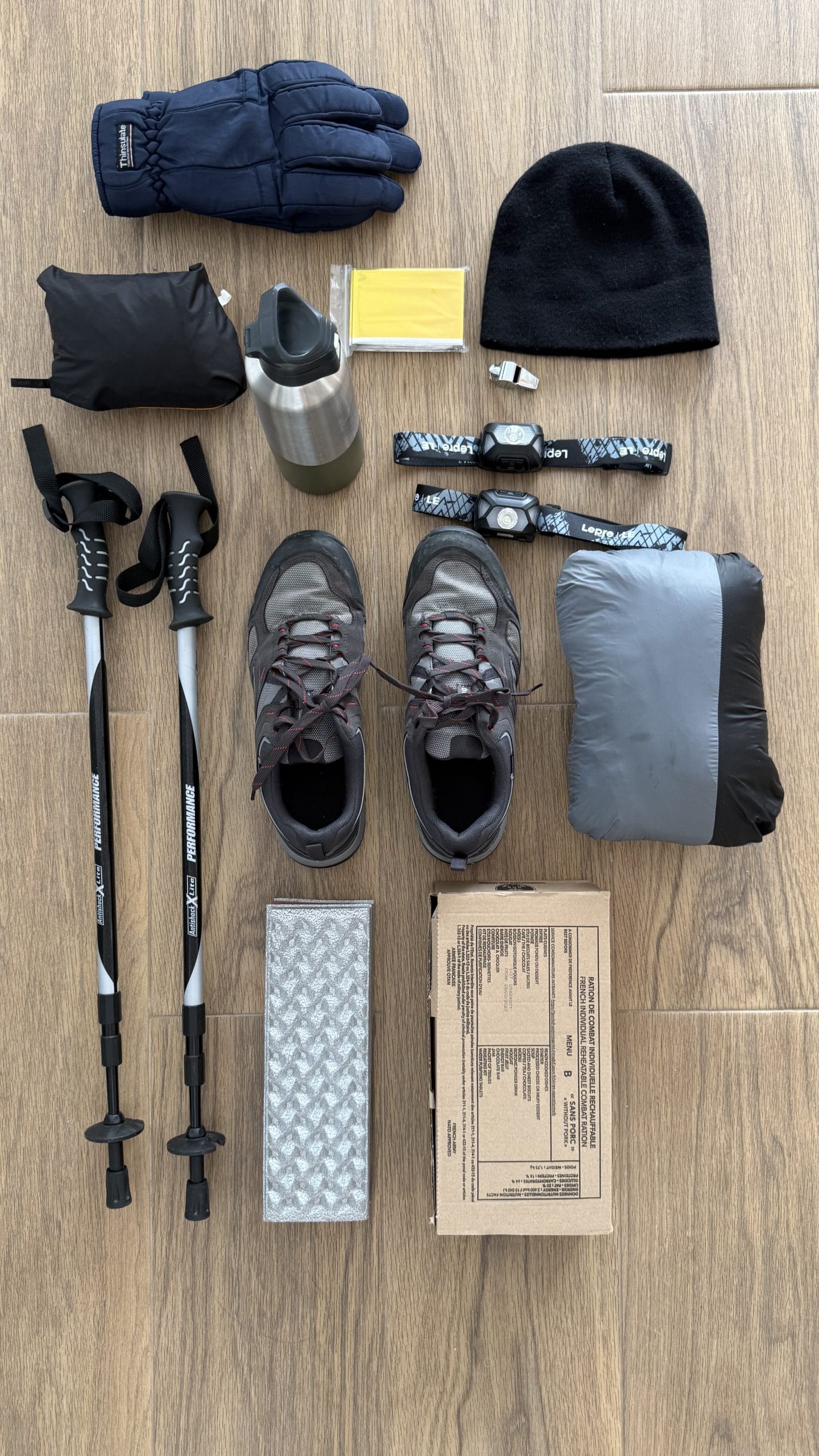
- Hiking boots
- Headlamp
- Second, spare headlamp
- Gloves
- Beanie
- Waterproof jacket
- Down jacket
- Technical hiking trousers
- Neck gaiter
- Technical T-shirt
- Two water bottles
- Power bank + phone cable
- GPS / phone with the hiking track
- Emergency blanket
- Hiking poles, if you use them
- Some food, including a military ration pack in my case
- A whistle
I had also taken the time to plan my food. Before leaving, I had eaten a meal of pasta and chicken, chosen precisely to have enough energy for this long hike.
Looking back, I would perhaps take slightly less food in the bag, but I wouldn’t change much about the rest of my gear.
The permits to reach the summit
This is a point you should definitely not overlook.
For the details of the trail up to La Rambleta (map, elevation profile, kilometres and PNT 07 rules), see our Montaña Blanca to La Rambleta fact sheet.
To make this ascent to the summit, inside Teide National Park, you need to take into account the permits required for the different sections of the route. PNT 07 corresponds to the climb via Montaña Blanca, while PNT 10 gives access to the last stretch up to the summit from La Rambleta.
Access conditions and slots can change, so don’t rely only on my experience from May 2025.
👉 I have written a complete article explaining the Teide permits, the different access options and how to organise your booking: Teide summit permit, the complete guide.
In my case, I had booked about five weeks in advance.
Do I recommend the Teide sunrise?
Yes, but not to just anyone.
It is not a small morning hike.
You need to be able to keep going for about 10 hours, with a big climb, a long descent and, above all, very little sleep.
You also need a minimum of fitness and cardio, but the mental side matters a lot.
At several points during the climb, you may wonder why you got yourself into this.
Personally, it was precisely this challenge that I enjoyed.
I would advise against this experience for anyone who isn’t sufficiently trained or who has particular difficulties with this kind of effort in the mountains. And as always in high mountains, remember that conditions can change and a problem can quickly become complicated.
If you go alone, you need to be even more careful.
Would I do it again?
Without hesitation.
Ideally with a bit less wind, because the gusts clearly made the last few hours harder.
But for the rest, I would do exactly the same again.
The night-time start, the stars, the silence, the tiredness, the encounters with other hikers, the first lights, the sunrise and above all that immense triangular shadow of Teide…
It’s a memory that stays with you.
And if you like challenges and natural landscapes, it’s clearly an experience to have at least once in Tenerife.
To find out what time the sun rises or sets depending on the month, see our table of sunrise and sunset times in Tenerife. And for another way to reach the summit, here is our account of the climb via Pico Viejo (PNT 09 + PNT 10), with a sunset and a summit at night.
Frequently asked questions about the Teide sunrise
👉 Read also: Stargazing in Tenerife.
How long does it take to climb Teide for sunrise?
In my case, it took about 10.5 hours between setting off and getting back to the car park, with about 4.5 hours of climbing. Count on 10 to 11 hours in total depending on your pace, your breaks and the time spent at the summit.
What time should you set off to see the sunrise?
For my ascent on 7 May 2025, I left Montaña Blanca at 1:30 am and arrived near the summit at around 6:50 am. The aim is to arrive early enough that you aren’t rushing the last kilometres and can calmly enjoy the first lights.
Can you see Teide’s shadow at sunrise?
Yes, when atmospheric conditions allow. The shadow appears opposite the sun and can be projected onto the haze or a layer of clouds. Its triangular shape then directly recalls that of the volcano.
Do you need to be athletic to do this ascent?
You need to be prepared for a long hike with a large elevation gain and several hours of effort. Cardio and endurance are important, but the mental side also matters a lot. It’s not a hike I would recommend trying without preparation.