


Bioluminescence in Tenerife: when the water glows blue at night
You run your hand through the water in the middle of the night, and the water lights up blue at your fingertips. It is not a special effect: it is bioluminescence, plankton that produces light. In Tenerife, this glowing sea was spotted in late September and early October 2026 around Radazul and Candelaria. It is a rare and unpredictable experience, and it does not happen everywhere in the world.
In this article, I explain why the sea glows blue at night, where it has been seen in Tenerife, whether you can really see it with the naked eye, when to try your luck and what to know before swimming.
Key things to know
What it is: microscopic plankton that makes the water glow blue when it is disturbed (often wrongly called “phosphorescence”)
Species involved: Noctiluca scintillans, according to a researcher at the University of La Laguna
Visible to the naked eye: yes, in complete darkness and when the water moves, but only during a bloom
Recent sightings: Radazul (municipality of El Rosario) and Candelaria, La Viuda beach
When: unpredictable, there is no reliable calendar
Danger: no known toxin for this species, but irritation is possible during a heavy bloom
Elsewhere in the world: yes, but not everywhere
Going further: snorkelling in Radazul and scuba diving in Tenerife
Why does the water light up blue at night?
Bioluminescence is the ability of a living organism to produce light through a chemical reaction. A substance called luciferin reacts with oxygen, and an enzyme, luciferase, speeds up the reaction. It is found in many marine species, from the surface to the deep sea: anglerfish, lanternfish, tiny crustaceans in the plankton, some squid.
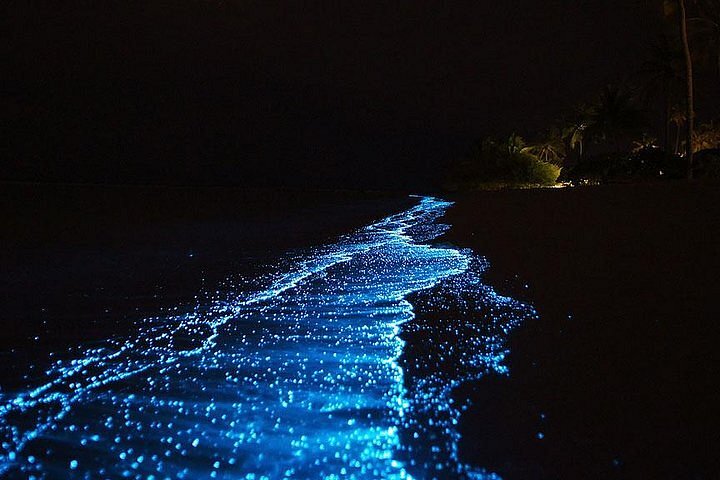
People often talk about a “phosphorescent sea”, but the correct term is bioluminescence: the light is produced live by a living organism, it is not stored and then released like on a phosphorescent object.
The glow you can see from the shore mostly comes from plankton, microscopic organisms that drift with the currents. In Tenerife, the species named is Noctiluca scintillans, a single-celled alga (a dinoflagellate) about 0.4 to 1.5 mm across, so almost invisible to the naked eye.
When the water shakes it (a wave, a paddle, a fish, your hand), its membrane deforms and triggers the chemical reaction. The result is a flash of blue light lasting about 80 milliseconds. Without movement, there is no glow, which is why the water seems to light up as you pass.
Where can you see the sea glow in Tenerife?
In late September 2026, a video filmed in Radazul, in the municipality of El Rosario, was picked up by the local press: it shows a young woman running her hand through the water at night and points of light appearing.
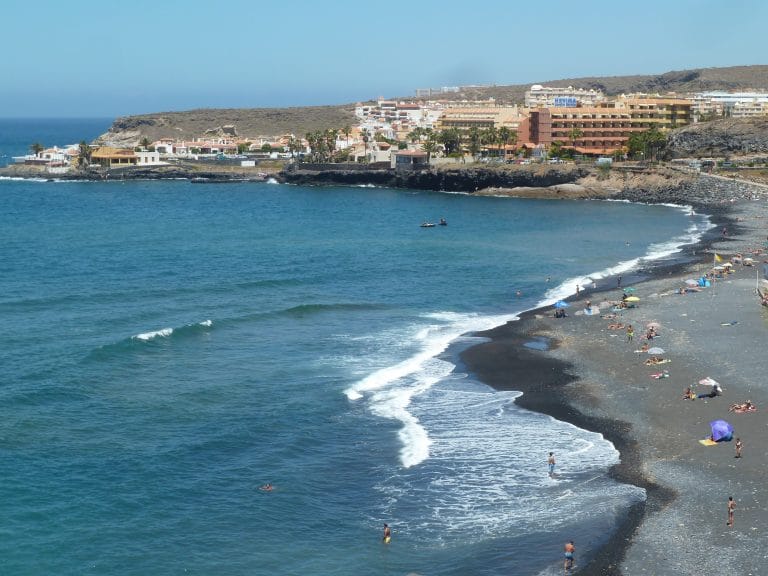
In early October, the phenomenon was reported along the coast of Candelaria and Radazul, notably at La Viuda beach in Candelaria. A researcher at the University of La Laguna, Nereida Rancel, attributes it to Noctiluca scintillans. This species is always present in the water, but in quantities too small to be seen: the glow only appears when the cells build up in large numbers, during a bloom.
According to the researcher, these concentrations are more likely in sheltered waters, because the currents around the archipelago limit large build-ups. The phenomenon is not new in the Canary Islands: the explorer Humboldt had already observed it here. To discover this part of the coast, also have a look at the page on Candelaria.
If you are a certified diver, night dives are offered from Radazul. Divers’ reviews mention glowing plankton, but nothing guarantees it will be the case on the night you go. For going underwater by day, our guides to snorkelling in Radazul and scuba diving in Tenerife give you the basics.
Can you really see the water glow blue with the naked eye?
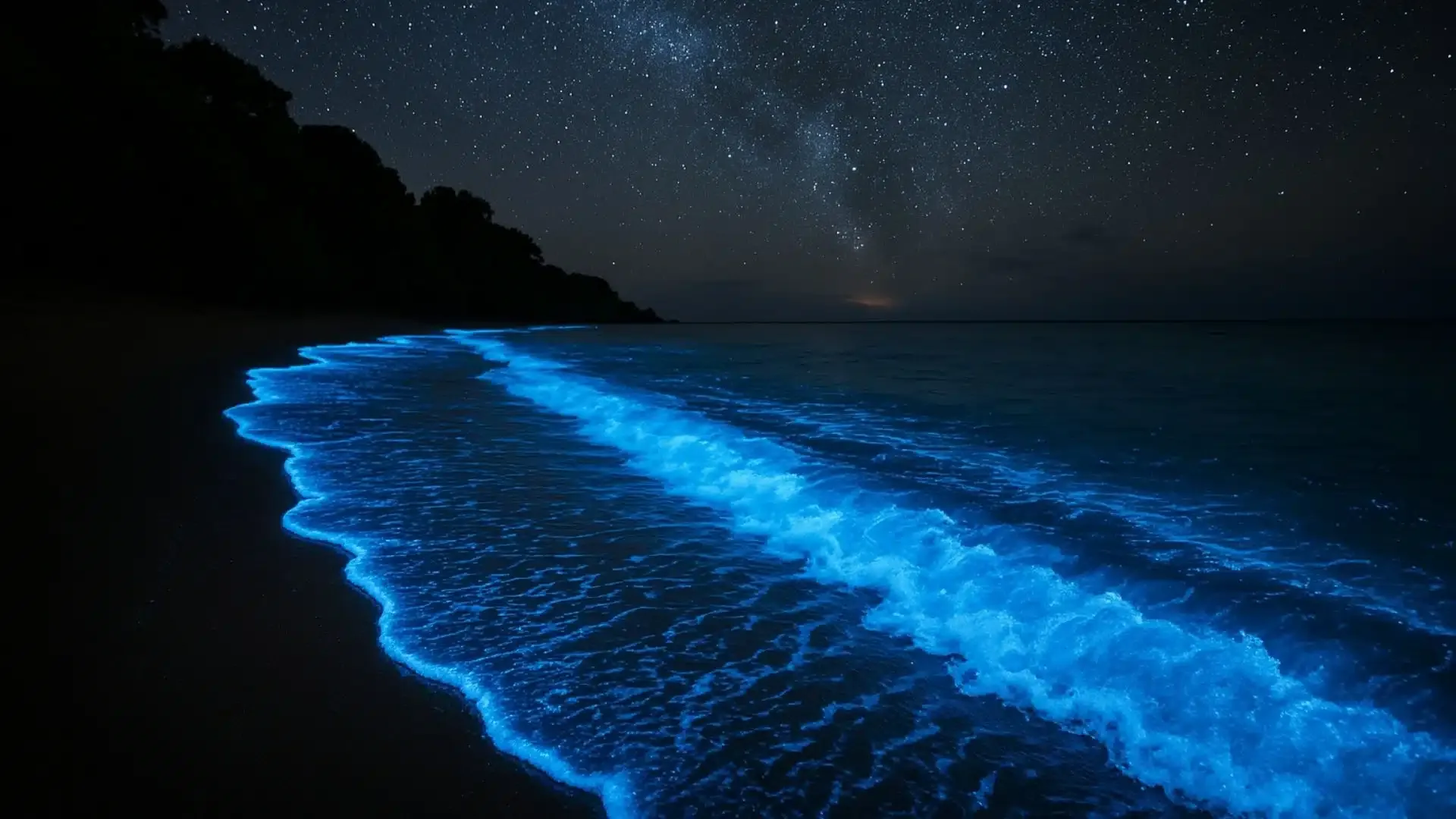
Yes, but you need the right conditions: complete darkness, away from lights, eyes used to the dark and moving water. In the Radazul video, the points of light appear precisely when the hand is run through the water. When the bloom is large, small waves can also make the water’s edge glow blue.
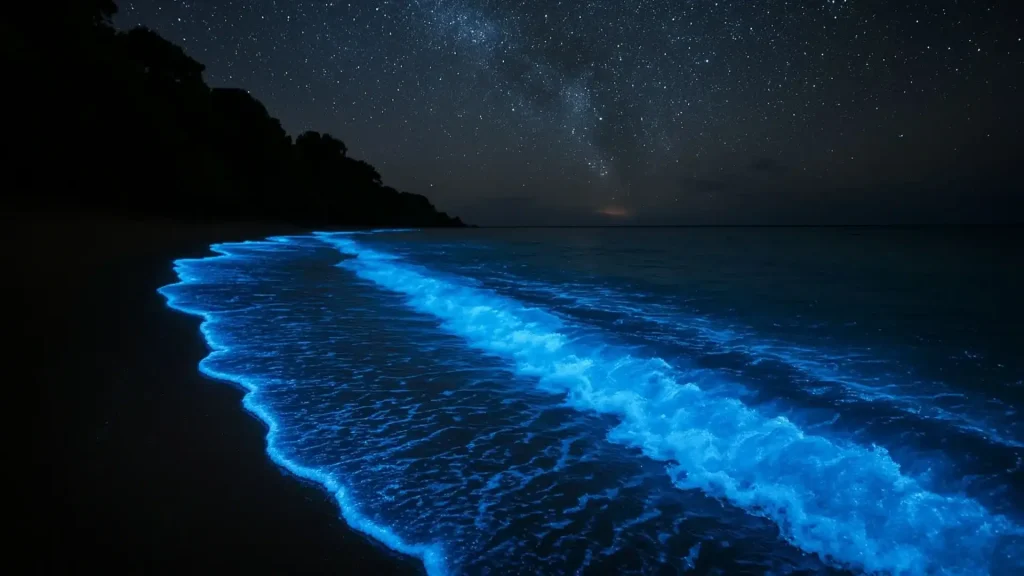
You should stay realistic though: it is not a guaranteed show, and long-exposure photos often make the glow look more intense than what the eye sees. The photos in this article illustrate the phenomenon in general. On site it is more subtle, but it is a memorable experience when it works.
When can you see the sea glow at night in Tenerife?
According to scientific sources, this alga lives mostly near the coast and tends to thrive when the water is warm and the sea is calm. When highly concentrated, it can also turn the water pink, orange or red-brown during the day. This is not a rule, only a clue: water coloured like this, with a calm sea, may give you hope for a glow the following night.
The simplest approach is to follow local news and try your luck over several evenings, preferably without a moon, simply because the sky is darker. It is better to see it as a bonus during a night outing than to build a whole plan around it.
Does this happen elsewhere in the world?
Yes, but not everywhere: it is reported for example in the Maldives, Puerto Rico (Vieques), Jamaica, Japan, Taiwan, Cambodia and, in Spain, in Galicia, depending on the season and plankton blooms. There too, it is almost never guaranteed, and the organisms involved are not always the same from one place to another.
Is it dangerous to swim when the water glows blue?
For the species involved, Noctiluca scintillans, no toxin is known. However, a heavy plankton bloom, whatever the species, can irritate the skin, eyes or throat. If you feel discomfort, get out of the water and rinse off. In the articles covering the Tenerife episodes, no health alert is mentioned.
- Avoid swimming in very discoloured water or water that smells bad.
- Be more careful if you have breathing problems.
- Do not swim near dead fish: a large bloom that decomposes can use up the oxygen in the water and cause fish to die.
Tenerife With Love tip
At night, the real risk is not the plankton but the swim itself: slippery rocks, waves, currents and nobody to rescue you. Stay at the water’s edge and do not swim alone. You do not need to get in to see the glow: running your hand through the water is enough.
Our tips for seeing the water glow
- Choose a dark spot, away from promenade lighting and harbours.
- Turn off your torch and let your eyes adjust to the dark for about fifteen minutes.
- Make the water move: run your hand, a paddle or a foot through the water.
- Stay flexible: it is not a scheduled phenomenon, some evenings there is nothing.
- Do not count on your phone for a nice photo: you need a camera capable of long exposures.
In short
The glowing blue sea in Tenerife comes from plankton, Noctiluca scintillans, which emits blue light when the water moves. It was spotted in Radazul and Candelaria in late September and early October 2026. It can be seen with the naked eye in complete darkness, but only during an unpredictable bloom. The phenomenon exists elsewhere in the world, but not everywhere. The plankton is not toxic, but the biggest risk remains swimming at night itself.
Frequently asked questions about the glowing sea in Tenerife
Why does the water light up blue at night?
It is bioluminescence: plankton, in Tenerife Noctiluca scintillans, produces a flash of blue light through a chemical reaction when the water disturbs it (wave, paddle, hand).
Where can you see the sea glow in Tenerife?
Recent episodes were reported in Radazul (El Rosario) and along the Candelaria coast, notably at La Viuda beach. The phenomenon is unpredictable: there is no place where it is guaranteed.
Can you see bioluminescence with the naked eye?
Yes, in complete darkness and when the water is disturbed, but only during a plankton bloom. Running your hand through the water is often enough to make points of light appear.
When can you see the sea glow in Tenerife?
There is no reliable calendar. The recent episodes date from late September and early October 2026, but they depend on unpredictable plankton blooms.
Is it dangerous to swim in glowing water?
The species involved produces no known toxin, but a heavy bloom can irritate the skin, eyes or throat. At night, the main risk remains the swim itself: stay at the water’s edge and do not swim alone.
Does this phenomenon happen elsewhere in the world?
Yes, but not everywhere: it is reported for example in the Maldives, Puerto Rico, Jamaica, Japan, Taiwan, Cambodia and Galicia, depending on the season and plankton blooms.