


Airbnb or Hotel in Tenerife: Which Should You Choose? Pros, Cons and Local Pitfalls
Airbnb or hotel in Tenerife? There is no single right answer, but there is one for your trip. It depends on how many nights you are staying, how many of you there are, whether you have a car and which part of the island you are in. And in Tenerife, a few local details (the cold in winter, steep streets, the rules on holiday rentals) can tip the balance.
In this article we compare the two options without the waffle: the real pros and cons, what Canarian law changes for you, the pitfalls specific to the island, and a verdict by type of traveller. To choose the area itself, read our guide to where to stay in Tenerife as well.
The essentials
Hotel: practical, flexible, ideal for a short stay or a late arrival
Rental (Airbnb or similar): often better value for groups or stays of a week or more, with a kitchen and more space
Legality: holiday lets are increasingly regulated in the Canaries, so always ask for the tourist registration number
Cold: in winter, many homes in the north or at altitude have no heating
Car: almost essential for an isolated rental, so check the parking
Mix and match: a hotel for the first and last night, a rental in between
Contents
The real question: how many nights, how many people, and what car?
Before comparing listings, answer four questions. They matter more than the “Airbnb versus hotel” debate itself.
- How many nights? For two or three nights, a hotel saves you cleaning fees and check-in hassle. From a week onwards, the kitchen and washing machine of an apartment become very attractive.
- How many people? For two, the price gap is often small. For four or more, a rental split between you is usually cheaper than two hotel rooms.
- With or without a car? Without a car, you need to sleep where you can walk or take the bus to most things. With a car, you can stay further from the tourist areas. Our guide to getting around Tenerife helps you decide, and the one on car rental in Tenerife covers the details.
- Which area? The south is sunnier and better equipped with hotels. The north is greener and more authentic, with more homes rented by local hosts.
Airbnb-style rentals: pros and cons
The pros
- More space and a proper kitchen. Handy for cooking with produce from the local markets, packing a hiking picnic or feeding the children.
- Often cheaper for groups or longer stays, especially if you prepare some of your own meals.
- Washing machine, terrace, sometimes a private pool or sea view, things few mid-range hotels offer.
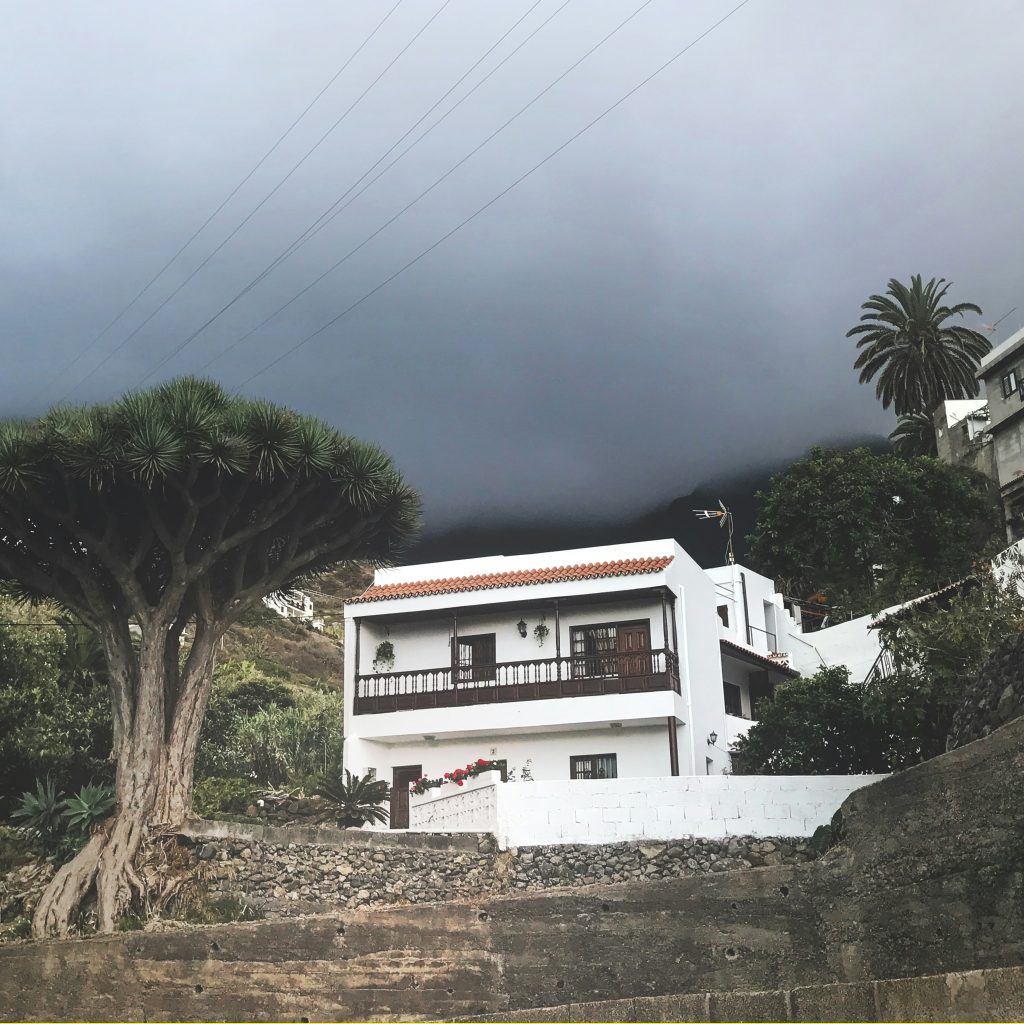
- A lived-in neighbourhood. Staying in a village means seeing local life, shopping at the corner bakery and getting away from purely tourist areas.
- Practical for long stays or remote work, as long as you check the connection (see our guide to living and working in Tenerife).
The cons
- No services on site. No 24-hour reception, no breakfast, no daily housekeeping, and no left-luggage if you arrive early or leave late.
- Extra costs on top of the displayed price: cleaning, deposit, and sometimes a charge for linen or air conditioning.
- Variable quality. The photos come from the host, and the real standard of the place, the mattress or the neighbours can be a surprise.
- The risk of cancellation or an unregistered property, which we cover below in the section on the law.
- A sometimes awkward arrival: a key box, a narrow access road, a host slow to reply when your flight is delayed.
Hotels: pros and cons
The pros
- Zero logistics. You arrive, drop your bags and you are home. Late reception, left-luggage and sometimes an airport shuttle.
- A clear legal framework. A hotel is a classified, inspected establishment with rules on safety, hygiene and guest care.
- Built-in services: breakfast, a maintained pool, housekeeping, and usually someone easy to reach if something goes wrong.
- More flexibility on cancellation, depending on the rate you choose.
- Ideal for switching off on a short break, a couple’s trip or a honeymoon.
The cons
- More expensive once you are a group, particularly if you take two rooms or eat every meal out.
- Less space and no kitchen, which matters a lot with small children.
- Very touristy areas. Many hotels are in the big southern resorts, with a more standardised feel.
- Fixed hours for breakfast and meals, and extras (half board, cocktails, parking) to keep an eye on.
- Less local immersion, especially in all-inclusive complexes.
Quick comparison
| Criterion | Rental | Hotel |
|---|---|---|
| Budget for two | Varies, often close | Varies, often close |
| Budget for a family, one week | Often better value | Often more expensive |
| Late arrival | Sometimes tricky | Very easy |
| Kitchen and laundry | Usually yes | Rarely |
| Services (breakfast, housekeeping) | None | Yes |
| Local immersion | Strong | More limited |
| Cancellation | Depends on the host | Depends on the rate |
| Risk of a non-compliant property | Exists | Very low |
| If something goes wrong | Host and platform | Reception on site |
These comparisons are general trends: prices vary a lot with the season, the area and how far ahead you book. Always compare the total cost (cleaning fees, deposit, parking, meals) and not just the price per night. To estimate the rest of your spending, see our Tenerife trip budget.
What the law changes for holiday lets in the Canaries
This is the most local point in the article, and the one generic guides leave out. Since the end of 2025, the Canary Islands have had a law on holiday homes (Law 6/2025, in force since December 2025). Town halls now play a central role: they decide where this type of rental is allowed. Checks have been stepped up, notably in La Laguna, and the local press reports a large number of listings without municipal authorisation.
According to figures published in summer 2026, the number of registered holiday homes in the Canaries fell by around 15% compared with the previous year, with a large share in Tenerife. In parallel, the national register of short-term rentals was annulled by the Supreme Court in May 2026, which adds some confusion about the rules that apply. The situation is changing fast, so check official information before you book.
What does this mean for you as a traveller? As far as we know, penalties mainly target the host, not the guest. The real risk for you is practical: a listing withdrawn at the last minute, a host you cannot reach, or a property that is not what it claimed to be. Hence a few simple habits.
- Ask for the Canary Islands tourist registration number before booking, and check that it appears in the listing.
- Pay through the platform, never by direct transfer or in cash to a stranger. Our page on safety and scams in Tenerife covers the classic traps.
- Keep a plan B (a hotel with free cancellation near where you are staying) if you book an isolated place or one without recent reviews.
- Read the recent reviews, not just the overall score.
This sits within a wider debate about housing on the islands, where some residents feel that tourist rentals push up rents. If it matters to you, you can choose a place run by a local host, a family-run hotel or a casa rural, and spend your money in the neighbourhood shops.
These details were last checked in October 2026. This is not legal advice: if in doubt, check official sources or the relevant town hall.
Local pitfalls in Tenerife
Here are the details that never appear in a listing but change a stay all the same.
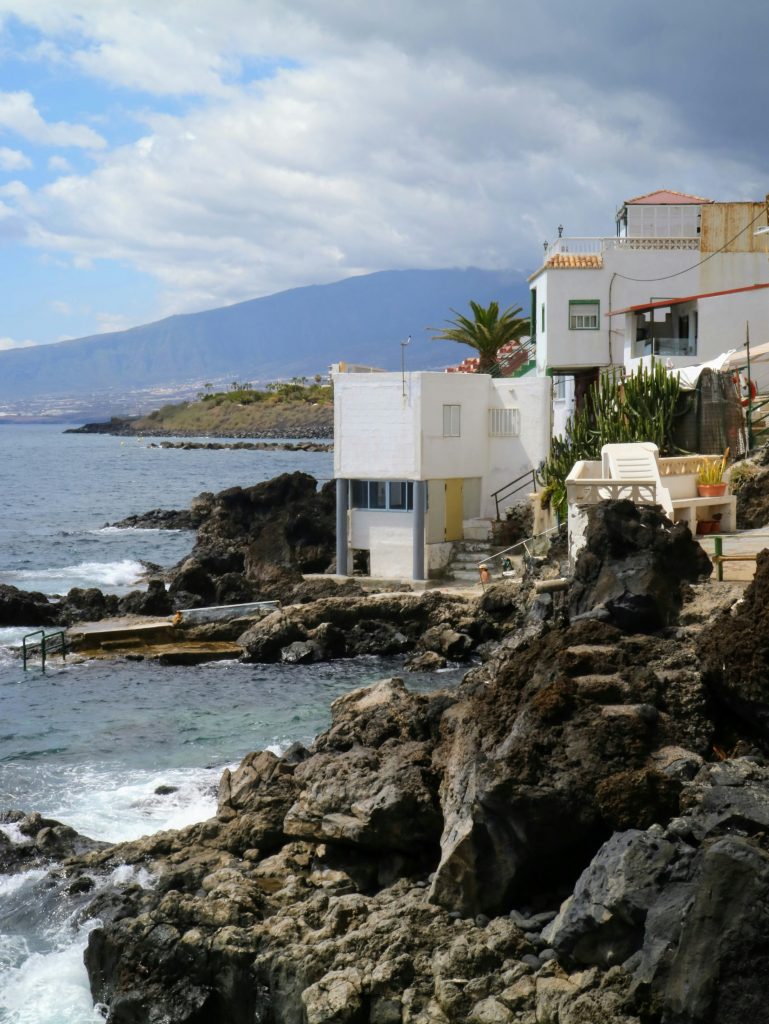
- Cold and damp. It is mild all year, but winter evenings can be chilly, especially in the north and at altitude. Many homes have no heating, or just a small portable heater. Ask outright if you are coming between November and March (our guide to Tenerife in winter and at Christmas gives the background).
- Car, parking and slopes. In historic centres (La Laguna, La Orotava, Garachico), the streets are narrow, sometimes pedestrianised or steep. Without a parking space, you can circle for a long time. In mountain villages, the access road can be narrow and winding at night.
- Late arrival. Many flights land in the evening. With a key box, make sure you have the codes and a contact who will answer. At a hotel, check reception hours.
- Local noise. Roosters, dogs, church bells, early-morning delivery lorries, and in summer village fiestas that run late (see our article on Tenerife romerías). If you sleep lightly, read the reviews about noise.
- Shop opening hours. Many small shops close in the afternoon and on Sundays. If you stay in a village without a big supermarket, plan your shopping.
- The “shared” or unheated pool. A pool in the shade of a block can stay very cold. Check whether it is private, heated or open all year.
- Wi-Fi. A listing that says “Wi-Fi” does not guarantee a connection good enough for remote work. For more, see our page on internet and phone in Tenerife.
- Hidden costs. Cleaning fees, deposit, an energy supplement, a possible tourist tax: work out the total before you compare.
The in-between options
Between an Airbnb and a big hotel there are several options people often forget. They are worth comparing.
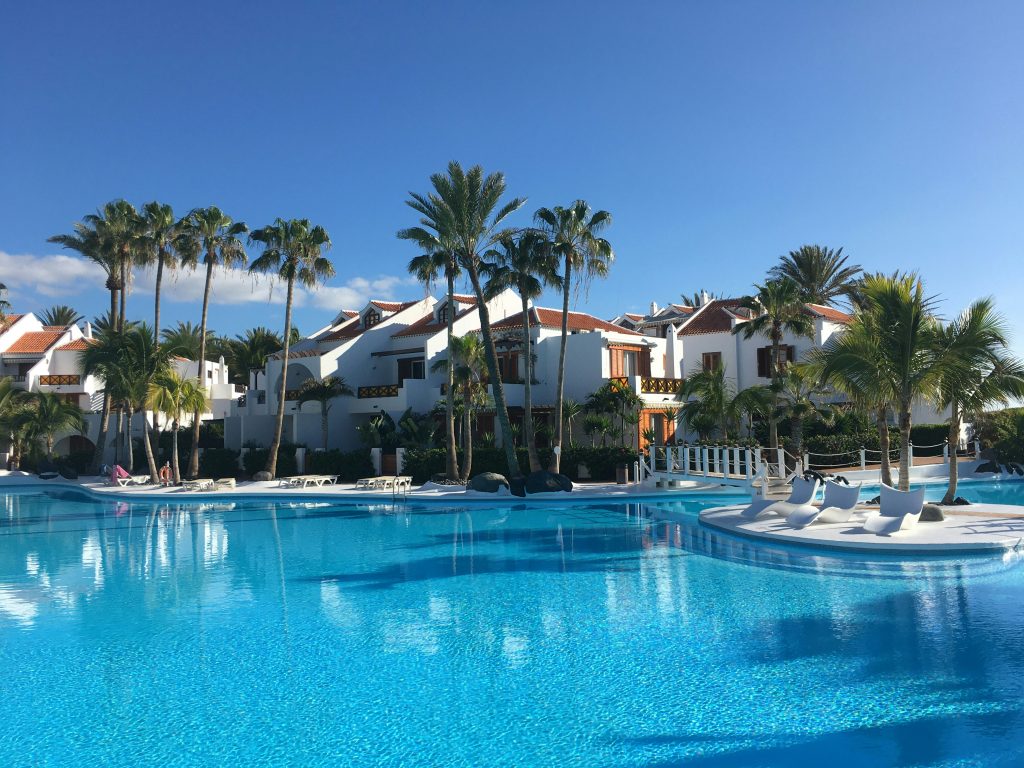
- The aparthotel: an apartment with a kitchen, but with a reception, housekeeping and a professional set-up. A good compromise for families.
- The rural hotel or casa rural: a house with character in the countryside, often with breakfast and local tips from the host.
- The guesthouse (bed and breakfast): ideal for direct contact with a local host and tailored advice.
- Suites or studios with a kitchenette in hotels: a minimal kitchen without giving up services.
What to choose for your type of trip
- Couple, short stay (2 to 4 nights): a hotel, for simplicity and to make the most of your time.
- Family, a week or more: an apartment or aparthotel, for the kitchen and the space.
- Group of friends or extended family: a house or large apartment to share, checking the noise rules and the number of beds.
- Road trip across several areas: mix it up. One or two nights per area is easier in a hotel or guesthouse.
- Hiker: accommodation close to the trailheads, with an early breakfast if possible, or a kitchen to prepare your picnic.
- Long stay or remote work: an apartment with checked Wi-Fi, a desk and winter heating.
- First time in Tenerife or late arrival: a hotel, to avoid stress on the first evening.
Tenerife With Love tip
If you are staying ten days or more, a mixed approach works very well: a hotel on the first night (to unwind after the flight) and the last (so you are not stressing before your plane), and a place with a kitchen in between.
To choose your area and type of hotel, see our page Hotels in Tenerife.
Booking without nasty surprises
- Check the tourist registration number in the listing.
- Read the recent reviews, especially those about noise, cold, cleanliness and access.
- Look at the exact location on a map and how to get there by car or on foot.
- Ask whether there is heating if you are coming between November and March.
- Check the parking and the distance to the front door.
- Work out the total price (cleaning, deposit, taxes) before you compare.
- Choose a cancellable rate if your dates are not final.
- Keep your messages with the host in writing.
- Have a plan B for the first night.
Frequently asked questions
Is it legal to rent through Airbnb in Tenerife?
Yes, as long as the property is registered and compliant. The 2025 Canarian law tightens the rules and gives town halls an important role. Ask for the tourist registration number before you book.
Is it cheaper than a hotel?
Not always. For groups and stays of a week or more, a rental is often cheaper. For a short stay or a couple, the gap is small once cleaning fees and the deposit are added.
Do I need a car if I stay in an apartment?
It depends on the area. In a resort or a well-served town you can manage without. In an isolated village or at altitude, a car is almost essential. Check the parking too.
Hotel or apartment for a family?
For a week or more, an apartment or aparthotel is often more practical, with a kitchen and space. For a short stay, a hotel with a pool and breakfast makes everything simpler.
Is there heating in rentals in winter?
Not always. Nights can be chilly, especially in the north and at altitude, and many homes only have a portable heater. Ask before you book.
In short
Choose a hotel for simplicity, short stays and late arrivals. Choose a rental for space, a kitchen and longer stays with a group. In Tenerife, always check the tourist registration number, the winter heating and the parking. And if you cannot decide, mix the two.
Sources consulted for the regulatory section: Derecho Local (Canarian Law 6/2025), Skift (annulment of the national register), RTVC, Diario de Avisos and Canarian Weekly. Information checked in October 2026.