

What to See in the North of Tenerife: the Must-Sees
The north of Tenerife has nothing to do with the crowded beaches of the south. Here, clouds cling to the peaks, villages keep their colonial façades and nature takes back its rights. If you want to discover another face of the island, greener, more authentic and often cooler, here is everything we’ve already explored to help you build your itinerary in the north.
Before you rush off: the north is generally greener and cooler than the south, with more changeable weather, as clouds catch easily on the relief. Distances look short on the map, but the mountain roads wind a lot, so always allow more driving time than your GPS says.
Villages that have kept their soul
The north of Tenerife has kept a heritage that the south, more recent and more touristy, does not have.
- San Cristóbal de La Laguna, the colonial city listed by UNESCO
- Garachico and its El Caletón natural pools, formed in the lava flow
- The Ayosa viewpoint, a viewpoint over the La Orotava valley and Teide
- Casa Hamilton, a former industrial pumping station in ruins, hanging above the ocean
The wild nature of Anaga Rural Park
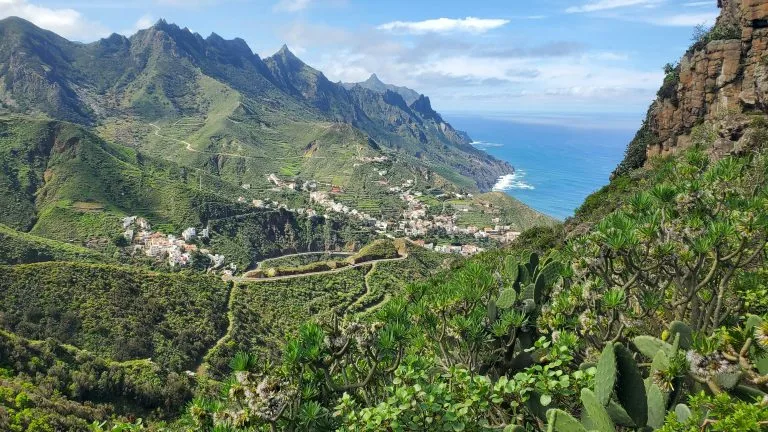
In the far north-east of the island, Anaga Rural Park is another world: laurel forest, remote villages and roads that wind above the clouds.
- Anaga Rural Park, our complete guide to finding your way around
- Bosque Encantado, a hike through the primeval forest
- Chamorga, the last village at the end of the road, slowly emptying out
- Playa de Benijo, the wildest beach in Anaga
- Playa de Antequera, reachable only on foot or by boat
Swimming in the north: natural pools and beaches
No white sand or turquoise water here, but natural pools carved into the lava and black-sand beaches with real character. You’ll find all our natural pools and beaches and coves guides on our two dedicated pages, and here are the ones in the north in particular:
- Lago Martiánez in Puerto de la Cruz, the pool designed by César Manrique
- The Bajamar pools
- Charco La Mareta in Icod de los Vinos, reserved for seasoned walkers
- Playa del Bollullo, a black-sand cove near Puerto de la Cruz
- Playa del Socorro in Los Realejos, a haunt of surfers
- Playa de Rojas, a secret cove in El Sauzal
- The Punta del Hidalgo lighthouse, for the ocean view more than for swimming
- Charco del Viento, a wild natural pool near Garachico
- Charco de La Laja, in San Juan de la Rambla, one of the most photographed natural pools on the island
Walks and unusual curiosities
The north also hides a few lesser-known spots, to add to your itinerary if you have a little time.
- Rambla de Castro, a tropical walk between palm trees and the ocean
- Cueva Roja, a secret red cave north of Santa Cruz
- Cueva de los Colores in Icod de los Vinos, with multicoloured walls
Eating well in the north
Guachinches aren’t reserved for the south.
- Calderito de Mila in La Matanza de Acentejo, a generous guachinche we tested
And if you go as far as the west
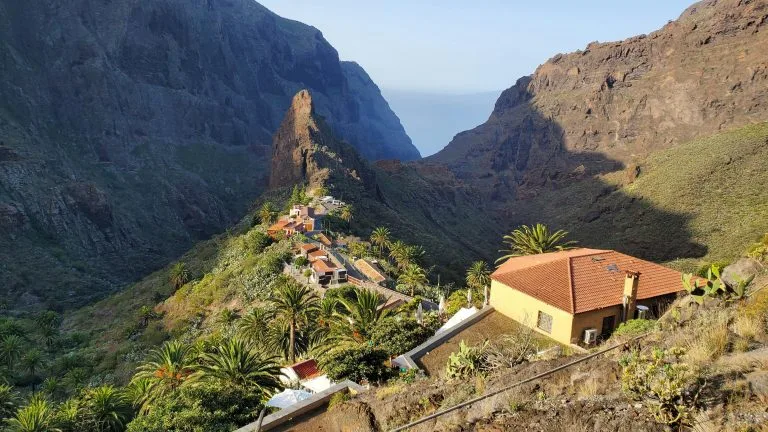
Technically, you leave the north and enter the Teno massif, but the village of Masca is often visited on the same day as a trip to the north-west of the island.
- Masca, our tips for making the most of your visit
💡 Tenerife With Love tip: if your accommodation is in the south, plan a good half day, or even a full day, to explore the north rather than trying to do everything on the same day as the rest of the island. Our 7-day and 10-day itineraries devote one or more whole days to the north.
My verdict
If I had to sum up the north in one sentence: it’s the real face of Tenerife, the one that existed before mass tourism. If the idea of sleeping there rather than doing the round trip from the south appeals to you, I have a dedicated map for Garachico on my Where to stay page. And if you’re heading off to discover the north, the WhatsApp community is also a good place to swap tips with other travellers on the spot.
Read also: Garachico: what to see in the historic town, the most beautiful villages in Tenerife, how long to allow for each place, the Agujero de Tamaimo and Taganana, a village in Anaga.