


Icod de los Vinos and the Drago Milenario: Tenerife’s Thousand-Year-Old Dragon Tree
Icod de los Vinos is a quiet little town on the north coast of Tenerife, known around the world for one reason alone: the Drago Milenario, a centuries-old dragon tree that stands in the heart of the village. It is one of the oldest and most impressive specimens of Dracaena draco, the Canary Islands’ endemic species that inspired the town’s coat of arms and used to appear on the 1,000-peseta banknotes.
Unlike the beaches and seaside resorts of the south, Icod de los Vinos is visited for its natural heritage and its authentic Canarian small-town atmosphere, with its white houses, wooden balconies and steep lanes. Allow half a day to discover the Drago and the historic centre, with the option of combining the visit with Garachico or the Cueva del Viento, both very close.
🎯 Good to know
📍 Location: Icod de los Vinos, north-west coast of Tenerife, about 25 km from Puerto de la Cruz
🌳 The tree: Around 800 to 1,000 years old, 21 m tall, 20 m in circumference at the base, National Monument since 1917
🕐 Park opening hours: 9 am to 8 pm from April to September, 10 am to 6 pm from October to March
💶 Prices: €5 adult (13-65), €3 senior/student, €2.50 child under 8, free for Icod residents
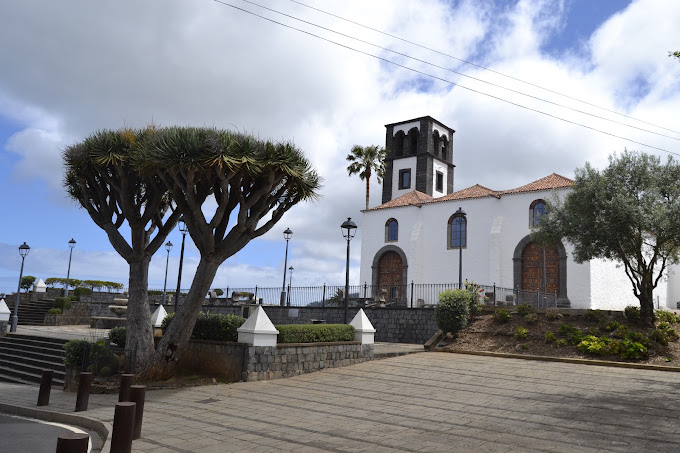
👀 See it for free: From the Plaza de Andrés Lorenzo Cáceres, right next to the San Marcos church
ℹ️ Good to know: Allow 45 min to 1 hour to visit the 3-hectare park around the tree
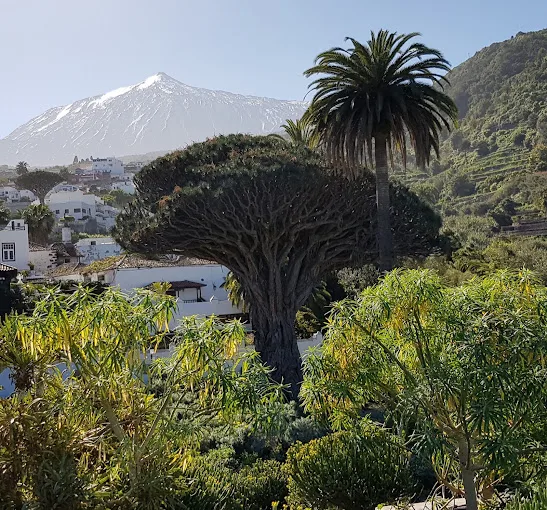
The Drago Milenario, a symbol of Tenerife
At 21 metres tall with a base circumference of about 20 metres, the Drago Milenario is one of the largest and oldest known specimens of Dracaena draco, the Canary Islands dragon tree. Its exact age is still debated by botanists: some studies say 350 years, others more than 2,000, but the most commonly accepted estimate today is between 800 and 1,000 years. Unlike ordinary trees, the dragon tree has no annual growth rings, which makes any precise dating very difficult.
The tree was declared a National Monument in 1917, one of the first protection measures of this kind in the Canary Islands. In 1993, the road that ran right beside it was even rerouted to preserve its roots. Today, the Drago Milenario has become one of the most recognisable symbols of Tenerife: it appears on the coat of arms of Icod de los Vinos and it long featured on Spanish 1,000-peseta banknotes.
A sacred tree for the Guanches
Long before the Spanish conquest, the dragon tree already held a special place in the culture of the Guanches, the aboriginal inhabitants of Tenerife. Its red resin, called “dragon’s blood”, was used for ritual and medicinal purposes, and some researchers think that remarkable trees like this one may have been the object of genuine worship. The trunk of the Drago Milenario is also hollow for about 6 metres of its height, a cavity reached through a small door, which probably fed part of its legendary aura over the centuries.
Visiting the Parque del Drago: prices and opening hours
The Drago Milenario is visited within the Parque del Drago, a botanical garden of about 3 hectares laid out around the tree. The entrance ticket costs €5 for adults aged 13 to 65, €3 for seniors and students, and €2.50 for children under 8; entry is free for residents of Icod de los Vinos on presentation of proof. The park is open from 9 am to 8 pm between April and September, and from 10 am to 6 pm between October and March. Allow 45 minutes to 1 hour for the visit, which is accessible with a pushchair on flat ground.
As well as the tree itself, the park contains a small volcanic cave once used by the Guanches, an old wine press (lagar), a traditional charcoal kiln, a nursery of young dragon trees called the “Guardería de Dragos”, and many carefully labelled plant species endemic to the Canary Islands. In clear weather, the view of Teide from the park is a welcome bonus.
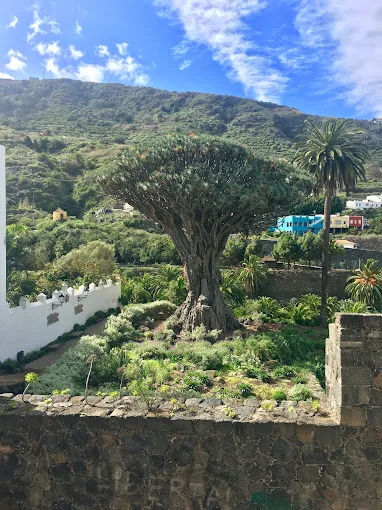
Seeing the Drago for free from the Plaza Andrés Lorenzo Cáceres
If you don’t want to pay the park entrance fee, it is perfectly possible to admire the Drago Milenario for free from the Plaza de Andrés Lorenzo Cáceres, right next to the San Marcos church. This square planted with jacaranda and fig trees offers a clear view of the tree over the park wall, just a few metres from the trunk. You won’t be able to get as close or see the inner cavity, but for a simple glimpse of the famous dragon tree, the free view is plenty.
Other things to see in Icod de los Vinos
The historic centre of Icod de los Vinos is worth lingering in a little beyond the Drago. The Casa-Museo de la Malvasía offers a tasting of local wines, including the famous malvasia, with Canarian cheese and traditional sauces (mojo). The Casa del Plátano traces the history of the banana on the island, from its introduction to the Canary Islands to its present economic importance. For families with children, the Mariposario del Drago, a butterfly house very close to the park, lets you see tropical butterflies flying freely. Don’t miss the Plaza de la Pila either, a raised square surrounded by typical colonial mansions, with a lovely view of Teide in clear weather.
Cueva del Viento, a stone’s throw from Icod
A few minutes’ drive from the town centre, the Cueva del Viento is one of the largest labyrinthine volcanic tubes in the world, formed by lava flows from the Pico Viejo volcano thousands of years ago. The visit is by guided tour only, by reservation, and lets you understand concretely how a lava tube is formed and discover part of Tenerife’s volcanic history. It is a good option if you want to complement your visit to the Drago with something more geological.
How much time to allow and how to get there
Allow half a day to visit the Drago Milenario and wander around the historic centre of Icod de los Vinos, a little more if you add the Cueva del Viento or a stop in Garachico, 10 minutes away by road. By car, Icod de los Vinos is reached from Puerto de la Cruz in about 20-25 minutes via the TF-5, and from the south of the island (Costa Adeje, Los Cristianos) you should allow more like 50 minutes to 1 hour by road. The village has several paid car parks near the centre.
Nearby
Icod de los Vinos is in an area of north Tenerife rich in natural pools: a few kilometres away, the Cueva de los Colores hides rock walls in surprising colours, while the Charco La Mareta is a wilder natural pool, reserved for experienced walkers. For an overview of the area, our guide to the must-sees of north Tenerife will help you plan your itinerary.
How old is the Drago Milenario?
Its exact age is debated, but the most commonly accepted estimate is between 800 and 1,000 years. As the dragon tree has no annual growth rings, precise dating is very difficult.
How much does it cost to get into the Parque del Drago?
Entry costs €5 for adults aged 13 to 65, €3 for seniors and students, and €2.50 for children under 8. It is free for residents of Icod de los Vinos.
Can you see the Drago Milenario for free?
Yes, from the Plaza de Andrés Lorenzo Cáceres, right next to the San Marcos church, you can admire the tree over the park wall without paying an entrance fee.
What are the opening hours of the Parque del Drago?
The park is open from 9 am to 8 pm from April to September, and from 10 am to 6 pm from October to March.
What else is there to see in Icod de los Vinos?
The historic centre, the Casa-Museo de la Malvasía, the Casa del Plátano, the Mariposario del Drago and the Cueva del Viento, a volcanic tube that can be visited a few minutes from the town centre.
Read also: Garachico: what to see in the historic town and San Juan de la Rambla.