

Gofio in Tenerife: the Guanche food at the heart of Canarian cuisine
You can’t spend more than a few days in Tenerife without coming across the word gofio, whether on a guachinche menu, in the cereal aisle of a supermarket or from a local telling you about their childhood. This flour of toasted grains, discreet and unpretentious, is nevertheless one of the strongest identity markers of Canarian culture.
Here is what you need to know about this Guanche food that has become a protected European heritage product, how it is eaten today and, above all, where to really taste it during your stay in Tenerife.
🎯 Key facts
🌾 What it is: a flour made by toasting and then grinding cereals (wheat, maize)
🏺 Origin: Guanche food, inherited from the first inhabitants of Tenerife, of pre-Hispanic Berber origin
🏆 Status: European Protected Geographical Indication “Gofio Canario” since 2014
🍽️ How to try it: at breakfast with milk, as a savoury side (escaldado), or in some guachinches already tested on this site
🛒 Where to buy it: in any supermarket on the island, in 500 g to 1 kg bags
What exactly is gofio?
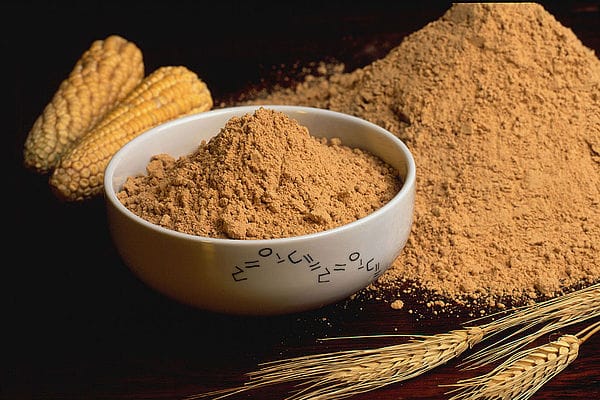
Gofio is an unsifted flour made by toasting cereals and then grinding them finely with a stone. In the past, barley, wheat and even pulses or fern rhizome were mostly used, depending on periods of scarcity. Since the 16th century, maize (known locally as “millo”), imported from America, has become the most widely used cereal, alongside wheat.
The result is a lightly roasted flour with a characteristic toasted smell, which is ready in seconds as it needs no further cooking. That is precisely what makes it as practical as it is nourishing.
A Guanche legacy that became a symbol of the island
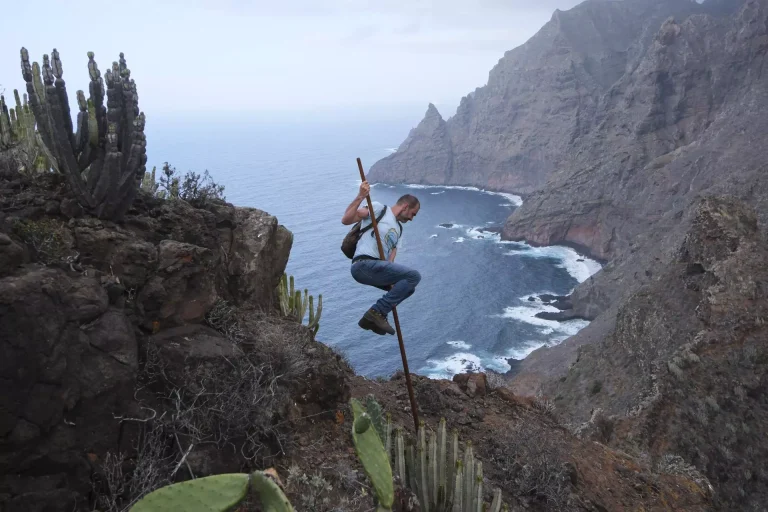
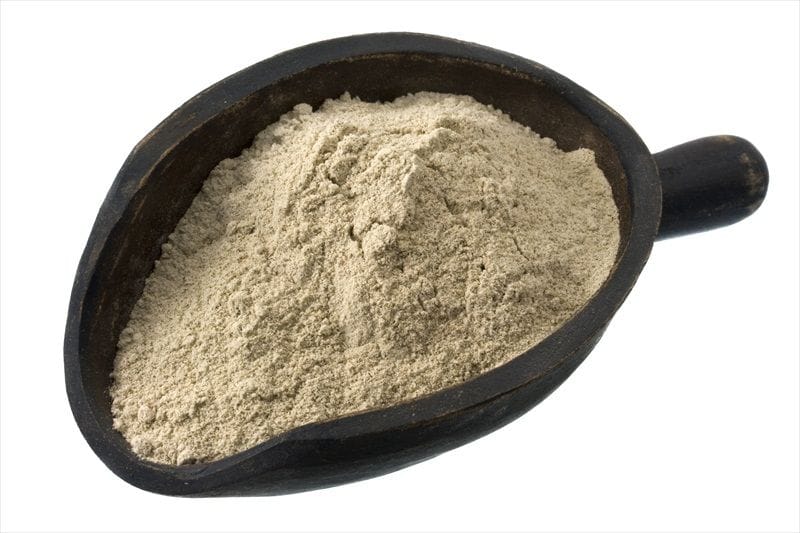
Gofio goes back to the Guanches, the first inhabitants of Tenerife, of Berber origin. Long before the Spanish conquest of the 15th century, they were already toasting cereals in terracotta vessels before grinding them between two volcanic stones. To carry it and knead it while travelling, they used a “zurrón”, a kind of goatskin bag that served as both container and makeshift mixing bowl. Another legacy of those shepherds: the shepherd’s leap, a way of racing down slopes with a long pole, still practised today.
This recipe has come down the centuries almost unchanged, which makes it today much more than a simple ingredient: a true marker of Canarian identity, found as much in the most modest homes as in the island’s most creative restaurants.
From survival to identity: a short history of gofio
Gofio has not only lived through Canarian history, it has sometimes saved it. In the difficult post-war years in Spain, its high calorie and nutritional value is said to have helped the people of the Canary Islands avoid some of the deficiencies that then affected part of the population on the mainland. Canarian emigrants who left to seek their fortune in America also always took it with them, as a compact, nourishing reserve for the crossing.
Today, gofio has made a notable comeback in creative Canarian cuisine: some chefs include it in desserts, sauces or presentations far more elaborate than the simple peasant porridge it originally was, without ever disowning its humble roots.
How gofio is enjoyed today
The simplest version is gofio con leche: one or two spoonfuls mixed into milk at breakfast, a bit like porridge. In its savoury version, gofio escaldado is made by mixing the flour with a hot broth, most often fish, to get a texture close to a purée, served as a side.
Another great classic is the pella de gofio, a compact ball made by mixing the flour with water, salt and sometimes a little olive oil, which is cut into slices to go with a meat or fish dish. On the sweet side, gofio is also found in mousse, ice cream or cake, a more modern way of introducing it to visitors who didn’t grow up with it.
Where to taste and buy gofio in Tenerife
The easiest way is to taste it directly in a guachinche: several of the places we have personally tested in our Local Food section regularly serve gofio, either as a side or in a dish of the day. Don’t hesitate to ask the waiter directly if you don’t see it on the menu.
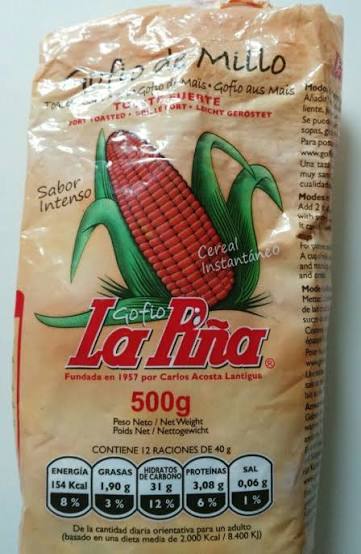
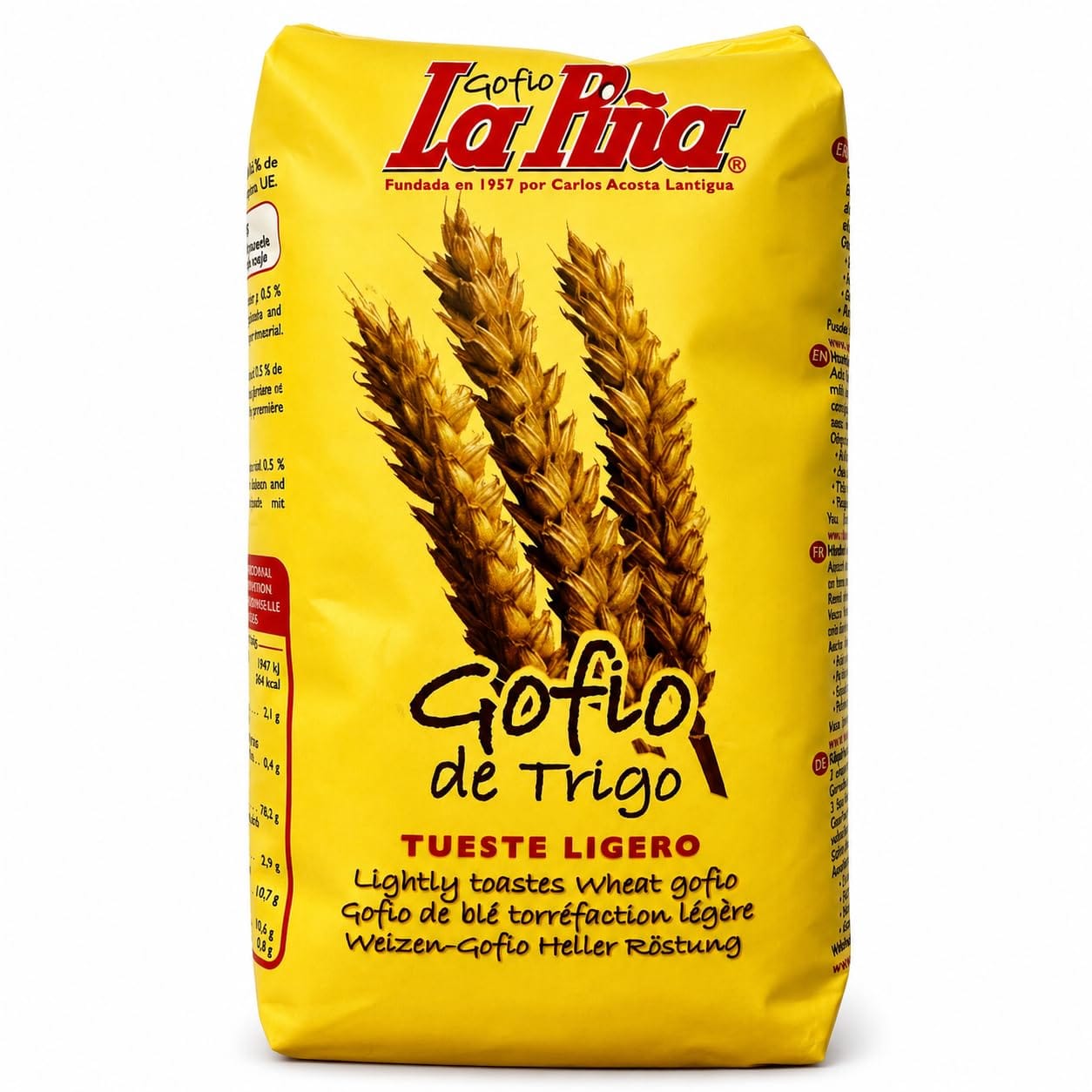
To take some home or simply to try it out of curiosity, you will find it in any supermarket on the island, in the flour aisle, in wheat (“gofio de trigo”) or maize (“gofio de millo”) versions, with historic brands such as La Piña, which has been producing gofio since 1957. The local markets covered on our Shopping in Tenerife page are also a good chance to find it made more traditionally, sometimes freshly ground on the spot.
For more ideas of products to bring back, from ron miel to customs rules on the way home, read my article What to bring back from Tenerife.
Gofio is just one of the many typically Canarian words you will come across on the island: find them all in our Canarian glossary.
What exactly is gofio?
It is an unsifted flour made by toasting and then grinding cereals, mainly maize and wheat in Tenerife today. It is eaten as it is, with no further cooking.
Where does gofio come from?
Gofio is a legacy of the Guanches, the first inhabitants of the Canary Islands, of Berber origin. Its basic recipe has barely changed since pre-Hispanic times.
How do you eat gofio?
In several ways: mixed with milk at breakfast, as a savoury side (gofio escaldado, with a broth), as a compact ball (pella de gofio), or today in sweet versions in desserts such as mousse or ice cream.
Where can you buy gofio in Tenerife?
In any supermarket on the island, in the flour aisle, in wheat or maize versions. You can also find it in local markets, sometimes ground more traditionally.
Does gofio have a quality label?
Yes, “Gofio Canario” has had a European Protected Geographical Indication (PGI) since 2014, which regulates its production conditions.