

Climbing Teide via Pico Viejo: 24 km, Sunset and a Summit Under the Stars
There are several ways to reach the summit of Teide on foot. The best known goes via Montaña Blanca (see our PNT 07 guide), and I had already done it. This time I wanted to try the other side: start from the Mirador de Las Narices del Teide, reach Pico Viejo on trail PNT 09, then finish up to the summit of Teide on PNT 10.
On 12 November 2026, I set off in the middle of the afternoon, watched the sun set over a sea of clouds covering the whole island, and reached the summit at 8:45 pm, at night, among the fumaroles. Back at the car at 1 am. It is one of the most beautiful and most demanding hikes I have done in Tenerife.
The hike at a glance
- 24.5kmDistance
- 7 h 12Walking time
- +1,925mElevation gain
- −1,925mElevation loss
- 3,715mHighest point
- 2,050mLowest point
- Round tripRoute type
- HardDifficulty
So you don’t get lost
- Start
- Mirador de Las Narices del Teide, on the TF-38 road, around 2,050 m. The start of PNT 09 is right in front of the car park. GPS of the trail start according to OpenStreetMap: 28.23852 / -16.69863. Google Maps directions · OpenStreetMap
- Finish
- Summit of Teide, 3,715 m. GPS: 28.27277 / -16.64234. You go back down the same way.
- Landmarks
- On the track rebuilt from OpenStreetMap, approximate altitudes on the way up: about 2,080 m at km 2, 2,340 m at km 4, 2,730 m at km 6, 3,060 m at km 8, 3,370 m at km 10, La Rambleta around km 11.5 (about 3,540 m) and the summit around km 12.3 (3,715 m). You come back the same way, up to 24.5 km. Use the track as a guide, not as a GPS track.
- Getting there
- I came by car. I did not check whether there is public transport to the viewpoint.
- Waymarking
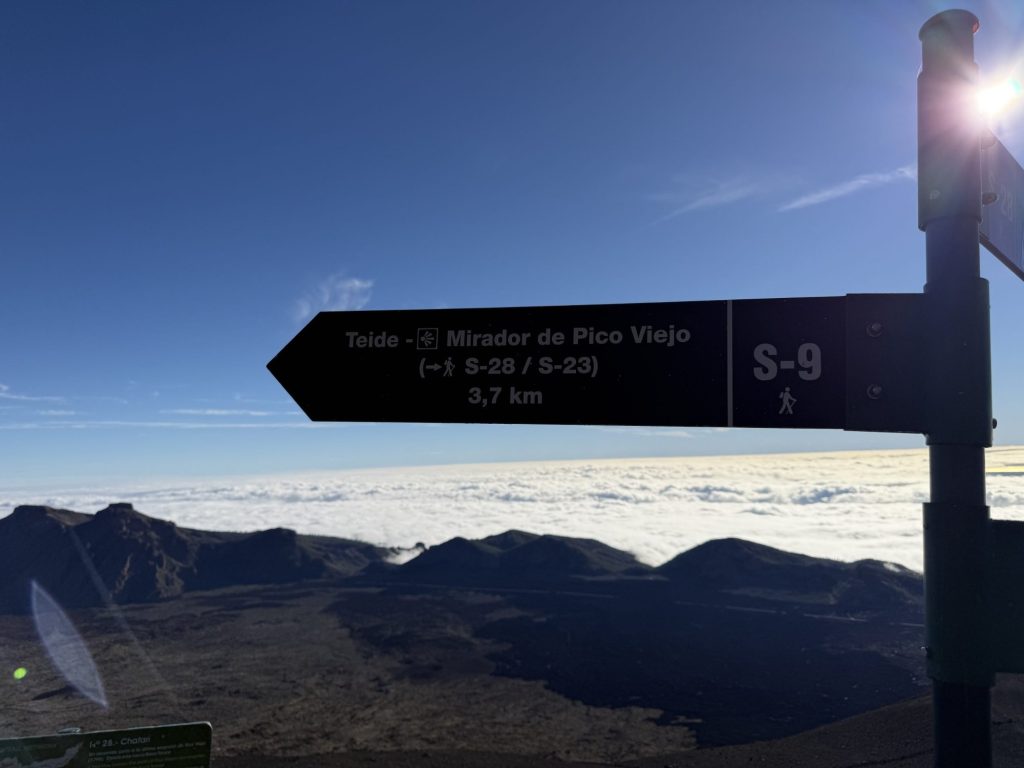
- Signs along the route (trail S-9) and directional signs at junctions.
- Permits
- Two bookings on Tenerife ON: PNT 09 and PNT 10. See the permits section below.
- Warning
- Unstable ground (gravel and loose stones), altitude up to 3,715 m, icy wind at the summit and areas without signal: do not set off without mountain experience.
- Start and finish: Mirador de Las Narices del Teide (around 2,050 m)
- Route: PNT 09 to Pico Viejo, La Rambleta, then PNT 10 to the summit of Teide (3,715 m). Back the same way.
- Distance: 24.5 km round trip
- Elevation gain: 1,925 m
- Actual walking time: 7 h 12, for nearly 10 h 45 on the mountain including breaks
- Steps: about 35,000
- Difficulty: hard, for experienced hikers only
- Permits: a PNT 09 booking and a PNT 10 booking, both on Tenerife ON
- People met: 4 on the way up, none on the way down
My timings
- 2:00 pm: arrival at the car park, preparing the night gear
- 2:15 pm: start
- About 3:00 pm: first real volcanic landscapes
- 6:15 pm: sunset, between Pico Viejo and the summit
- 8:45 pm: arrival at the summit of Teide
- About 9:00 pm: start of the descent
- 1:00 am: back at the car
Starting in full sun, in the middle of the lava flows
That day the whole island was under cloud. The only place bathed in sunshine was Teide National Park. About 17 °C at the start, not a cloud above us: ideal conditions.
The car park at the viewpoint is large and easy to find, and the start of PNT 09 is right in front of it. No need to look for it.
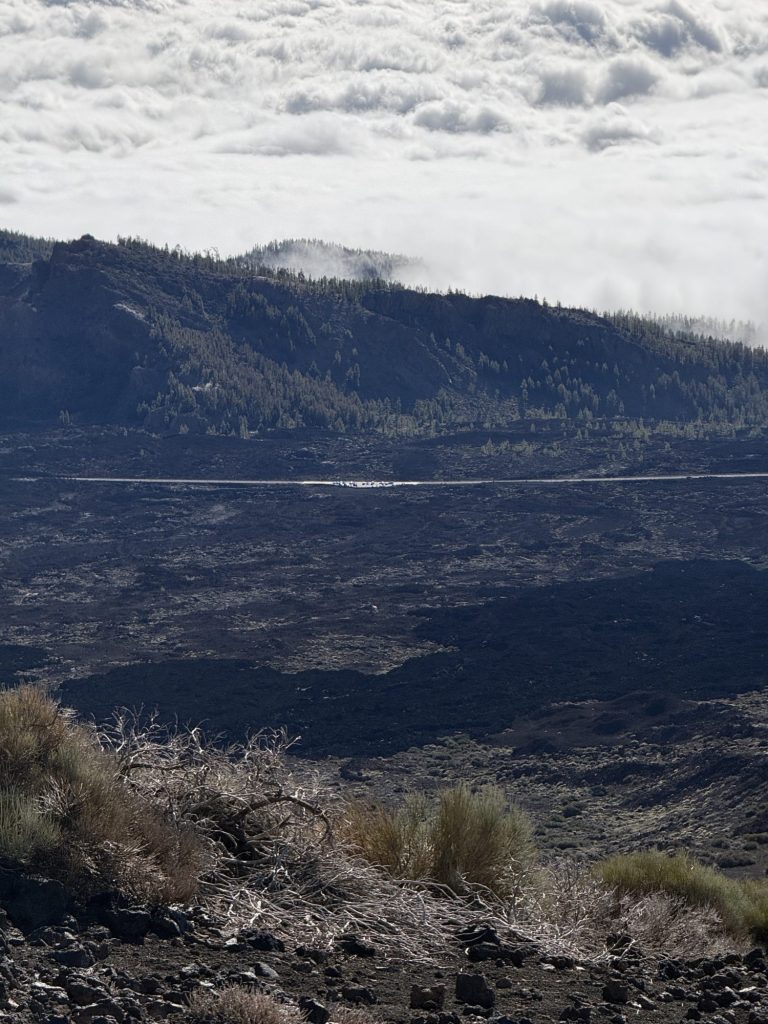
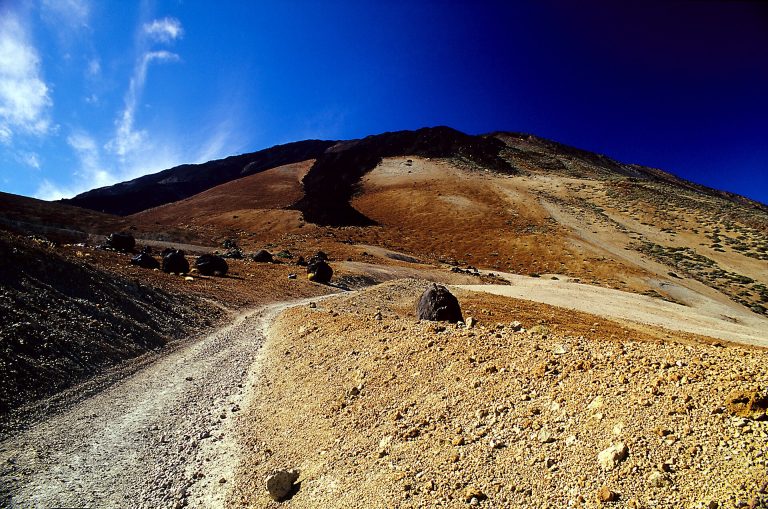
First difference with Montaña Blanca: here, it climbs straight away. The trail is more technical, with a few short descents now and then, and above all a constant alternation of gravel and loose stones. The ground is far less stable, so you really have to watch your ankles.
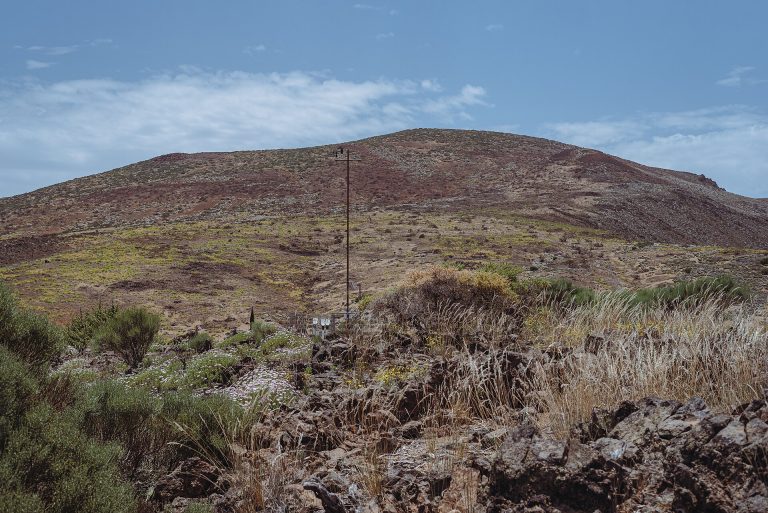
What struck me most in this first part were the old lava flows. From the start, you are in the atmosphere. And after about 45 minutes, the volcanic landscape truly opens up.
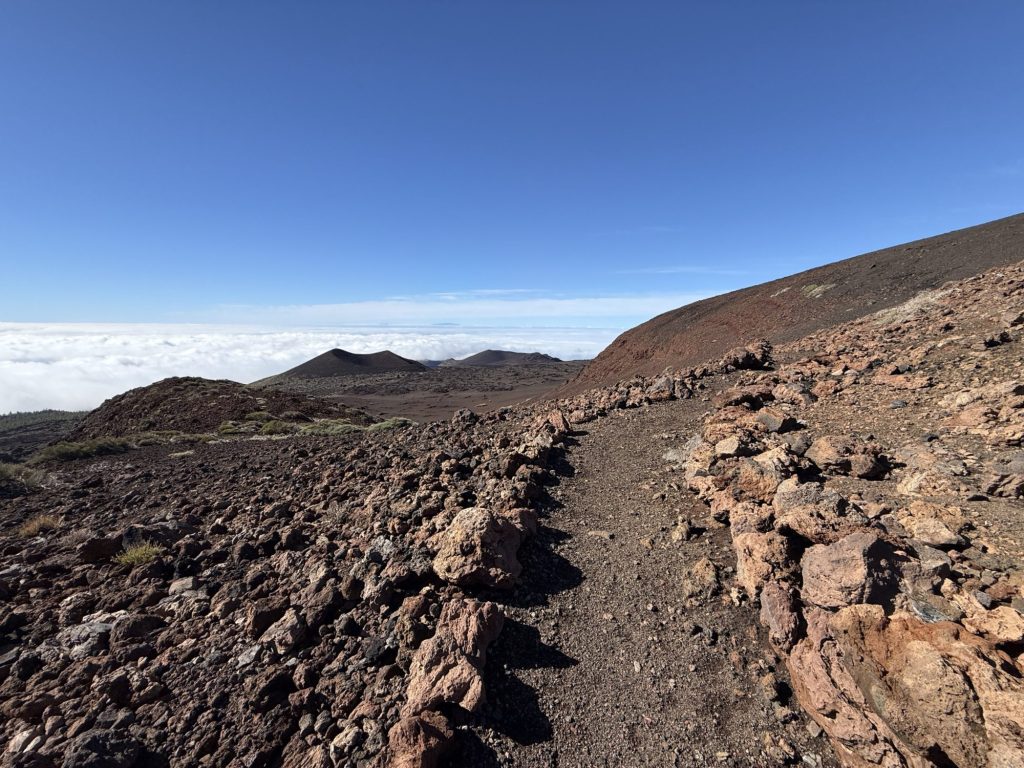
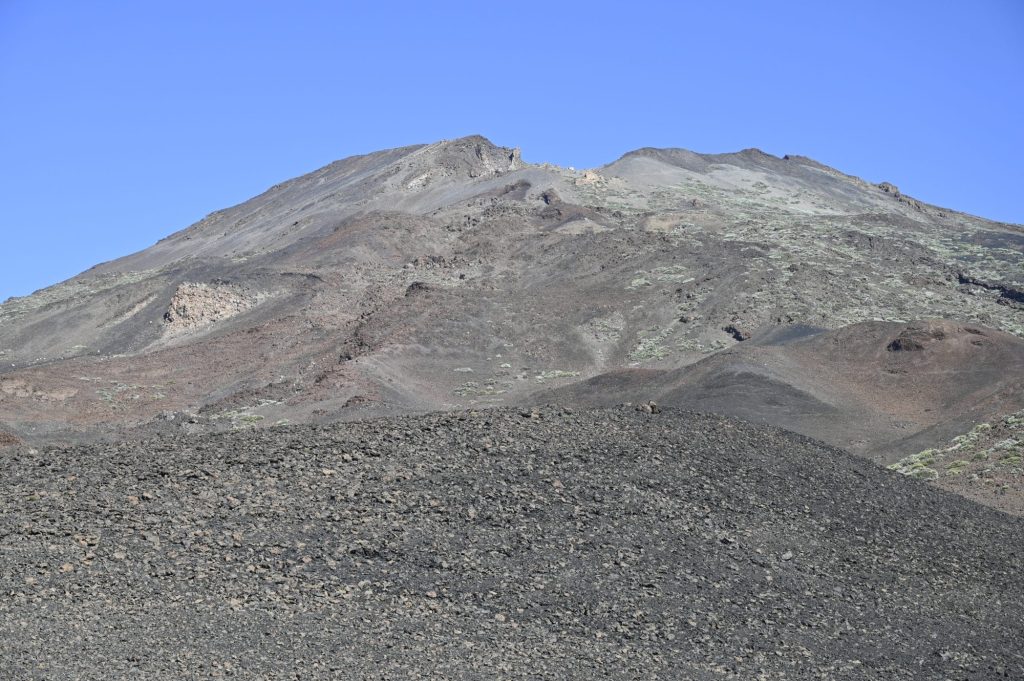
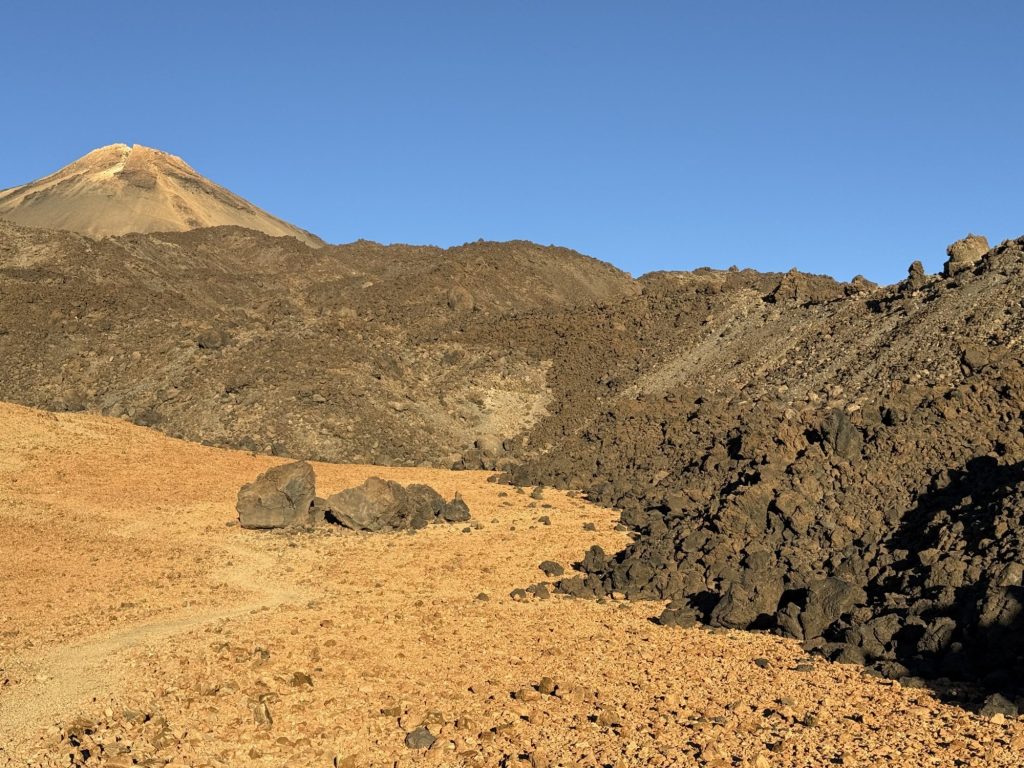
Another detail I loved: you can see your goal. At the start, Pico Viejo is clearly visible ahead. Once you reach Pico Viejo, Teide rises right behind it. Via Montaña Blanca, you cannot see the summit at the start. Here, you always know where you are heading, and it is a real motivator.
The Pico Viejo crater: a detour worth the time
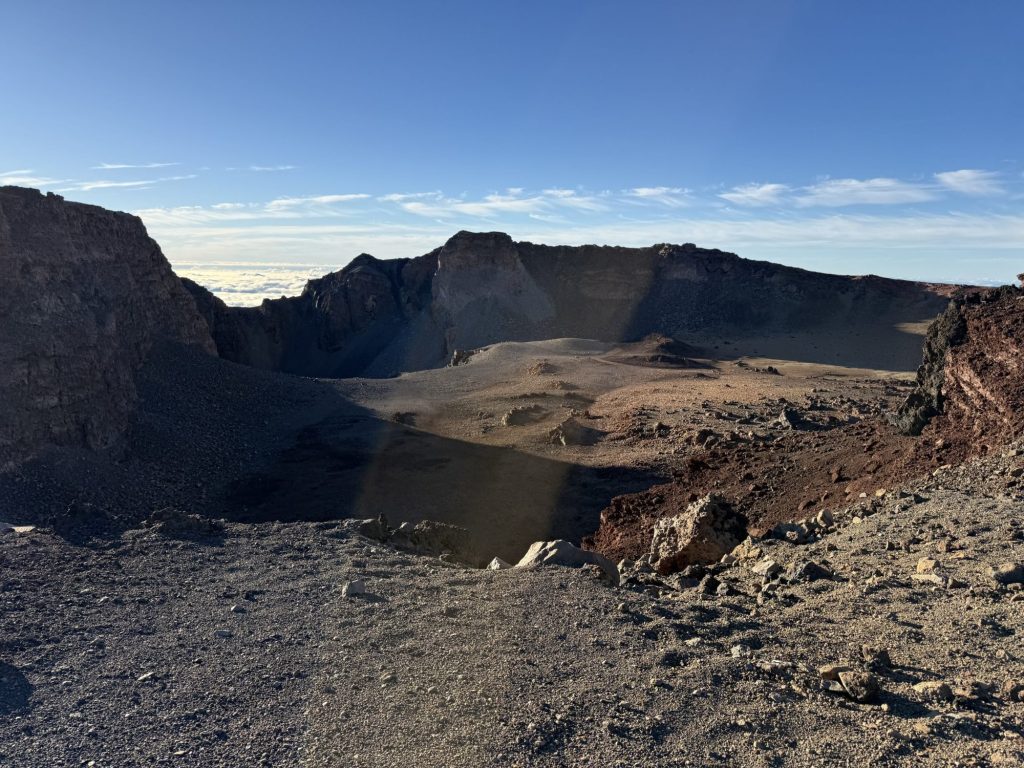
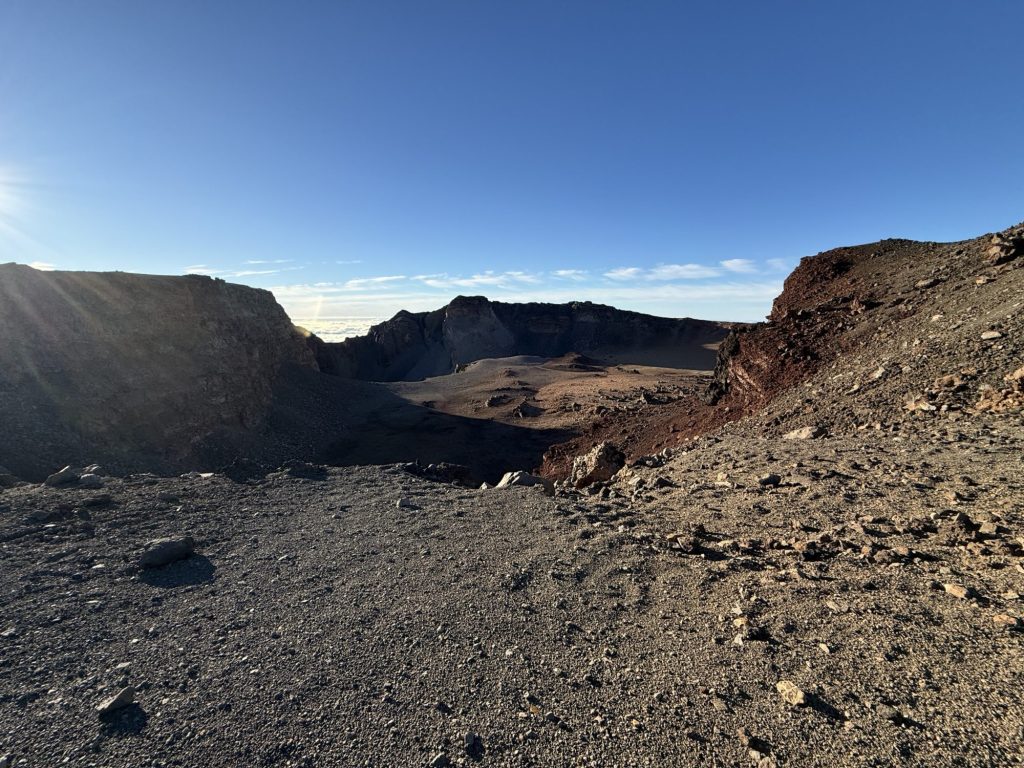
I made a short three-minute detour to look at the Pico Viejo crater up close, still in daylight. And it is impressive. The crater is huge, without a trace of vegetation, with lava shades ranging from light brown to very dark brown. From the trail, you really get a sense of its size.
A little higher up, once you have passed it, a viewpoint lets you see it from above. Whether to take the detour is up to you, depending on how you feel and your timing, but if you have a few minutes, go for it.
The sea of clouds, always behind you
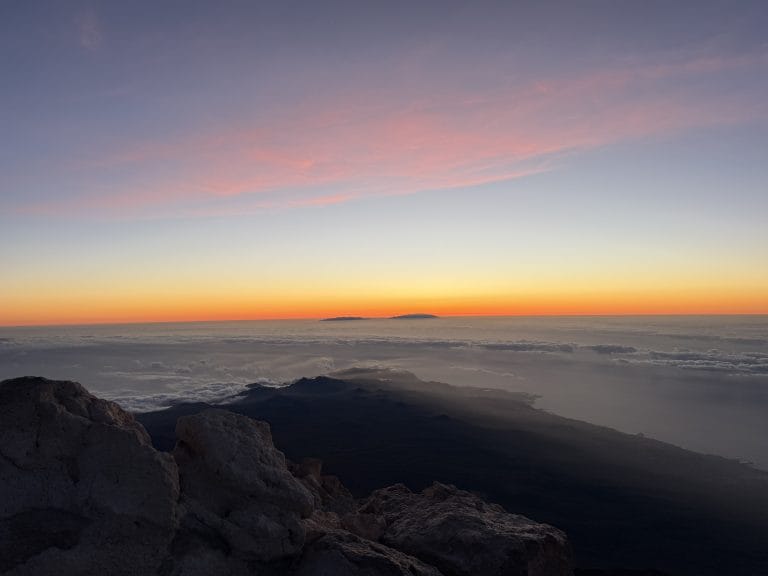
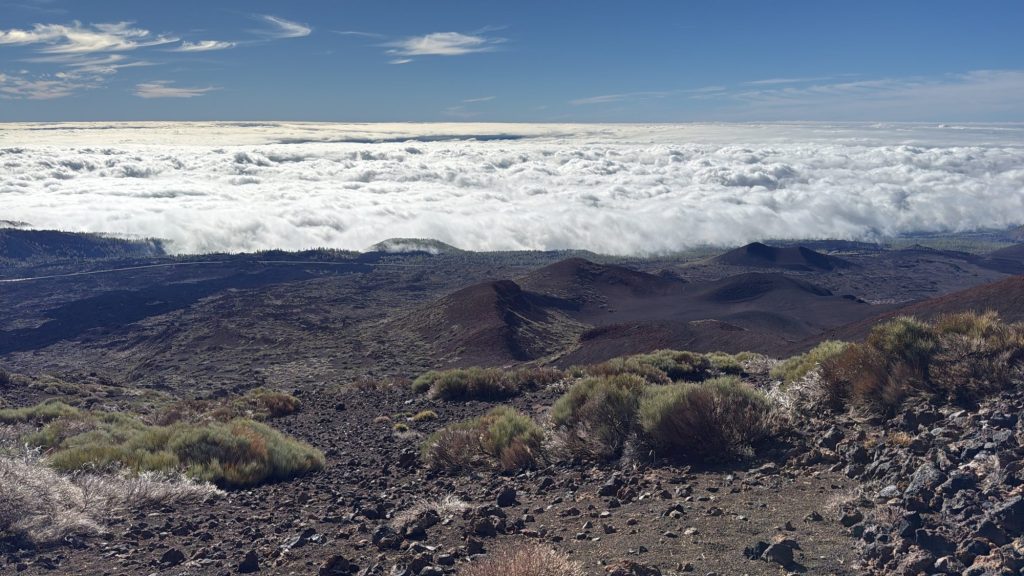
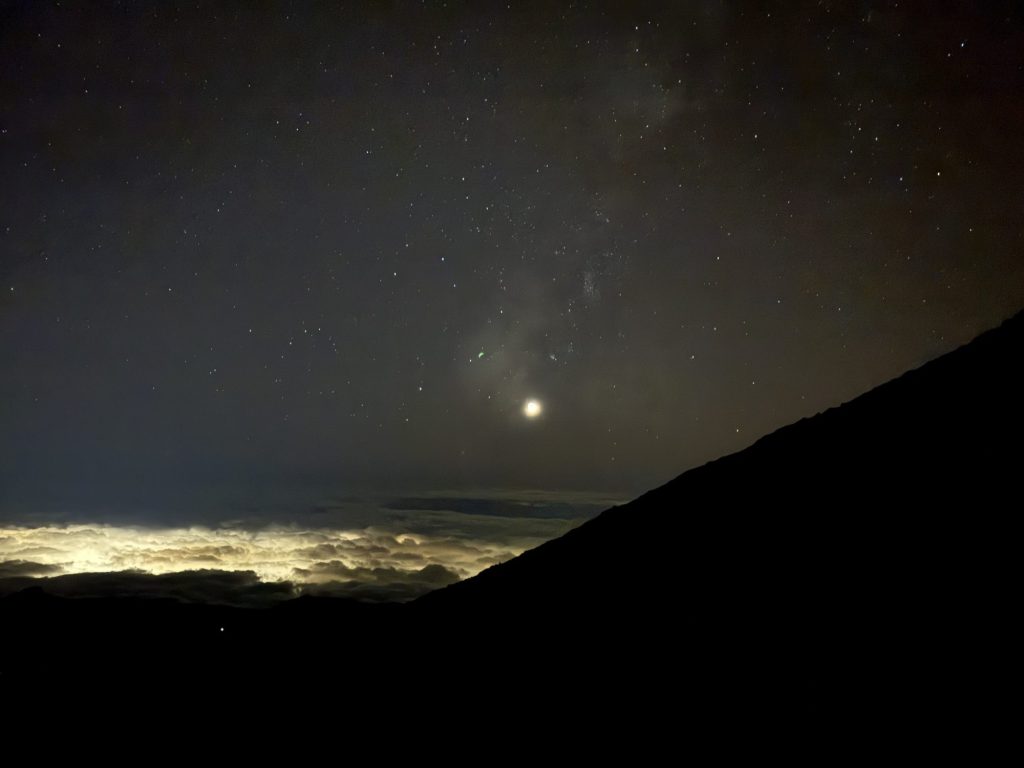
After about an hour of walking, the sea of clouds appears behind us. And the higher you go, the more exceptional it gets: it stretches across the whole horizon. That day I was well above it, and the whole island was covered, at least as far as I could see. Only one other Canary Island poked through in the distance, La Palma I think.
My advice: remember to turn around regularly. When you climb, your head is down on the trail, and it is a pity to miss a show you are not used to seeing.
Sunset between Pico Viejo and Teide
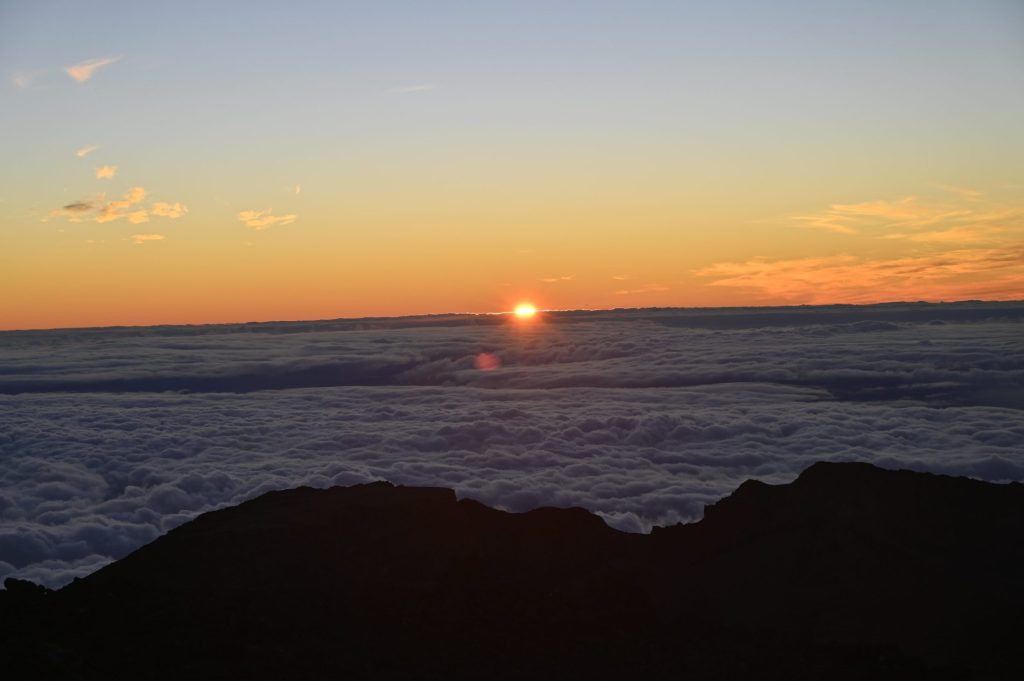
At 6:15 pm, I was a little past halfway between Pico Viejo and the summit of Teide. My PNT 10 slot ran from 6 pm to 10 pm, which left me some margin: I sat down for 15 to 20 minutes to enjoy it.
Remember to adapt your timing to the season: in Tenerife, the sun sets around 6:10 pm in December, but around 8:50 pm in May and around 9 pm in June and July (local time; find all the times in our month-by-month table of sunrise and sunset times in Tenerife). A night hike in summer is nothing like the one I did in November.
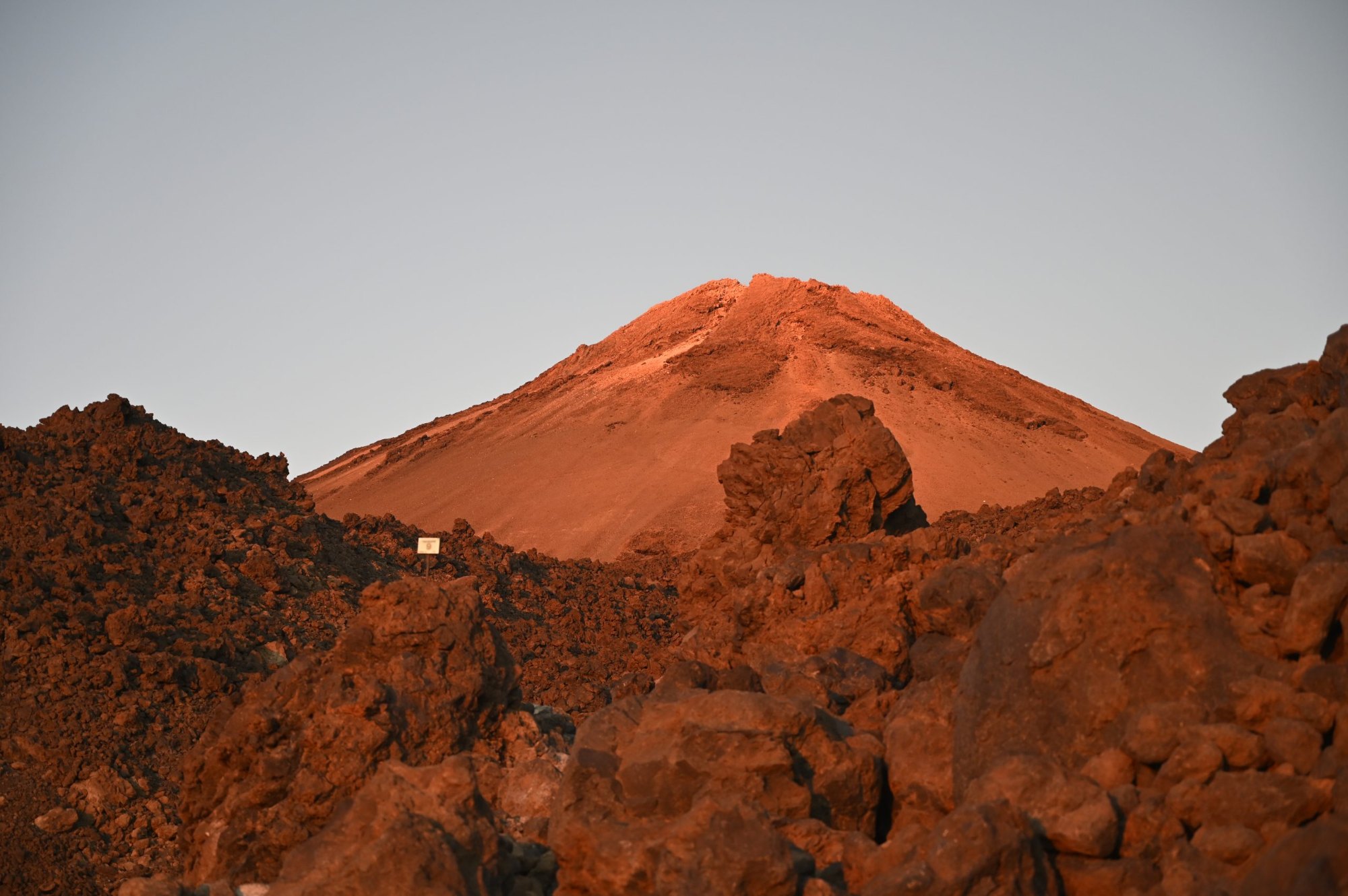
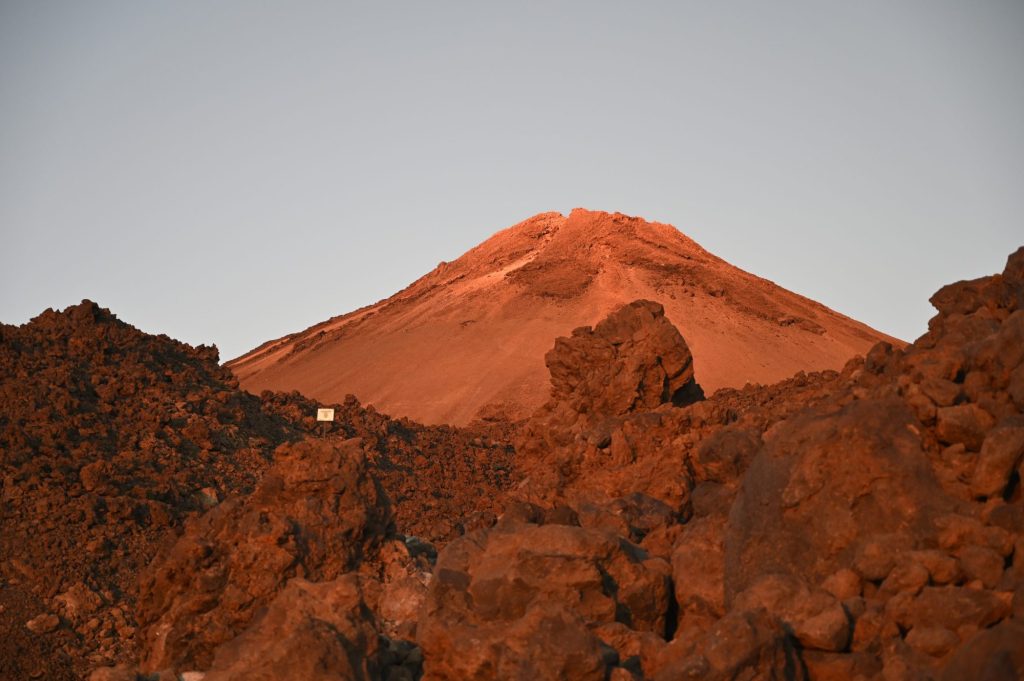
The horizon was orange and red above the sea of clouds, and in front of me, a golden light lit up Teide. That is when I took almost all of my photos. I took almost none at the summit, having arrived too late for the light.
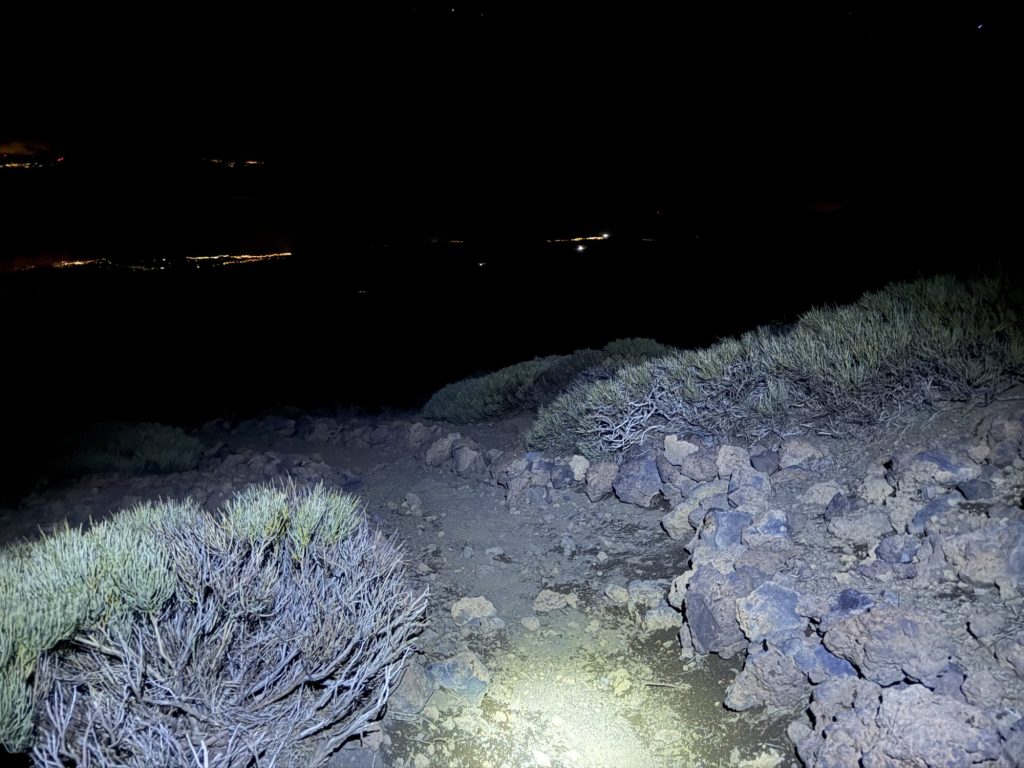
The night climb, by headlamp
I had about 2.5 hours of walking in the dark before reaching the summit. I could not leave earlier that day, and since I had already climbed via Montaña Blanca, I told myself it was time to try something different.
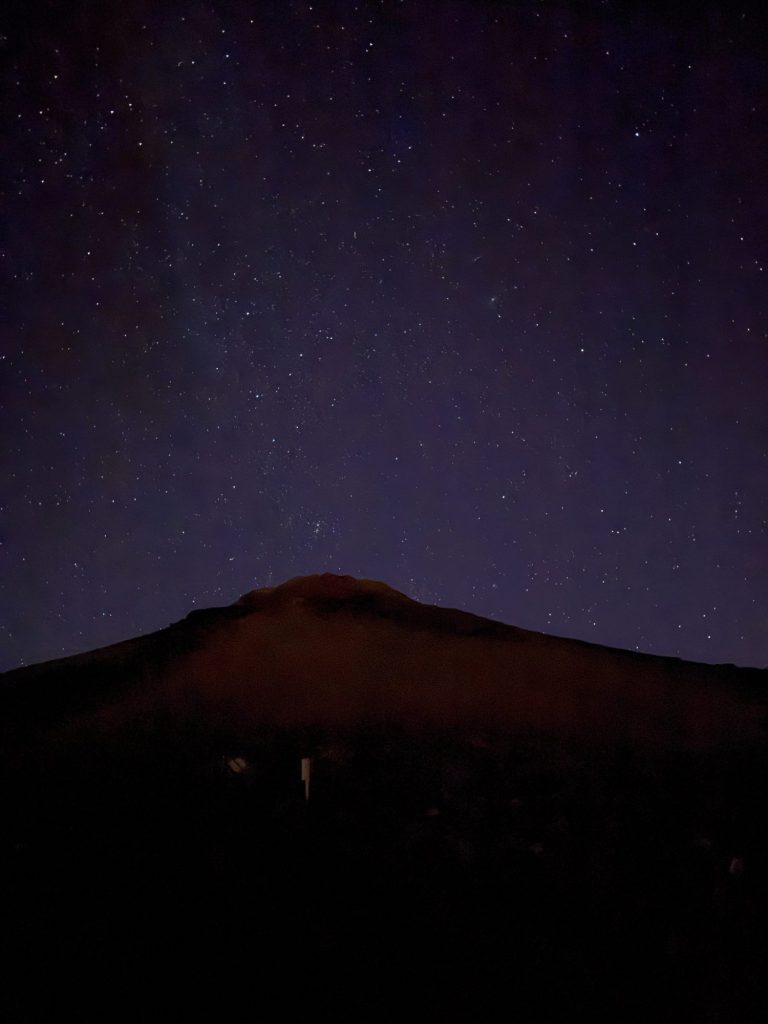
Walking by headlamp feels completely different. Very cool, but also very intense on the heart. Between 45 minutes and an hour after sunset, the sky became dark enough to see the stars. I even spotted a shooting star, really low on the horizon.
My best memory of this hike? Seeing Teide right after sunset, with the stars appearing above it.
You feel the altitude
The hardest part is clearly the last section. I exercise regularly and I am in good shape, but as soon as I climbed, I was out of breath. My watch showed a heart rate around 160 bpm, and I had to make many short stops to catch my breath.
The difference is gradual but clear: on PNT 09, you spend much more time at high altitude than via Montaña Blanca. My legs also started to tire towards the end of the climb. Everyone reacts differently to altitude, but expect to feel the difference.
Once at La Rambleta, PNT 10 up to the summit is very easy to follow, even at night. I had already done it twice, but honestly, you cannot get lost there.
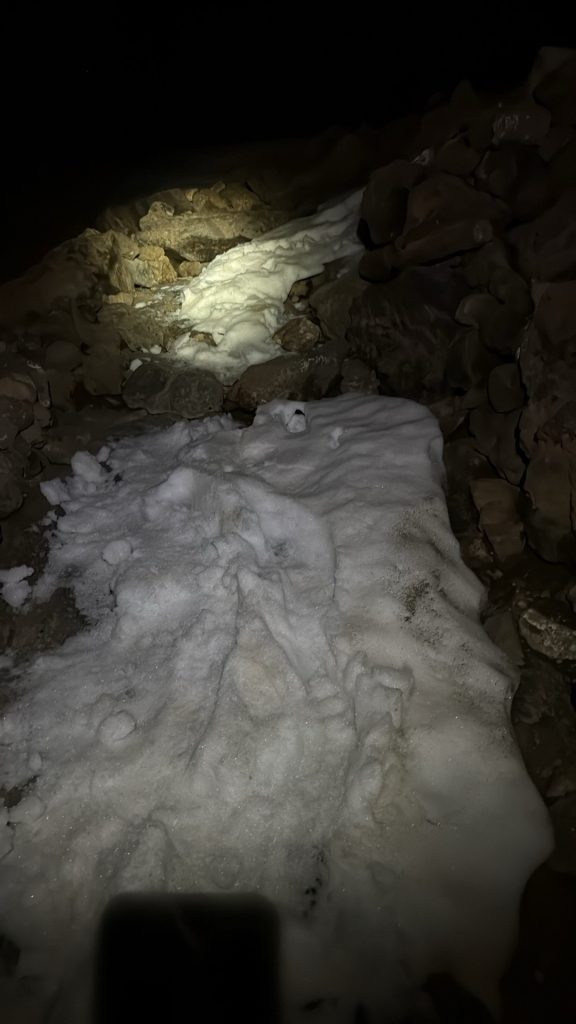
On the way, I came across a short stretch of snowy trail. When there is snow or ice, Tenerife ON asks for crampons and an ice axe: check the conditions the day before.
The summit of Teide, at night
Arrival at the summit at 8:45 pm. It was dark, but you could make out the fumaroles, and above all, you could smell them: a strong smell of sulphur, even stronger towards the end. With the wind, the steam stayed a bit diffuse.
It was about 5 to 6 °C, with a very cold wind that made it feel much colder. To give you an idea: take your gloves off for five minutes and your hands freeze. I ate a little to regain strength, then went back down without lingering.
Four hours of descent in the dark
I went back down the same way, passing Pico Viejo again, with my headlamp on the whole time. Physically, I found the descent much easier than the climb. Technically, it is another story.
At night, you have to analyse every step even more than by day. One stride on a loose stone and it is a fall or a twisted ankle. That is where PNT 09 is much trickier than Montaña Blanca: via Montaña Blanca, you often come down on lava blocks that form something like steps. Here, there is much more continuous slope and gravel, which makes the ground slippery.
I picked up the pace at the end to be back at 1 am. If you descend at a relaxed pace, allow 1.5 to 2 hours more. Result at the finish: two small blisters, slightly sore knees… and the hardest part, in the end, was pressing the clutch to change gears on the drive back!
PNT 09 or Montaña Blanca: which hike should you choose to climb Teide?
I have done both, and they are really two different experiences.
Via Montaña Blanca (PNT 07), the first part is relatively easy, on a wide track. The difficulty comes in the second half, which is clearly more technical. The ground is often made of lava blocks forming steps, which are more stable.
Via Pico Viejo (PNT 09), it climbs from the very start, with a few calmer stretches to catch your breath between the hard parts. The ground is less stable (gravel, loose stones), you stay longer at high altitude, and the descent is trickier. In return, the landscapes are volcanic from the first minutes, you have your goal in sight at all times, and you meet very few people.
My opinion: PNT 09 is much more technical and demanding than Montaña Blanca, I really felt it. For a first ascent of Teide, Montaña Blanca remains the most reasonable choice. If you already have mountain experience and are looking for a wilder route, Pico Viejo is incredible.
Permits: PNT 09 and PNT 10
To do this route, you need two separate bookings, both on Tenerife ON (website or app):
- PNT 09 Teide, Pico Viejo, Mirador de Las Narices del Teide: booking is compulsory. Since the Cabildo resolution of 14 October 2026, the trail is limited to 95 places per day. The new rules also require compulsory equipment and provide for a fine of up to €600 for access without a permit. Full details are in our article on the new Teide hiking rules.
- PNT 10 Telesforo Bravo (from La Rambleta to the summit): a separate booking, with a precise time slot. Mine ran from 6 pm to 10 pm. In the daytime, the 2026 fee is €15 for non-residents, while sunrise and sunset slots are free: it is all explained in our guide to the Teide summit permit.
In my case, access to Teide was closed because of storm Charles. Once it had passed, the trails reopened and places were put back online the day before. So I booked both permits 24 hours ahead, which is rare: normally, plan well in advance, especially for PNT 10.
On the trail, I did not meet any ranger. But that is no reason to set off without a permit.
Essential gear
- Shoes: hiking shoes are compulsory. I wore a pair of Quechua from Decathlon, which did the job very well.
- Clothing (layering system): by day, hiking trousers and a technical t-shirt. When the temperature drops, running leggings under the trousers, a base layer on top, a hat and gloves. At the summit and for the whole descent, a down jacket.
- Lighting: a main headlamp and a spare one. If your lamp fails in the middle of the descent, with no light, it is really complicated.
- Water: I set off with 4 litres and drank 2.5. At night you drink much less, but it is better to take plenty.
- Food: biscuits, protein bars, fruit bars, nougat and an energy powder to mix into water.
On these trails, Tenerife ON also requires a survival blanket and a charged phone. The full list is in our guide to mandatory hiking gear, and we cover the rest in the hiking gear checklist.
Navigation: the trail is well marked, with signs all along the route and directional signs at the junctions. But a GPS track is still essential, especially as there are many areas without signal. I used my Garmin watch and AllTrails on my phone. Be careful: I had forgotten to download the offline map, and that feature is now reserved for paid AllTrails subscriptions. Luckily I had the track duplicated on the watch. Also bring a power bank.
My three tips before you set off
- Know your limits. Do not set off without mountain experience. It is long, intense and the effort is significant, especially with the altitude.
- Prepare the night as a hike in its own right. Two headlamps, warm clothes, gloves, a hat and a down jacket. At the summit, the icy wind is unforgiving.
- Check everything the day before. Weather at the summit (wind and temperatures, not just the general forecast for the island), whether the trails are open and the validity of both your permits.
My verdict on this hike
This climb is incredible, as much for its beauty as for its difficulty. The lava flows, the Pico Viejo crater, the sea of clouds as far as the eye can see, the sunset, then Teide under the stars: it has it all. And with only four people met on the way up and nobody on the way down, you really feel as if you have the volcano to yourself.
If you are an experienced hiker and have already climbed Teide via Montaña Blanca, this is the logical next step. Prepare well, and do not forget to turn around to admire the sea of clouds.
Also read: sunrise at the summit of Teide and the Teide National Park guide.
Frequently asked questions about the Teide hike via Pico Viejo
How long does it take to climb Teide via Pico Viejo?
I walked for 7 h 12 over 24.5 km round trip, nearly 10 h 45 on the mountain including breaks, with about 4 hours of night descent. Allow a full day.
Do you need a permit for PNT 09 and PNT 10?
Yes. Both require a separate booking on Tenerife ON. PNT 09 is limited to 95 places per day since the Cabildo resolution of 14 October 2026, and PNT 10 is booked by time slot. A fine of up to €600 is provided for access without a permit.
Can you climb Teide at night via Pico Viejo?
Yes, if your PNT 10 slot allows it: mine ran from 6 pm to 10 pm and I reached the summit at 8:45 pm. You need two headlamps, warm clothes and a GPS track, and you should not set off without mountain experience.
What is the difference between PNT 09 and Montaña Blanca (PNT 07)?
PNT 09 climbs from the start, on less stable ground (gravel and loose stones), keeps you longer at high altitude and its descent is trickier. In return, it offers volcanic landscapes from the first minutes and very few people. Montaña Blanca remains the most reasonable choice for a first ascent.
What equipment is compulsory on these trails?
Tenerife ON requires in particular hiking shoes, long trousers, a fleece, water, a charged phone, a headlamp with spare batteries and a survival blanket, with a hat and gloves in winter. Missing equipment can lead to access being refused.
Sources: Cabildo de Tenerife resolution of 14 October 2026 and Tenerife ON (booking conditions and compulsory equipment), consulted in November 2026. Distance, elevation and times: measured by Fabien on 12 November 2026.