

Canyoning in Tenerife: what really exists (and what is banned)
Canyoning does exist in Tenerife, but it is a niche, tightly regulated activity, and the island’s two best-known ravines (Masca and Infierno) are not canyoning destinations. Here is what is really done, what is banned, the November 2026 prices and the rules to know.
🎯 The essentials
- 🧗 In short: only a few ravines, with a guide and a permit.
- ❌ Barranco del Infierno: canyoning is banned there all year round. The guided visit is a walk, with no ropes or abseiling.
- 🥾 Masca: a regulated hike with compulsory booking. Technical canyoning is not offered there.
- 💰 Prices: about €65 to €100 for an introduction, about €205 for a demanding water canyon (November 2026 prices).
- ⏱️ Length: 2 to 3 hours for a family outing, about 5 hours for an introduction, 6 hours for a demanding canyon.
- 🧭 Not tested yet: I have not been canyoning in Tenerife yet.
Where is canyoning really done in Tenerife?
Only a few ravines are descended with ropes, abseils and sometimes jumps. The best known are Los Arcos (Chimoche), Lerito and Los Carrizales, rounded out by Albarderos, La Campana and Llano Frío (Anaga). Access conditions change, so go through a professional who handles the permits.
In short, allow about €65 to €100 for an introduction and from about €205 for a demanding water canyon (November 2026 prices).
Where canyoning is banned or not on offer
Canyoning is banned all year round in the Barranco del Infierno, as is swimming in the stream. The guided visit you can book is a walk of about 3 hours, with no ropes or abseiling. To prepare for it, read our Barranco del Infierno guide.
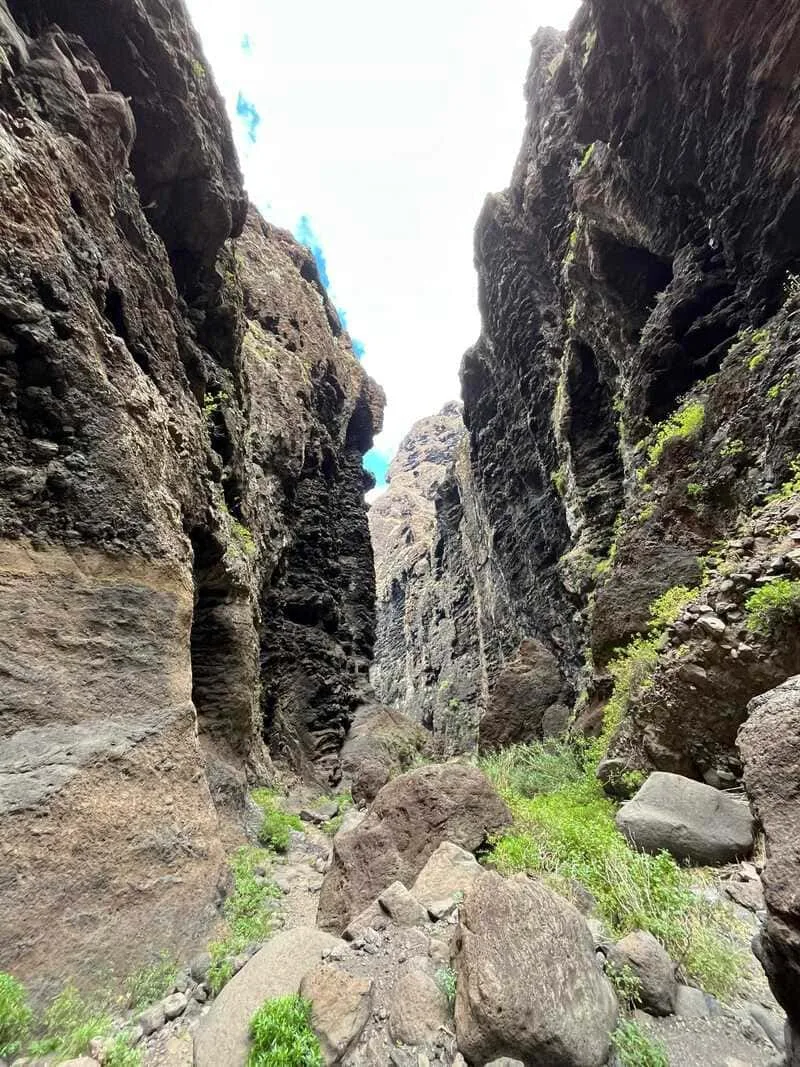
The Barranco de Masca is a regulated hike, with compulsory booking and a shuttle. Technical canyoning is not offered there: you walk it, you do not abseil it. For the walk, read our Barranco de Masca hike and our Masca guide.
What the regulations say
Canyoning is regulated by the Cabildo. A general authorisation for active tourism companies runs until 31 December 2026, and some canyons, such as Los Carrizales, require prior authorisation. These rules change from one year to the next, so choose a registered company that handles permits, insurance and qualified guides, and ask it to confirm the permit for the canyon you book.
In the Canary Islands, active tourism companies must file a declaration, hold insurance covering rescue, evacuation and accidents, and employ qualified staff. Spain has an official sports technician qualification in canyoning, but guides’ qualifications are not always stated, so ask the operator.
Conditions and equipment
What if you just want to walk in a ravine?
Without ropes, you have the Barranco del Infierno and the Barranco de Masca, two regulated hikes. To get equipped, read our guide to mandatory hiking gear, and for more ideas, our page on activities to book in advance in Tenerife.
My view
🧭 Not tested yet
I have not yet been canyoning in Tenerife. This page is mainly here to save you from searching for a Masca or Infierno descent that does not exist, and to show you what is really done.
Frequently asked questions
Can you go canyoning in Tenerife?
Yes, but only in a few ravines, with an authorised company. It is not a mass activity as in some other destinations.
Can you go canyoning in the Barranco de Masca?
The Barranco de Masca is a regulated hike with compulsory booking. Technical canyoning is not offered there.
Can you go canyoning in the Barranco del Infierno?
No, it is banned there all year round. There is a guided visit on foot, with no ropes or abseiling.
How much does a canyoning trip cost?
About €65 to €100 for an introduction and from about €205 for a demanding water canyon (November 2026 prices).
Do you need experience?
Not for an introduction with a qualified guide. You do need to be able to abseil without fear of heights.