


Tenerife by van: rules, camping and practical tips
Recommended for: Van and motorhome travellersRoad tripTouring stay
🎯 Key things to know
- Wild camping is banned in Tenerife. Sleeping in your vehicle without putting anything outside is usually tolerated, but never guaranteed.
- The rules depend on each municipality, and a regional decree is currently being adopted in the Canary Islands.
- Campsites are limited in number: book ahead, and for the Cabildo’s official camping areas, booking is compulsory.
- Rules last checked: October 2026. Check again before you travel.
Travelling around Tenerife by van or motorhome gives you a lot of freedom, but the island is far from a free-for-all. Mountain roads, protected areas and municipal bylaws all shape how you plan your stay. This guide sums up what is banned, what is tolerated and the options for sleeping legally. It sticks to the facts: the rules are changing, so always check with the town hall and the Cabildo before you go.
Can you sleep in your van in Tenerife?
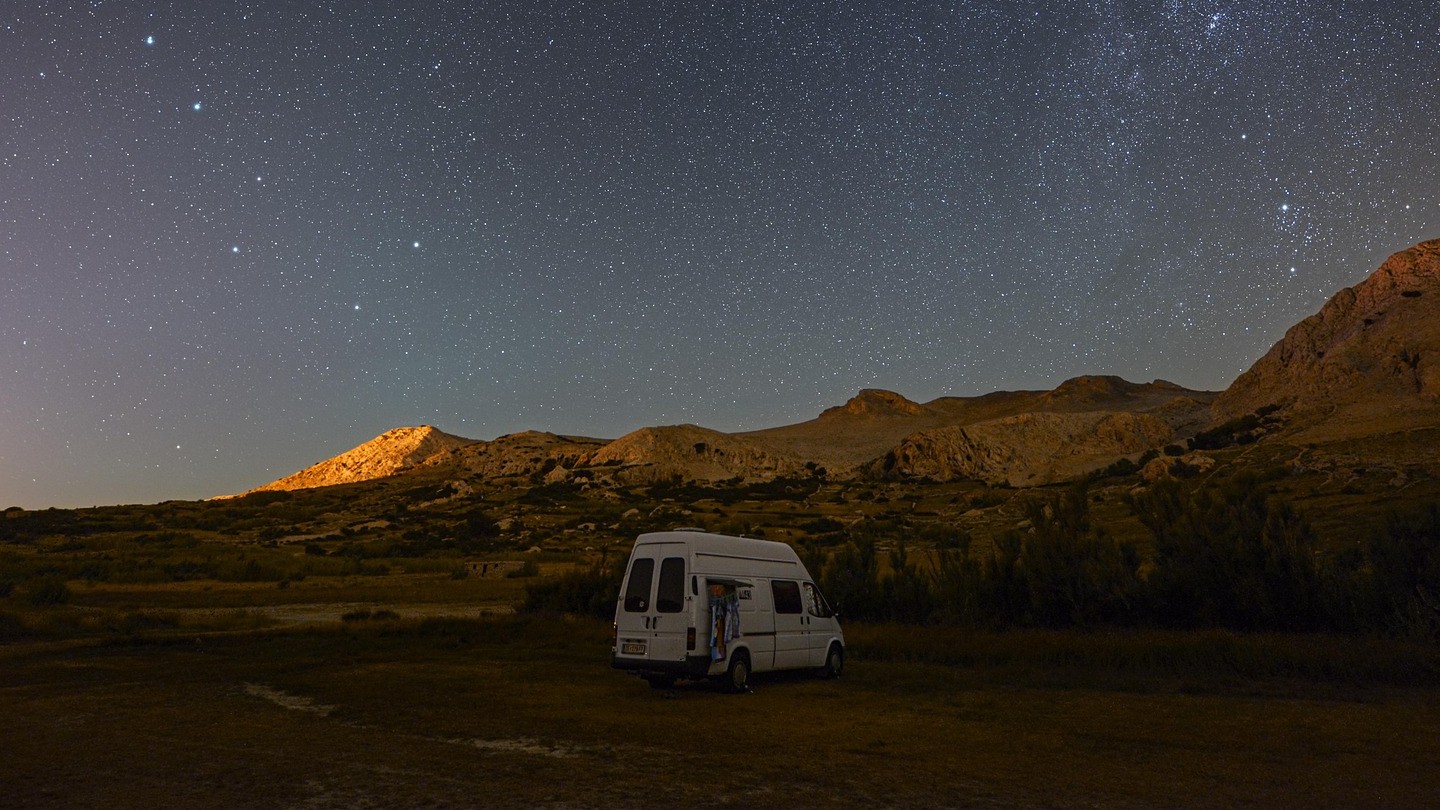
Wild camping is banned in Tenerife. That means putting out chairs, a table or an awning, hanging washing or emptying waste water can be treated as camping and fined. Parking properly and sleeping in your vehicle without setting anything up outside is usually tolerated, but it is not guaranteed: each municipality sets its own rules.
Some municipalities have put up car-only signs, height barriers that stop tall vehicles reaching the coast, or parking time limits that can be as short as 24 hours. In protected natural areas, wild camping is not allowed. Always read the signs on the spot.
What the upcoming decree changes
In the Canary Islands, a draft decree on campsites and open-air camping was approved by the Consultative Council at the end of September 2026. It still has to be adopted by the Canary government and published in the official gazette, with no date announced so far. The text would ban wild camping for tourism purposes (awning, chairs, table, emptying waste water), while still allowing you to sleep in your vehicle if nothing is set up outside. Municipalities could also ban certain spots or limit overnight parking. Motorhome areas would be limited to 72 hours.
These rules are not in force yet. Treat them as a sign of the direction things are heading, and check their status before your trip.
Where to sleep legally
Campsites
Campsites remain limited in number. Camping Nauta, in Arona in the south, takes tents and caravans and also offers bungalows. Book ahead in high season and ask on arrival about pitches for vans or motorhomes.
The Cabildo’s camping areas
The Cabildo de Tenerife runs camping areas in natural spaces. Booking is compulsory: the booking document acts as your permit and must be shown, printed or on your phone. Take Fuente del Llano, in the municipality of Arico, as an example: tents, motorhomes and caravans are accepted for a maximum of 7 consecutive days. There are no facilities on site. Generators, amplified music and portable barbecues are banned, dogs must be kept on a lead and rubbish must be taken away with you. Access is by a 16 km track with no public transport. The management office is at the Casa Forestal in Vilaflor.
The permit can be cancelled in bad weather or when the fire risk is high: check the alerts before you set off. These conditions vary from one area to another, so find out about each site.
A future site in Vilaflor
The Cabildo is preparing a camping and motorhome site in Vilaflor, on the former site of a bottled-water plant, in the Corona Forestal natural park. The plan includes around 35 pitches for tents or motorhomes, with waste disposal points. The call for tenders is announced for the second half of 2026, with no opening date. Nothing is open yet.
Hiring a van in Tenerife
Which licence and what conditions?
A category B licence is enough for a van or motorhome whose maximum authorised mass (MAM, shown on the vehicle registration document) does not exceed 3,500 kg, with up to 8 passengers in addition to the driver. Some motorhomes are heavier than that, so check the MAM before you book. Each rental company sets its own minimum age and how long you must have held your licence: check before booking. If your licence was not issued in the European Union, ask the rental company whether an international permit is required. At pick-up, bring your licence, a form of ID and a bank card for the deposit.
Which type of van should you choose?
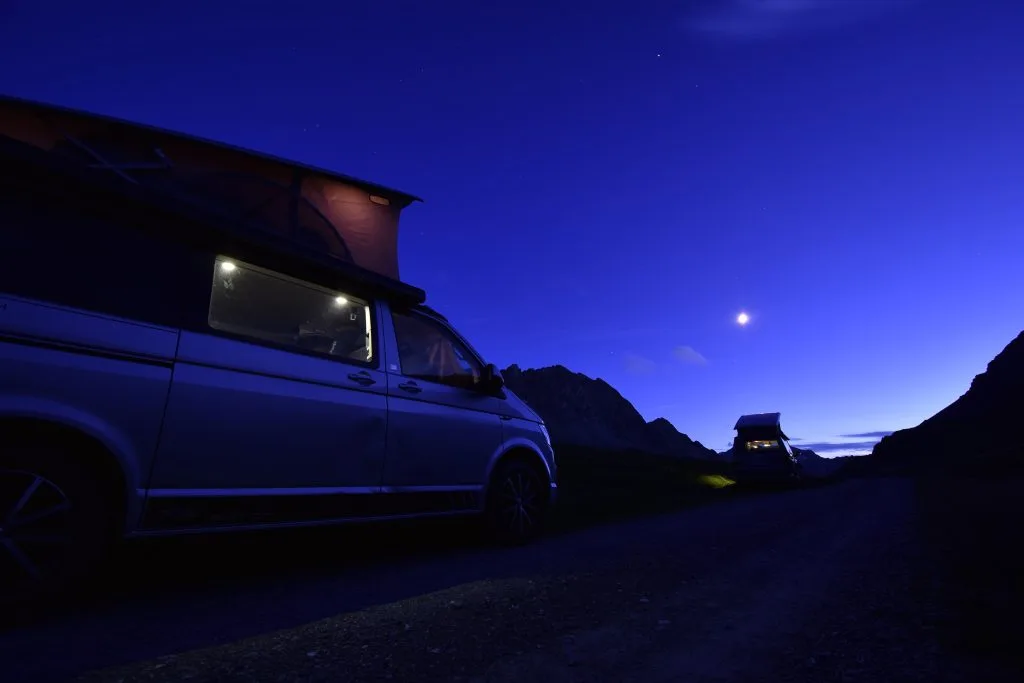
- The compact van or converted panel van : sleeping space and storage, easier to park and drive. A vehicle under 2 metres high gets through car park barriers more easily.
- The motorhome : bigger, with a kitchen and often a shower and toilet. More comfortable for a long stay, but harder on mountain roads and to park.
- Unusual vehicles : you will mostly find these on peer-to-peer platforms.
For forest tracks and the access roads to camping areas, read the insurance terms carefully: some policies exclude unpaved tracks.
How much does it cost?
Prices vary a lot depending on the vehicle, the length of the rental and the season, with higher rates in high season and over the Christmas holidays. Compare several offers for your dates. Check the extras: additional driver, extra insurance, camping equipment, cleaning, mileage beyond the allowance.
Where to hire one?
There are two options: peer-to-peer platforms such as Yescapa, and van and motorhome rental companies, which include Indie Campers. Compare offers, read recent reviews and book early in high season. Check that the vehicle is allowed to travel on the island and that unlimited mileage is included if you want to go all the way round Tenerife.
The rental steps
- Choose the type of van based on the number of people and your budget.
- Check the minimum age, the licence, the insurance and the options.
- Book online or by phone, with your dates and your bank card.
- At pick-up, do the condition check and take photos of the vehicle.
- On return, give the van back clean and in the condition set out in the contract.
To compare with a car, also see the guide car rental in Tenerife.
Driving a van in Tenerife
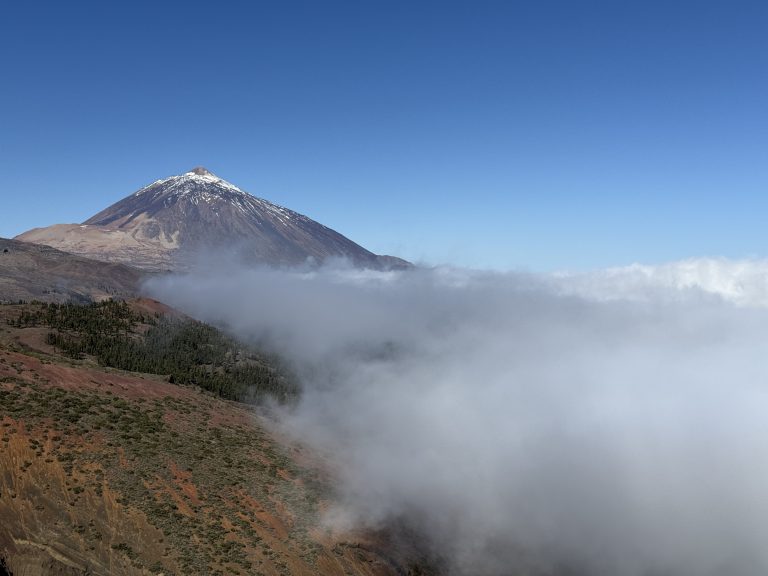
Mountain roads are narrow and winding. Have a look at the advice in the guide driving in Tenerife and allow plenty of time. Check the height and width of your vehicle before heading onto an unfamiliar road: some coastal roads have height barriers. Water and waste disposal points are few and far between, so plan them in advance. For Teide, see the guide to Teide National Park.
What if a van is not for you?
A car and fixed accommodation are simpler and often more flexible. See where to stay in the guide where to stay in Tenerife, how to get around Tenerife or the guide Tenerife without a car. For the rest of your planning, go through plan your Tenerife trip.
❤️ In short
- Wild camping is banned; sleeping in your vehicle without putting anything outside is usually tolerated.
- Book campsites and Cabildo areas in advance.
- The rules are changing: check with the town hall and the Cabildo.
Can you sleep in your van in Tenerife?
Sleeping in your vehicle without setting anything up outside is usually tolerated, but not guaranteed: each municipality decides, and some ban or limit overnight parking.
Is wild camping allowed in Tenerife?
No. Wild camping is banned. Putting out chairs, a table or an awning, or emptying waste water can be treated as camping.
Where can you camp legally in Tenerife?
At the island’s campsites, which are limited in number, or in the Cabildo’s official camping areas, with compulsory booking.
What licence do you need to hire a van in Tenerife?
A category B licence is enough for a vehicle whose maximum authorised mass does not exceed 3,500 kg, with up to 8 passengers in addition to the driver. Each rental company sets its own minimum age and required licence seniority.
How much does it cost to hire a van in Tenerife?
Prices vary a lot depending on the vehicle, the length of the rental and the season, with higher rates in high season. Compare several offers for your dates and check the extras and the insurance.
Will the rules change?
A regional decree is currently being adopted in the Canary Islands. It is not yet in force: check its status before your trip.