
Calima in Tenerife: what it is, health risks and what to do
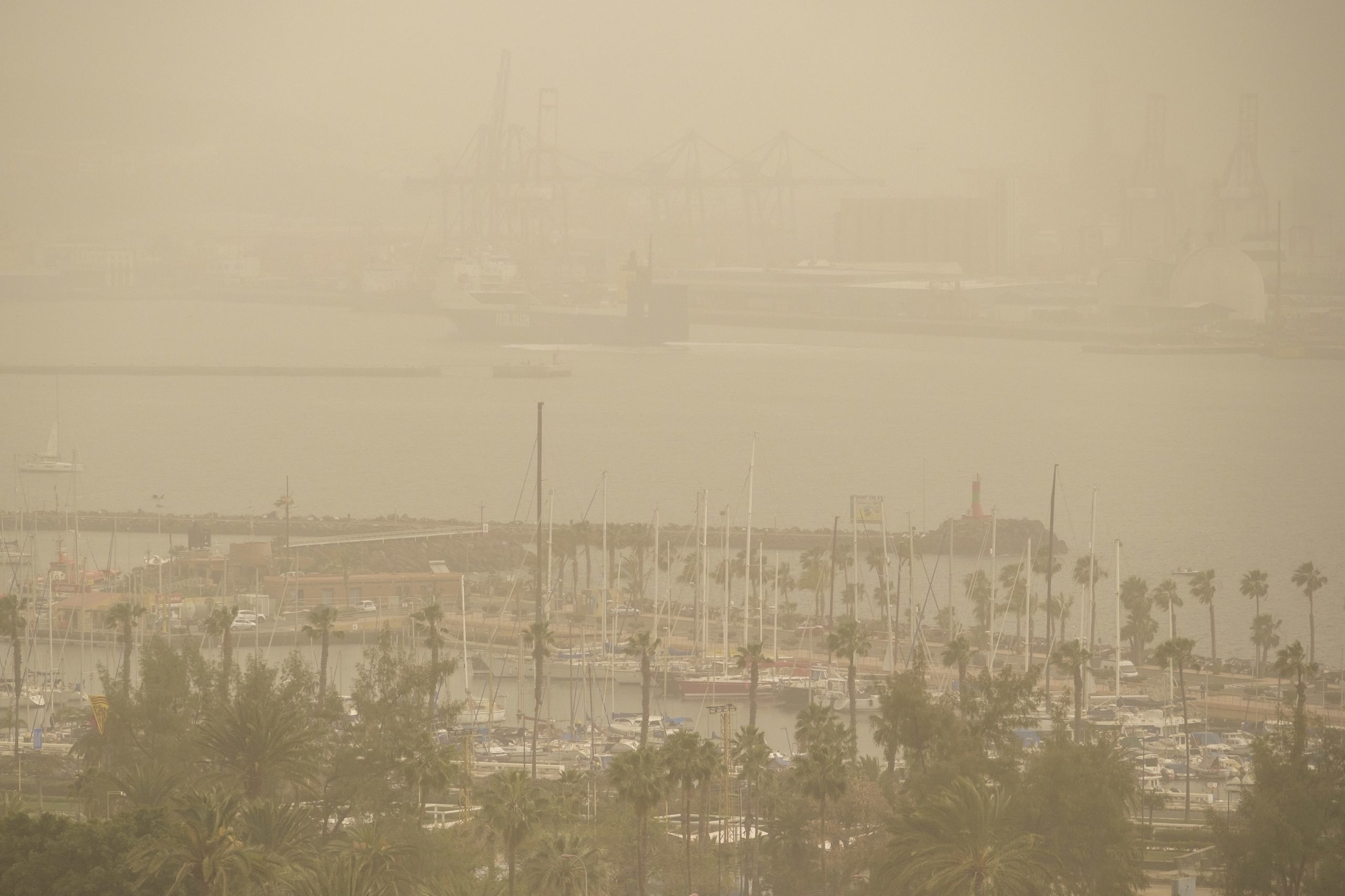
Calima is the yellowish or greyish veil of dust that can cover Tenerife for several days in a row. You do not always see it from the beach, but it lowers air quality, reduces visibility and calls for a few precautions, especially for sensitive people.
This guide explains what it is, how the Canary Islands authorities react, what it means for your health and your trip (flights, roads, activities) and where to follow air quality. For rainy days, we have a separate guide: what to do in Tenerife when it rains.
Recommended for:
CalimaHealthAir qualityTravel🎯 Key points
- 🌫️ Calima is airborne dust, usually from Africa. It veils the sky, reduces visibility and lowers air quality.
- ⚠️ Most affected: children, older people, people with asthma or respiratory or heart conditions, pregnant women, smokers and people who work outdoors (Canary Islands public health directorate).
- 📏 Official benchmark: the daily health-protection limit is 50 µg/m³ of airborne particles. For the late October 2026 episode, forecasts ranged from 5 to 200 µg/m³ depending on the area.
- 🏠 What to do: keep windows closed, avoid physical effort outdoors, drink water and check the air quality index.
- ✈️ Flights: very poor visibility can cause diversions. Check with your airline.
What is calima?
Calima is an episode of dust suspended in the air, usually coming from Africa. It gives the sky a yellowish or grey tint, reduces visibility and can push temperatures up. What really matters is not the colour of the sky but the amount of particles you breathe in.
The authorities track these episodes with forecast models (Spain’s Ministry for Ecological Transition and CESIC) and air quality monitoring stations. When the risk rises, the Canary Islands Government declares a calima pre-alert. In 2026 there were several, including in February, March, September and October.
How long does an episode last?
It depends. An episode usually lasts a few days, with an intensity that varies by island and by hour. The late October 2026 episode was put on pre-alert across all the islands on Monday 26 October at midday. It was expected to last all week, with a peak forecast for Wednesday 28 (above 100 µg/m³ fairly widely, according to the forecast at the time). The authorities did not class it as a high-intensity episode, which does not rule out effects on sensitive people.
The dust was forecast to be stronger at mid altitude and on south-facing summits, so heading into the mountains is not a way to escape it. Health authorities also note a rise in hospital emergency visits for up to five days after an episode ends.
What are the health effects?
According to the Canary Islands public health directorate, high concentrations of dust can cause mild symptoms (irritated nose and throat, itchy eyes, cough), but can also trigger asthma attacks and worsen respiratory or heart conditions. The risk of respiratory infections also rises.
The most sensitive people are:
- children and older people;
- people with a chronic respiratory condition (asthma, chronic bronchitis, fibrosis);
- people with a heart condition (heart failure, arrhythmias, poorly controlled high blood pressure, oxygen therapy);
- people with a weakened immune system;
- pregnant women;
- smokers and people who work outdoors.
If you belong to one of these groups, check that you have your rescue medication and watch for cough, wheezing, shortness of breath, chest pain or palpitations. If symptoms get worse, call 112.
What to do during a calima
- Avoid physical effort and sport outdoors.
- Stay indoors as much as possible, with windows and doors closed.
- Clean surfaces with a damp cloth rather than dry sweeping.
- Stay in a humid environment, drink water and keep taking your usual medication.
- Follow the information and forecasts from the authorities.
- If respiratory symptoms get worse, call 112.
Where to check air quality
The Canary Islands Government publishes an air quality index (ICA) estimated for each area of the archipelago, based on its network of monitoring stations. It is the tool to check before choosing an outdoor activity: Canary Islands air quality index (ICA).
During the October episode, air quality was rated “regular” to “unfavourable” in some areas. For general weather, also check the live weather in Tenerife.
Calima and travel: flights, roads, heat
- Flights: when dust sharply reduces visibility, planes cannot always land. If visibility is below the airport’s limits, the plane holds or diverts. Canary Islands airports do not have the top category of automatic landing system, which makes these limits stricter. Flights have been diverted to Gran Canaria in earlier episodes, mostly at Lanzarote and Fuerteventura (account of a retired airline captain published by Canarian Weekly in 2022). If you are flying during an episode, contact your airline before leaving for the airport.
- Roads: dust can reduce visibility. Slow down and drive carefully. Our guide to driving in Tenerife covers the basics.
- Heat: calima often comes with higher temperatures. During the October episode, 30 to 34 °C was forecast inland on the central islands. Drink regularly.
- Beach: the authorities give no beach-specific advice. They recommend limiting prolonged exposure to outdoor air and avoiding physical effort outside. Adapt to how you feel, especially if you are a sensitive person.
Which activities during a calima?
Go for indoor, low-effort plans: a covered market, a museum, a wine tasting, a gentle city visit. Postpone hikes, cycling, running and intense water activities. We have gathered ideas in what to do in Tenerife when it rains: most of them also work when the air is heavy.
❤️ In short
- Calima: no outdoor effort, stay indoors with windows closed.
- Health: sensitive people should be the most careful, and call 112 if symptoms get worse.
- Air quality: check the Canary Islands Government ICA before going out.
- Flights: visibility can cause diversions, contact your airline.
Read also: how to prepare your stay in Tenerife, and for bad-weather days, the activities to book in advance.
FAQ: calima in Tenerife
What is calima in Tenerife?
It is an episode of airborne dust, usually from Africa, that veils the sky, reduces visibility and lowers air quality.
Is calima dangerous?
For many people the effects are mild: irritated nose and throat, itchy eyes, cough. It is riskier for children, older people, people with asthma, respiratory or heart conditions, pregnant women and smokers. If symptoms get worse, call 112.
How long does calima last?
Usually a few days, with an intensity that varies by island. The late October 2026 episode was expected to last all week, and hospital emergency visits can rise for up to five days after an episode ends.
Should I cancel a hike during a calima?
It is better to postpone it: the authorities advise against physical effort outdoors during an episode, and the dust can be stronger at altitude.
Where can I check air quality in Tenerife?
On the Canary Islands Government air quality index (ICA), estimated for each area from its network of monitoring stations.
Can calima disrupt flights?
Yes, if visibility gets too low, flights can hold or divert. Contact your airline before leaving for the airport.
Sources: Canary Islands Government public health directorate (27 October 2026), October 2026 calima pre-alert forecasts relayed by Meteorología en Red, Canarian Weekly (calima and flights, 2022). Written on 11 November 2026.