


Weather in Tenerife: when to go and what to expect
When you think of Tenerife, you generally picture sun, beaches and pleasant temperatures all year round. And that is not entirely wrong: the island enjoys a mild, relatively stable climate throughout the year, which earns it the nickname of the island of eternal spring.
But there is one important thing to understand before planning your stay: it can be brilliantly sunny in the south of Tenerife while the north is under cloud. And conversely, the north is absolutely not an area with permanently bad weather. It is simply a different climate and a different atmosphere.
⭐ The essentials
- A mild, stable climate all year round: Tenerife can be visited in any season.
- The south is drier, warmer and sunnier; the north is wetter, cloudier and greener.
- The south is particularly dry from May to September; the north gets more rain from November to February.
- The calima (dust from the Sahara) can veil the sky for a few days a year, at different times.
- The weather on Teide has nothing to do with the coast: always bring a warm jacket, even in summer.
🗂️ In this article
☀️ South or north: the weather really changes
This is probably the first thing to know before booking your accommodation. Official climate data confirm a real contrast between the two coasts of the island: the south gets markedly less rainfall and enjoys more hours of sunshine than the north.
🌴 In the south
The climate is generally drier, warmer and sunnier. This is one of the main reasons why the main seaside resorts are in the south-west and south of the island.
If your goal is to spend a few days at the beach, enjoy the pool, have a drink on a terrace and maximise your chances of sunshine, the south is clearly the choice to favour.
🌿 In the north
The north is generally wetter, cloudier and cooler. This is notably linked to the trade winds, which bring moisture against the reliefs of the north of Tenerife: this contributes to the formation of the famous “mar de nubes“, the sea of clouds you can see at higher altitudes.
But be careful not to fall into the cliché: north does not mean bad weather. It is simply less hot and cloudier than in the south, and it is precisely this climate that gives the north much greener landscapes.
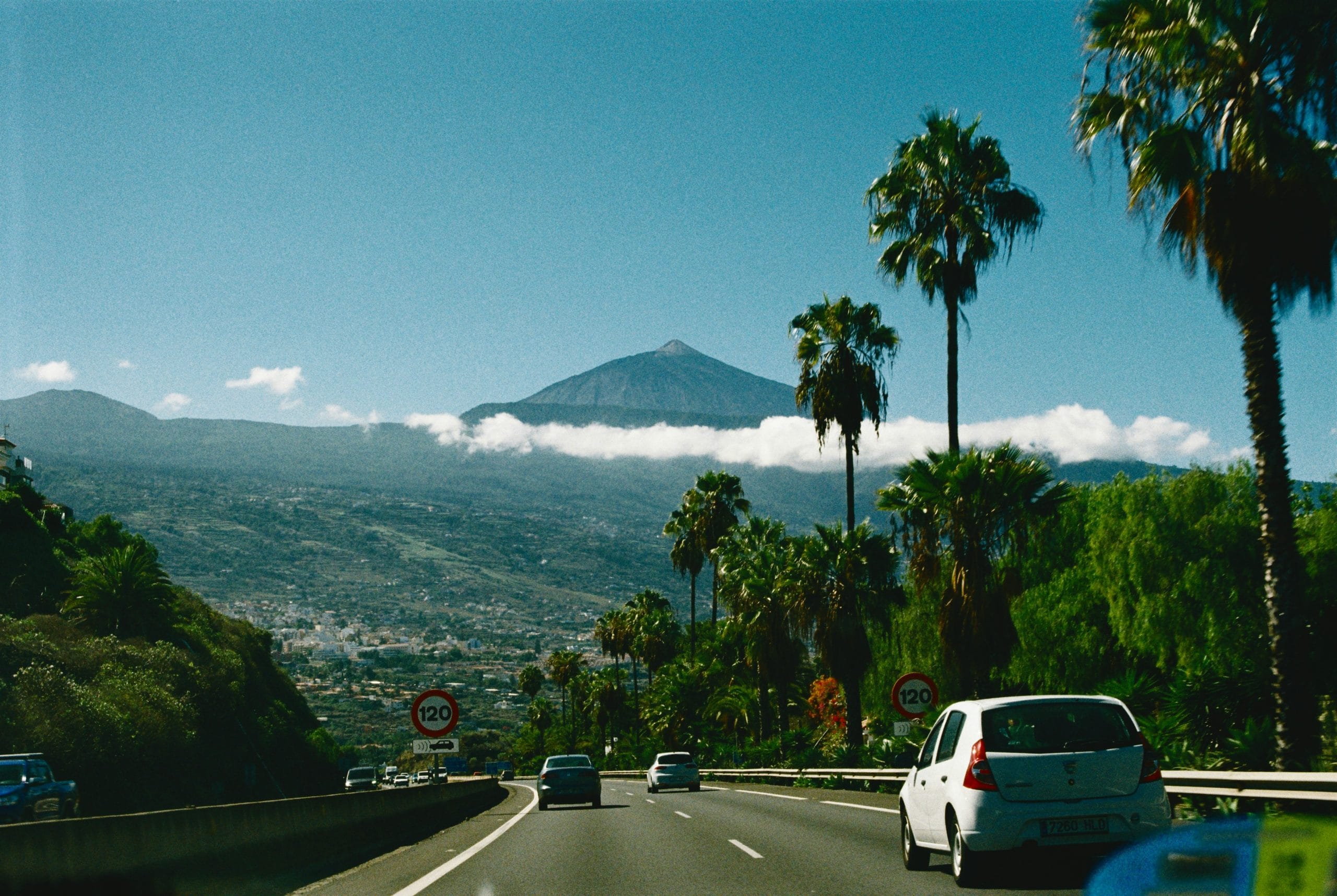
This contrast really changes the experience depending on where you put down your suitcases: it is a criterion to take into account when choosing your area. If you are still hesitating, our guide to choosing where to stay in Tenerife details the differences between the areas of the south and the north.
🌡️ What is the temperature in Tenerife?
This is where Tenerife’s climate is particularly pleasant: you do not really get the big temperature swings between winter and summer that you can get in France. In the south, climate averages for the Tenerife South station give a maximum of about 22 to 23°C in winter, up to nearly 28°C in August.
👉 The month-by-month detail (daytime temperature, night-time temperature and rainy days) can be found further down, in the When to go to Tenerife? section.
👉 Note: these are climate averages, not a guarantee for your stay.
🌞 Why is Tenerife called “the island of eternal spring”?
Because temperatures stay pleasant almost all year round. This is particularly interesting if you come from France in winter: while it may be cold at home, you can find yourself in Tenerife with 20 to 25°C during the day on the south coast depending on conditions. And even in the middle of summer, the proximity of the ocean generally makes the heat less stifling than during a heatwave in France. This is one of Tenerife’s great strengths: you can enjoy the outdoors practically all year round.
🌧️💨 Rain and wind in Tenerife
Does it rain in Tenerife?
Yes. Contrary to what you might think, Tenerife is not an island where it never rains, but the amount of rain varies enormously depending on the time of year and where you are. In the south, rainfall is particularly low from May to September: at Tenerife South, climate averages give practically no measurable rainy days in June and July. In the north, the situation is different: rainfall is more frequent, particularly during the winter months.
☔ And this is where Tenerife is quite incredible: you can have a cloudy or rainy day in the north, get in your car, and find brilliant sunshine in the south. So if the weather is not on your side where you are staying, look at the weather elsewhere on the island before completely changing your plans. This is also what makes a hire car particularly practical on the island.
And what about the wind in Tenerife?
The wind can sometimes be present, but it is not necessarily a problem day to day. Some areas are also more exposed to the wind: El Médano, for example, is particularly known for its wind conditions and water sports such as kitesurfing.
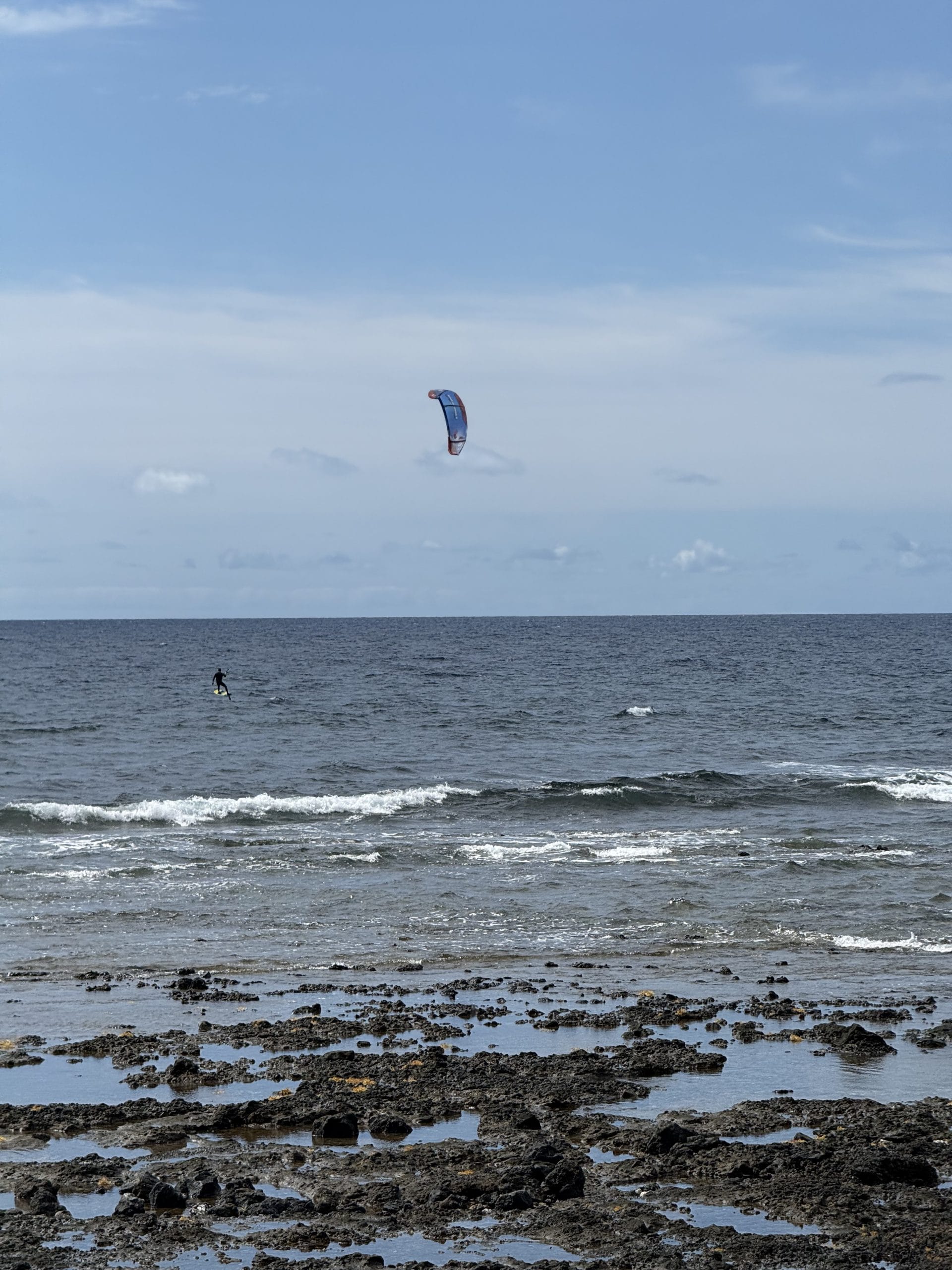
And at altitude, the situation can be completely different: on the highest part of Teide, wind gusts can be strong. With fatigue and altitude, that can quickly make progress much harder. If you go hiking at altitude, never rely solely on the weather on the coast.
👉 Altitude, temperatures and gear to bring: everything is in the Teide National Park guide.
🌫️ The calima: what exactly is it?
If you sometimes see a strangely white, yellowish or hazy sky in Tenerife, it may be calima. The calima is an intrusion of dust particles, mainly originating from the Sahara, carried to the Canary Islands by air masses. It can reduce visibility and give that impression of a veiled sky. This phenomenon is part of the climate of the Canary Islands and can occur at different times of the year. To recognise it, understand the health risks and know what to do, read our guide to calima in Tenerife.
👀 How to recognise it?
- A whitish or yellowish sky
- Poorer visibility
- A feeling of a “dirty” sky
- More dust on cars and surfaces
- Sometimes higher temperatures depending on the weather situation
So it is not necessarily bad weather: it is a different weather phenomenon, and it remains occasional.
🌊 Can you swim all year round?
Yes, but keep one small point in mind: the Atlantic Ocean is cool. Even when the air is warm, the water can feel cool to you, especially in winter and early spring. If you want to maximise your chances of pleasant water, the summer months and early autumn are the most favourable: the sea temperature rises gradually in spring and reaches its maximum towards the end of summer.
👉 And as always, “pleasant” depends enormously on the person: some people swim without any problem in winter, others find the water cool even in summer.
🌋 Note: the weather on Teide has nothing to do with the coast
This is probably the most important weather tip we can give you. You can start your day in Costa Adeje with 25°C and brilliant sunshine, and a few hours later find yourself at over 2,000 metres of altitude with a much lower temperature, wind and completely different conditions. While it is about 25 to 28°C on the coast, the temperature can drop to around 20°C or even 18°C during the day at altitude depending on conditions, with an even colder feel when it is windy. And the higher you go, the bigger the difference becomes.
🎒 Even in summer, bring a warm jacket, an extra layer, good shoes and a head torch if you set off early or at night. For a simple outing with a few stops by car, you can obviously be much less equipped, but as soon as you set off on a real hike, do not go as if you were at the beach. All the practical details (access, booking, gear) are in our guide to the Teide summit permit.
📅 When to go to Tenerife? The weather month by month and the best time
The good news is that there is not just one period when Tenerife is worth visiting: the island can be visited all year round thanks to its mild, stable climate. But the best time really depends on the kind of trip you want to take.
Here, month by month, is what you can expect from the weather in the south of the island, with the daytime temperature, the night-time temperature and the number of rainy days for each month.
☀️ average maximum daytime temperature · 🌙 average minimum night-time temperature · 💧 average number of rainy days in the month (at least 1 mm).
Source: AEMET, 1981-2010 climate normals, Tenerife South station (airport). These are averages: an actual stay can differ from them.
👉 Guides by month: Tenerife in January: weather, Three Kings and ideas for outings · Tenerife in February: weather, Carnival and what to do · Tenerife in March: weather, Holy Week and what to do · Tenerife in April: weather and what to do · Tenerife in May: weather and what to do · Tenerife in November: weather, festivals and what to do · Tenerife in December: weather, Christmas and what to do
In the south, from May to September, it rains less than one day a month on average, and December is the wettest month (3.5 days). Even in the middle of winter, nights stay around 15°C. Further north, in Santa Cruz, it rains more often in winter (5.4 days in December) and it is a little warmer in summer (29.0°C maximum in August, against 28.4°C in the south).
☀️ For the beach and the sun
May to September is an excellent period, particularly dry in the south, with lots of sunshine.
🥾 For hiking
Spring and autumn are particularly good: pleasant temperatures, without the highest heat of summer.
❄️ To escape the French winter
December to March: not necessarily 28°C every day, but very mild coastal temperatures compared with France.
🌴 For a bit of everything
April, May, October and November are very good compromises: warm enough for the beach, without excessive heat.
🎒 What to pack for Tenerife?
The best summary of Tenerife’s weather fits in one sentence: pack a summer suitcase, with a few autumn clothes.
🏖️ For the coast
- T-shirts, shorts, swimsuit
- Trainers and flip-flops
- Sunglasses, sunscreen, cap
🌙 For the evenings
- A sweatshirt or a light jumper
- A small waterproof jacket (a K-way type): it takes up almost no space and can always come in handy
⛰️ For the mountains (Teide)
- A warm jacket, or even a light, compact puffer jacket
- An extra layer
- Good, suitable shoes
- Water and a head torch if you set off early or at night
❤️ My Tenerife With Love tip
If there is only one thing to remember about Tenerife’s weather, it is this: do not only look at the weather where you are sleeping, look at the weather where you are going. Is it raining in the north? Look at the south. Is it brilliantly sunny in Costa Adeje? That does not necessarily mean it will be the same temperature on Teide.
Tenerife is an island with an enormous number of microclimates, and that is precisely what makes it so interesting. So yes, come for the sun ☀️, but do not forget to bring a sweatshirt and a waterproof jacket 😉.
To see the sea temperature month by month, read our article on Tenerife water temperature.
❓ FAQ: Weather in Tenerife
What is the best month to visit Tenerife?
There is no single best month, it all depends on your plans. For the beach, summer is particularly favourable; to combine hiking, sightseeing and pleasant temperatures, spring and autumn are excellent compromises.
Is it warm in Tenerife in winter?
Yes, especially on the coasts and particularly in the south. Average maximum temperatures in the south are around 22°C in December and January.
Does it rain a lot in Tenerife?
In the south, relatively little, especially from May to September. The north gets more rainfall, notably in winter.
Is the south always sunny?
No, even the south can have cloudy days or a few spells of rain. But it is statistically drier and sunnier than the north.
Can it be cold on Teide?
Yes, and markedly colder than on the coast. Never rely on the beach temperature to prepare a hike on Teide: always bring a warm jacket.
What is the calima in Tenerife?
It is an episode during which desert dust particles, mainly originating from the Sahara, are carried towards the Canary Islands. The sky can turn whitish and visibility can drop.
Which part of Tenerife should I choose if I want the most sun?
The south, especially for a short stay whose main aim is the beach, sun and outdoor activities: it is statistically drier and has more hours of sunshine.