


Stargazing in Tenerife: An Unforgettable Evening at Roques de García
If you’re lucky enough to get a clear sky and can move a little away from the coastal lights, Tenerife is one of the best places in the world to watch the stars. I’ll tell you about my evening at Roques de García, in the heart of Teide National Park, with everything you need to know to enjoy the same experience.
👉 To plan your day at Teide, see the Teide National Park guide and the cable car.
Teide is not only the highest peak in Spain, it is also one of the best-preserved night skies in Europe. The National Park holds the “Starlight Tourist Destination” designation, awarded for the quality of its sky, and since 1988 the Canary Islands have applied a law that is unique in the world (the “Ley del Cielo”, or Sky Law) to limit light pollution and protect the astronomical observatories on the archipelago. Add the altitude, which puts Teide above the cloud layer, and more than 300 clear nights a year, and you understand why the sky here is so impressive.
🌌 The essentials
📍 Where: Roques de García, on the Teide road (TF-21), or any other high-altitude spot away from the lights
🎫 Permit: none needed to stargaze from the road or the car parks (only access to the summit, beyond La Rambleta, requires a permit)
🌙 Best time: a moonless night (new moon) with a clear sky, possible all year round
💰 Budget: free if you go on your own
🧥 What to bring: warm clothes (hat, gloves, down jacket), food and drink, a torch
Contents
🌌 Why the sky above Teide is so exceptional
Teide National Park is one of the few places in the world certified as a “Starlight Tourist Destination” by the Starlight Foundation, an official recognition of the quality of its night sky. This is no coincidence: since 1988 the Canary Islands have applied the “Ley del Cielo”, a law that limits light pollution to protect the astronomical observatories on the archipelago, notably the Izaña Observatory on Teide itself.
Then there is the altitude: above 2,000 m you are above the cloud layer that traps moisture and pollution from the coastal areas. The result is a dry, stable sky and more than 300 clear nights a year. These are also the reasons why two major professional observatories are located on Tenerife and La Palma.
🥾 My experience: an evening at Roques de García
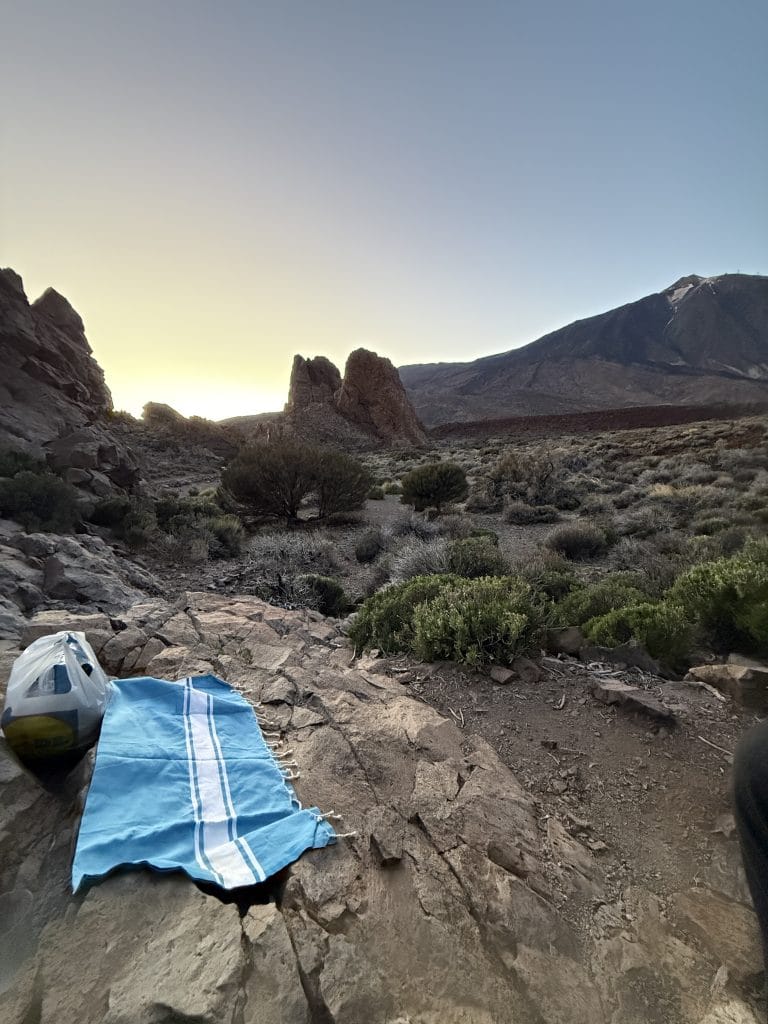
In late April 2026, after hiking in another area of Teide in the afternoon, I decided to go to Roques de García on purpose for the sunset and some stargazing.
I settled just a few dozen metres from the car park, right next to the emblematic rocks of the National Park. A little picnic on the spot, the sunset, then stargazing until around midnight.
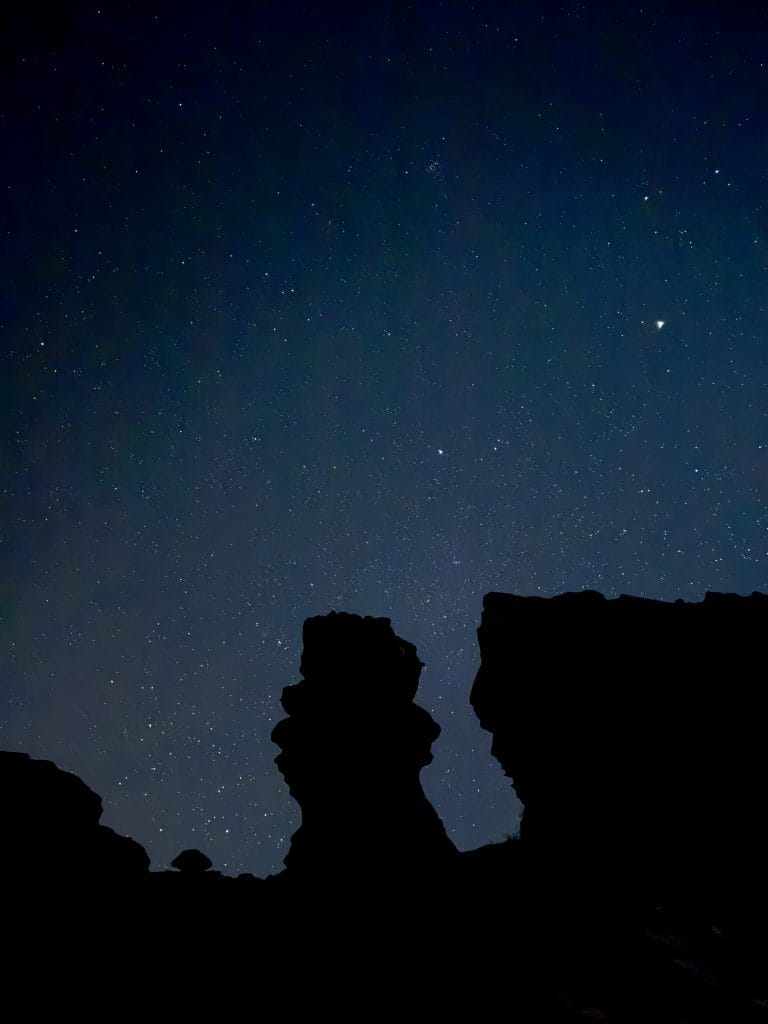
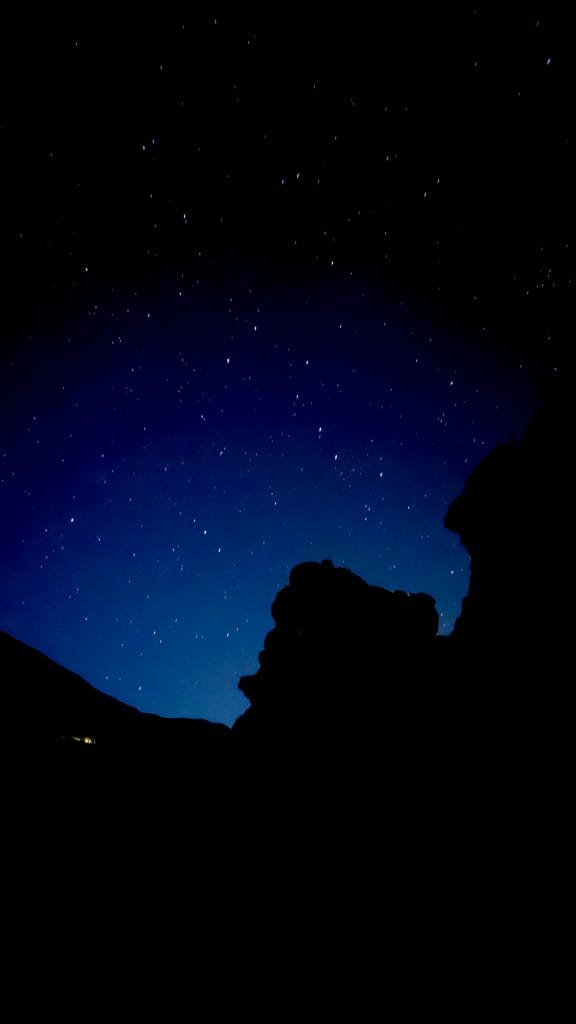
What I saw that evening: the Milky Way clearly visible to the naked eye, a shooting star, an enormous number of stars, and the moon rising during the evening. No professional equipment needed: I took my photos with my iPhone’s night mode and long exposure, and the result blew me away.
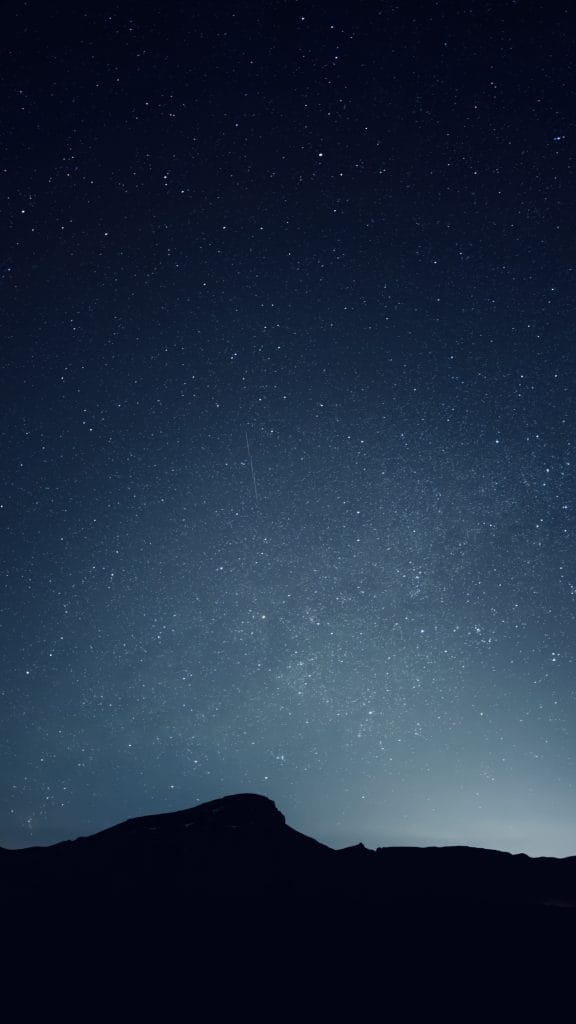
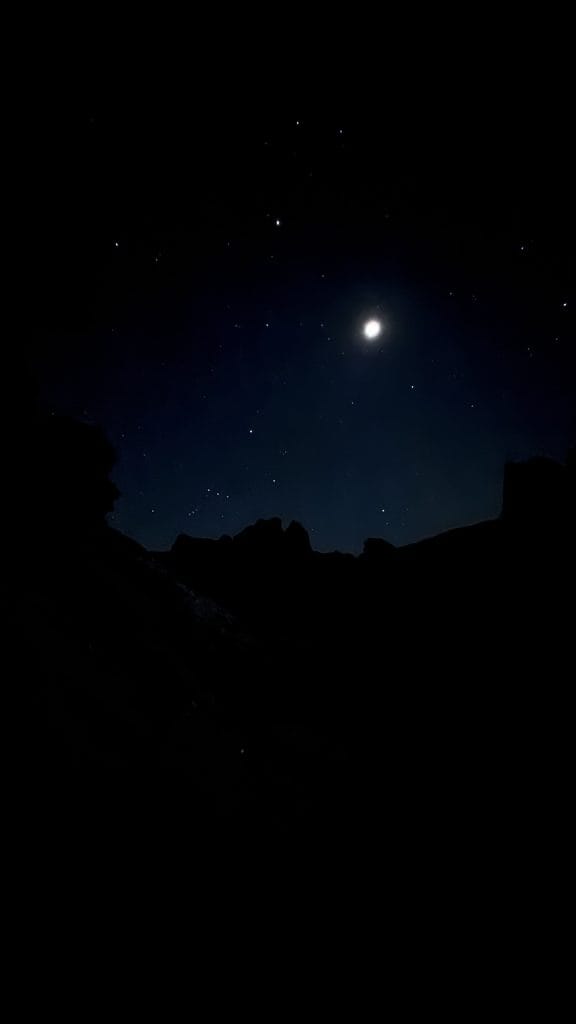
What struck me most was how simple it all was: no booking, no guide, just park, walk for two minutes and look up. The Teide sky does all the work.
📍 Where to stargaze at Teide
My spot: Roques de García, literally a few dozen metres from the car park, beside the TF-21 road. No need to walk for long or to have any kind of permit: you park, set your things down, and that is already more than enough for a superb sky.
The day before, I also took a few photos a few metres from the Montaña Blanca car park, in another area of Teide. Same principle: a simple high-altitude car park, far from any light, is enough.
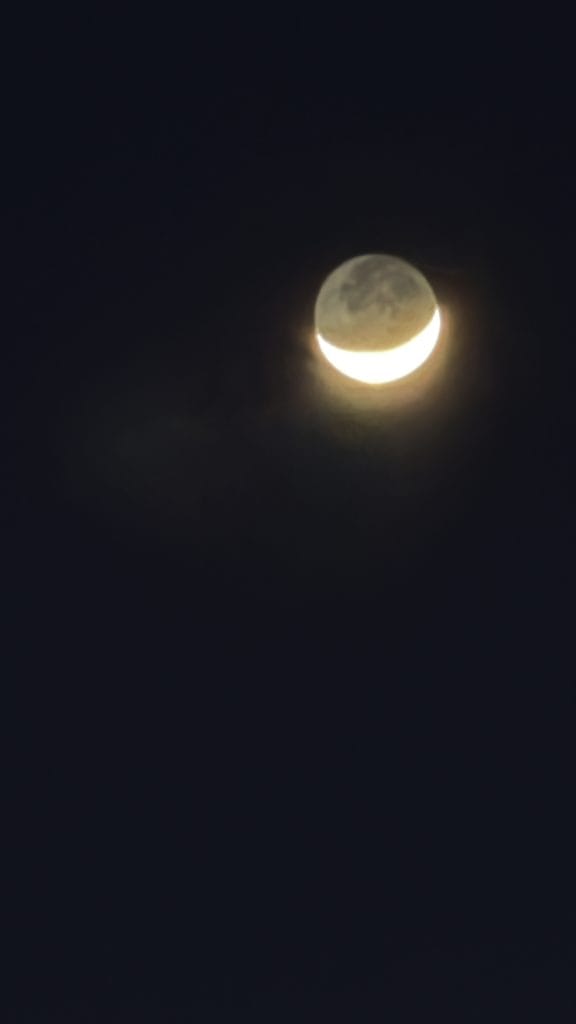
More broadly, any high-altitude point in the National Park away from the lights works. The further you get from the coast and the towns, the better. The only real distinction to know about: these spots need no permit, unlike access to the summit of Teide beyond La Rambleta, which is strictly regulated (see my article on the Teide summit permit if you want to go higher, for example for a sunrise).
🌙 When to go: the best time and the moon
The most important factor is not really the season, it is the moon. Choose a night close to the new moon, when it is faint or absent from the sky: that is when you will see the most stars and the Milky Way stands out best. Conversely, a full moon lights up the sky and drowns out the faintest stars.
If you want to catch a meteor shower, the best known and most intense is the Perseids, peaking around 12-13 August. In 2026 the new moon falls on 12 August, which makes conditions particularly favourable that year for seeing as many shooting stars as possible.
The Teide sky is usable all year round thanks to the park’s 300 clear nights. Summer is more comfortable temperature-wise, but you can try it in any season as long as the sky is clear.
🧥 What to bring
Even in midsummer, it gets cold quickly at altitude on Teide once the sun has set. I had a hat, gloves and a down jacket, and it was clearly not a luxury. Bring warm clothes, even if it means having too many.
Food and drink if you plan to stay a while, a torch to move around and find your car once the night is well settled in, and your phone: night mode or long exposure is more than enough to bring back beautiful photos, no professional camera gear needed.
🚗 Safety and access
The road to Teide is winding and not always lit after dark: drive slowly and stay careful, especially if you don’t know the route well. Park in a proper parking space, never on the side of the road.
As mentioned above, no permit is needed for a spot like Roques de García or Montaña Blanca. Only access to the summit, beyond La Rambleta, is regulated.
🔭 Want to go with a guide?
I have only tried stargazing on my own, without a guide or telescope, and it is more than enough for a great evening. If you would rather have company, there are organised excursions at Teide with a telescope and a guide. I haven’t tried one myself, so I would rather not recommend a particular one for now: I will update this article if I ever try one.
Another option, different from a classic stargazing evening: the daytime guided visit of the Teide Observatory (Observatorio del Teide, at Izaña), run by the Instituto de Astrofísica de Canarias. Expect about €21 per person for a 1.5-hour visit, with some days offering slots in French. Online booking is compulsory, it is not recommended for children under 8, and watch the altitude (about 2,400 m) if you are prone to altitude sickness. I haven’t tried this visit myself, but it often comes up in recommendations for people who want to go further than stargazing on their own.
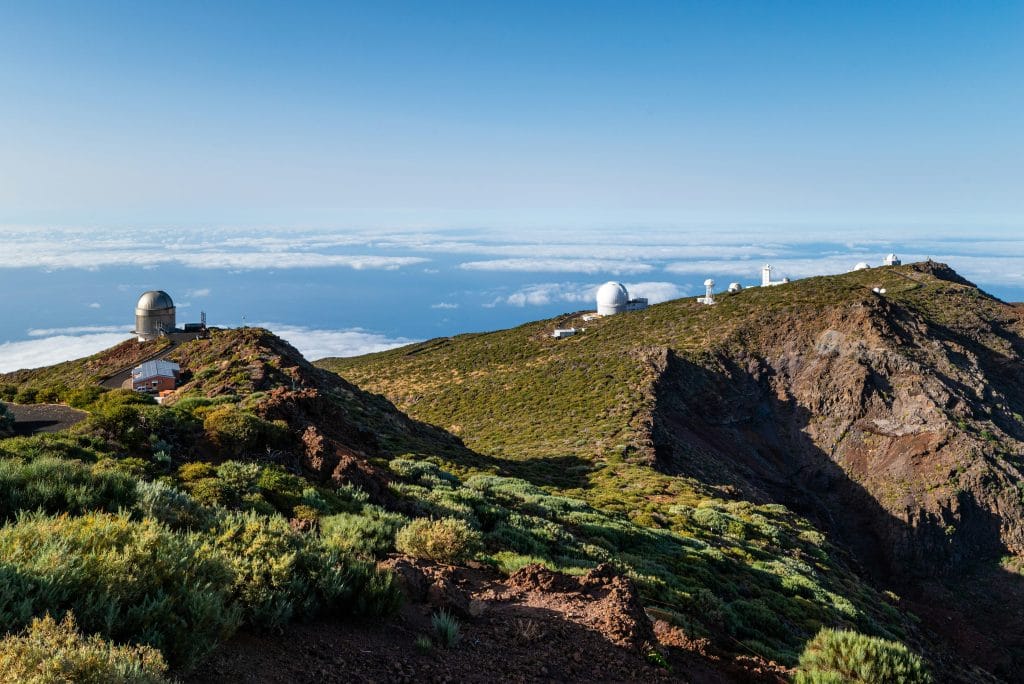
If you want to combine stargazing with a sunrise or sunset at altitude, have a look at my article on the sunset at the summit of Teide.
⭐ My verdict
I give it 9/10. It is simple, free, accessible without a permit or any special equipment, and the result lives up to it: seeing the Milky Way with the naked eye from an improvised picnic remains one of the best memories of my outings on Teide. The only small downside is the cold once night has set in, but with the right clothes it spoils nothing.
📌 In short
✅ No permit needed to stargaze from a spot like Roques de García or Montaña Blanca
✅ Free if you go on your own
✅ Aim for a night close to the new moon for a really dark sky
✅ Perseids peak around 12-13 August (new moon on 12 August 2026, ideal conditions)
✅ Bring warm clothes, even in summer
✅ Your phone in night mode is enough for great photos
Frequently asked questions about stargazing in Tenerife
Do you need a permit to stargaze at Teide?
No, not for a spot like Roques de García or Montaña Blanca: you can stargaze freely from the road or the car parks. Only access to the summit of Teide, beyond La Rambleta, requires a permit.
What is the best time to stargaze in Tenerife?
Choose a night close to the new moon with a clear sky; it is possible all year round thanks to Teide’s 300+ clear nights a year. For a meteor shower, aim for the Perseids peak around 12-13 August.
Do you need a telescope or a guide to see the stars properly?
No, with the naked eye the Teide sky is already impressive: the Milky Way, shooting stars and far more stars than you can see from the coast. Excursions with a telescope and a guide exist if you want to go further.
Where should you park to stargaze at Teide?
The car parks at Roques de García or Montaña Blanca, on the TF-21 road, are simple, free starting points, just a few dozen metres from an already very clear sky.
Is it cold at night on Teide, even in summer?
Yes. Even in midsummer, the temperature drops quickly once the sun has set at altitude. Bring a hat, gloves and a down jacket, even if it means having too many.